Rwanda could gain access to about $35.7 million in fresh IMF financing after the government and the Fund reached a staff-level agreement on the first review of a programme aimed at maintaining economic stability while supporting development.
The agreement, reached after IMF officials held discussions with Rwandan authorities from Sept. 23 to Oct. 6, still requires approval by IMF management and the Fund’s Executive Board, which is expected to consider the review in December.
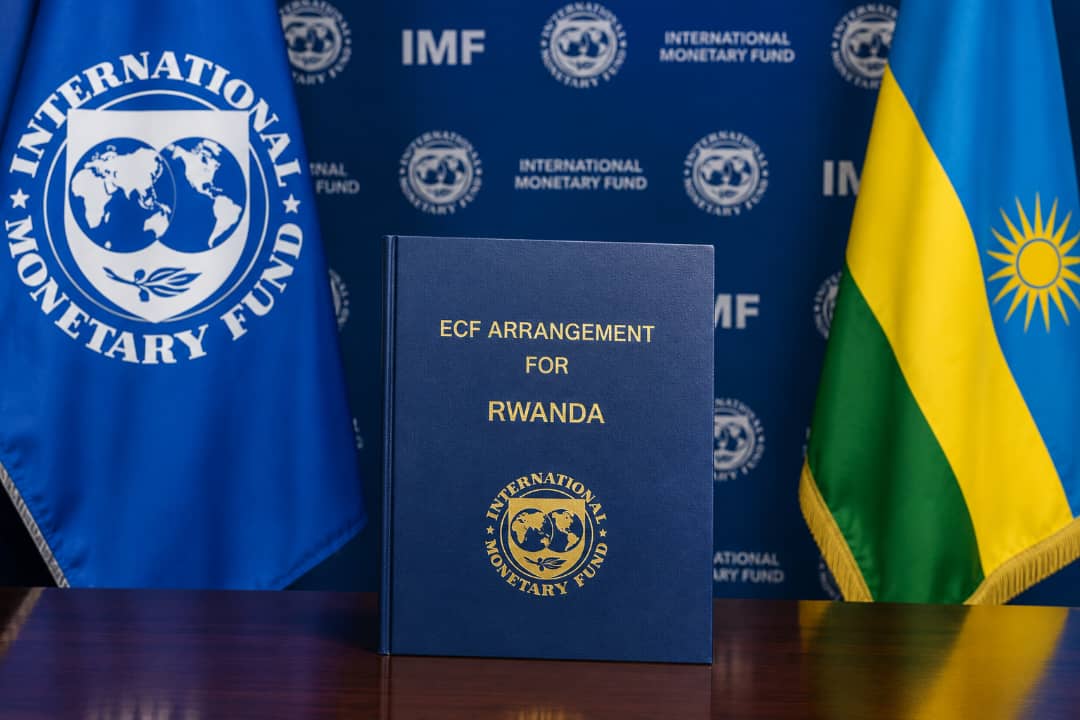
The financing would come under Rwanda’s 38-month Extended Credit Facility arrangement. The amount is equivalent to SDR 26.433 million.
The agreement comes as Rwanda’s economy continues to expand rapidly but faces mounting price pressures. The IMF said economic growth reached 9.7% in the first half of 2026, while annual inflation rose to 15.7% in August, well above the National Bank of Rwanda’s medium-term target of 5%. NISR has also reported annual inflation of 15.7% for August.
The IMF attributed the price pressures partly to higher international oil and fertilizer prices, alongside pressures that were already present in the economy and spillovers from the war in the Middle East.
Albert Touna Mama, the IMF’s mission chief for Rwanda, said the authorities had met all end-June quantitative performance criteria and were making progress on structural reforms.
Those reforms include strengthening the investment framework and developing Rwanda’s domestic securities and foreign exchange markets.
The IMF said strong exports and remittance inflows had helped narrow the current-account deficit, while foreign exchange reserves remained at about four months of imports and pressure on the Rwandan franc eased.
But monetary policy is likely to remain tight. The Fund said the National Bank of Rwanda needs to maintain an appropriately restrictive, data-driven approach to bring inflation back toward its 5% target.
The IMF projects Rwanda’s economy will grow 7.8% in 2026 and 7% in 2027. It warned that global commodity-price volatility, geopolitical and trade tensions, El Niño-related climate shocks and tighter global financing conditions could weigh on the outlook.
If approved, the latest disbursement would add to financing under the ECF programme, which the IMF approved in June with total access of SDR 185.031 million, or about $250 million.