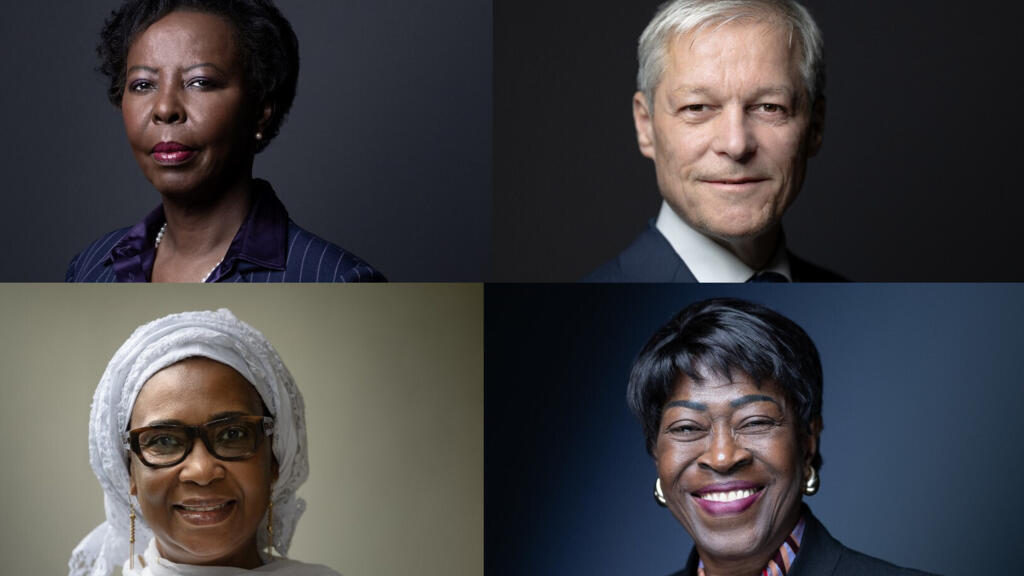
The Democratic Republic of Congo has announced the withdrawal of its candidate for Secretary-General of the International Organisation of La Francophonie (OIF) and pledged support for Romania’s Dacian Cioloș, in a move aimed at building consensus ahead of Monday’s leadership election.
In a statement issued in Phnom Penh on November 14, the Congolese government said it was withdrawing Juliana Amato Lumumba’s candidacy following consultations with Romania, which nominated Cioloș, a former Romanian prime minister.
Kinshasa said the decision was intended to bring member states closer to agreement on a candidate capable of uniting the organisation. It described Cioloș as the candidate it would support jointly with Romania, while calling on other candidates and the countries backing them to show similar flexibility.
The government stressed that Lumumba’s withdrawal did not reflect any doubts about her qualifications, abilities or contribution to the campaign. It praised her candidacy for promoting an ambitious vision for the renewal of the organisation.
The announcement comes amid strained relations between Congo and Rwanda, whose candidate, incumbent Secretary-General Louise Mushikiwabo, is seeking a third consecutive term.
Kinshasa has opposed her re-election as tensions between the two neighbours continue over the conflict in eastern Congo. The Congolese government accuses Rwanda of supporting M23 rebels, an allegation Kigali denies.
Before the latest announcement, RFI reported on November 14 that several sources expected Congo to consider leaving the OIF if Mushikiwabo won another term. Congolese Communications Minister Patrick Muyaya had told the broadcaster that there would be consequences if the outcome in Phnom Penh did not reflect his country’s values.
In its latest statement, however, Kinshasa reaffirmed its commitment to the Francophonie, saying it remained attached to the organisation’s charter and values. It presented the withdrawal of its candidate as an effort to overcome divisions and preserve the organisation’s cohesion.
Rwanda, meanwhile, has said it will maintain Mushikiwabo’s candidacy. Foreign Affairs Minister Olivier Nduhungirehe on November 13 said that she remained in the race, following reports that French President Emmanuel Macron had asked President Paul Kagame to withdraw her candidacy.
Mushikiwabo, was first elected to lead the OIF in 2018 and re-elected in 2022. Her tenure has also attracted criticism, including questions raised by some officials about her response to Russia’s invasion of Ukraine and the withdrawal of Burkina Faso, Mali and Niger from the organisation in 2025.
A representative of her team told RFI that the diplomatic engagements cited by critics were part of the OIF’s mediation work. Organisation spokesperson Oria Vande Weghe defended reforms introduced during Mushikiwabo’s tenure, including changes to the secretary-general selection procedure.
With Congo withdrawing Lumumba and backing Cioloș, the remaining candidates are Mushikiwabo, Cioloș and Mauritania’s Coumba Bâ. Kinshasa has nevertheless said its initiative cannot be unilateral, urging the other candidates and their supporters to demonstrate the same willingness to compromise.
The OIF has 90 member states and governments, comprising 53 full members, five associate members and 32 observers. Only the 53 full members have voting rights in the selection of the secretary-general.
The organisation traditionally seeks consensus in choosing its leader, with a formal election provided for under its revised selection rules. The next secretary-general will serve a four-year term from 2027 to 2030.
The election is scheduled for November 16 during the closing session of the 20th Francophonie Summit in Phnom Penh, Cambodia.