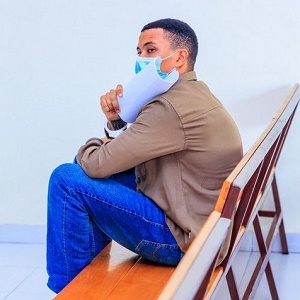
DJ Toxxyk, whose real name is Arnaud de Bosscher Shema, has been found guilty on all four charges against him — including involuntary manslaughter, drug-related offences, and fleeing the scene of an accident.
In its verdict, the Nyarugenge Primary Court ruled that he will not serve a prison sentence. Instead, he was fined Rwf 1,050,000 and handed three months of community service. That community service has been suspended for six months, meaning he will only be required to carry it out if he commits another offence within that period.
The ruling follows a case that has drawn significant public attention since late last year.
Earlier in the proceedings, the same court had ordered Shema to remain in custody for 30 days as investigations continued into a fatal road accident that claimed the life of a police officer.
According to prosecutors, the crash happened in the early hours of December 21, at around 4:00 a.m., along Sopetrade Road, where roadworks were underway. They said Shema struck police officer Fred Mushabe, who was directing traffic at the time, killing him on the spot.
Prosecutors also told the court that Shema abandoned his vehicle near ONOMO Hotel and fled immediately after the incident.
He faced multiple charges, including manslaughter, leaving the scene of an accident, and drug-related offences.
During the hearings, the court noted that Shema admitted to two of the charges — causing the death and fleeing the scene — something judges said weighed heavily in their decision.
On the drug-related accusations, the court said Shema had acknowledged the claims during the investigation. Prosecutors presented evidence that hybrid cannabis was found at his home, along with a signed document confirming its recovery. Local authorities also described him as someone known to use marijuana.
However, the court dismissed one allegation — that he refused to take an alcohol test — after finding no evidence to support it.
At one point, prosecutors had argued that he should remain in detention, pointing to the seriousness of the charges, the risk of him evading justice, and the fact that investigations were still ongoing.
In his defence, Shema told the court he had briefly fallen asleep at the wheel and lost control of the car after hitting a pavement. He said everything happened too quickly for him to react.
He admitted leaving the scene but explained that he panicked and acted out of fear and shock. He later travelled to Karongi District to seek advice from a friend, who eventually contacted authorities on his behalf.
Shema pushed back strongly against the drug-related charges, insisting he neither used nor possessed cannabis. He argued that the search of his home took place three days after his arrest, at a time when he no longer had access to the property.
He also claimed investigators pressured him into signing statements without giving him enough time to review them, saying some details recorded did not reflect what he actually said.
On claims he was driving under the influence, his lawyers argued that although tests were reportedly conducted, no lab results were presented in court — making it impossible to confirm intoxication.
With the verdict now delivered, the case closes a closely followed chapter, though it leaves behind difficult questions about accountability, responsibility, and the events of that night.
Top of Form