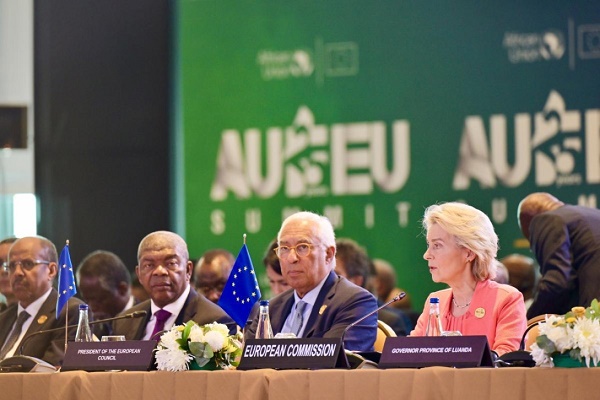
The 7th African Union–European Union summit in Luanda concluded on Tuesday, 25 November 2025, with leaders from both continents signing a joint declaration outlining a renewed roadmap for cooperation. The summit reaffirmed commitments on trade, investment, infrastructure, climate, health, and governance, aiming to strengthen ties and deliver tangible benefits to citizens across Africa and Europe.
Co-chaired by Angola’s President João Lourenço, in his capacity as Chair of the African Union, and António Costa, President of the European Council, the summit brought together senior officials from both sides to celebrate 25 years of partnership. Leaders stressed that their “common future lies in closer cooperation and collective action” to address shared challenges and opportunities.
Read More: Joint Declaration 7th African Union (AU) –European Union Summit
The joint declaration lays out an ambitious agenda for the next decade, including renewed support for the African Continental Free Trade Area (AfCFTA), investment in key infrastructure and digital projects, and backing for Africa’s green energy transition. Leaders also committed to advancing sustainable development goals, strengthening health and education systems, and protecting human rights across the continent.
Security and global challenges were also high on the agenda. The declaration reaffirmed support for peace and stability in conflict-affected regions, including Sudan and the Democratic Republic of the Congo, and called for stronger multilateral cooperation in addressing migration, climate change, and economic recovery.
The joint declaration expressed deep concern over the Sudan conflict, reaffirming their support for a Sudanese-led political process to end the war. Both organizations have strongly condemned atrocities committed by the Rapid Support Forces (RSF), particularly following the seizure of El Fasher, and are calling for an immediate ceasefire, unimpeded humanitarian access, and accountability for violations of international law.
In addition, the summit also reaffirmed support for a lasting peace in the DRC, endorsing UN resolutions, the Doha Framework Agreement, and the AU-led mediation process. The ongoing conflict, particularly in the eastern DRC, was reported said to be driven by factors including resource-rich regions and is marked by clashes between the FARDC and various armed groups, such as the M23.
While analysts welcomed the comprehensive roadmap, they cautioned that past summits have often produced ambitious language without follow-through. For African and European stakeholders, the real test will be turning these commitments into measurable results, from jobs and infrastructure to climate action and fair trade.
As leaders departed Luanda, there was cautious optimism that the 25th-anniversary summit could mark a new chapter in AU–EU relations, one that moves beyond ceremonial declarations toward concrete outcomes that benefit citizens on both continents.