Why non-participation in Africa’s open-skies treaty is stalling its expansion plans
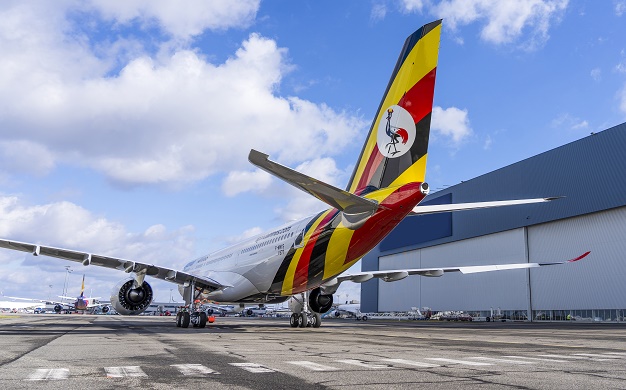
KAMPALA / LAGOS — Uganda’s national carrier, Uganda Airlines, is confronting significant legal barriers to its regional growth objectives. The airline’s ambition to tap into profitable intra-African routes has hit structural roadblocks following decisions by aviation authorities in Nigeria and South Africa to deny the carrier Fifth Freedom traffic rights.
Both regulatory rejections stem from Uganda’s failure to fully ratify and implement the Single African Air Transport Market (SAATM) flagship framework.
To optimize fleet utilization and capture market share across sub-Saharan trade corridors, Uganda Airlines sought Fifth Freedom rights, a commercial aviation mechanism allowing an airline to transport passengers and cargo between two foreign nations as part of a flight originating or ending in its home state.
However, bilateral protectionism and continental policy disparities have constrained these expansion plans:
While the Ghana Civil Aviation Authority (GCAA) recently granted approval for Uganda Airlines to pick up passengers and cargo between Accra and Lagos, Nigerian aviation authorities refused permission.
Nigerian officials cited Uganda’s status as a non-signatory state to the SAATM initiative as the central ground for blocking the route sector.
A parallel situation unfolded on the lucrative Johannesburg, Harare link. Although Zimbabwe, a full SAATM signatory state, consented to the fifth-freedom operational agreement, South Africa denied the necessary traffic rights.
Pretoria has asserted that reciprocal open-skies privileges cannot be extended to carriers whose home governments have not signed on to the liberalized African framework.
Launched under the African Union’s Agenda 2063 initiative, SAATM aims to create a single, unified air transport market across the continent, eliminating bilateral restrictions and boosting intra-African trade and connectivity.
While major aviation hubs like South Africa and Nigeria leverage the accord to advocate for open skies, national carriers operating out of non-member states are increasingly finding themselves locked out of Fifth Freedom traffic permissions.
Member states that have fully implemented the 1999 Yamoussoukro Decision through SAATM are legally bound to grant liberal access only to participating states.
Without the overarching umbrella of SAATM, non-participating nations remain constrained by traditional Bilateral Air Services Agreements (BASAs), which frequently restrict third-, fourth-, and fifth-freedom rights to shield domestic carriers from external competition.
Uganda’s executive leadership and cabinet have previously voiced intent to formally ratify the SAATM framework to prevent regulatory isolation. However, procedural delays have continued to stall final approval.
The regulatory restrictions come at a critical time for Uganda Airlines, which has set ambitious growth targets aimed at scaling annual revenue to between $400 million and $500 million by 2030, with a target break-even milestone by 2031.
Aviation sector analysts have emphasized that without full SAATM integration, African carriers operating under non-signatory flags will face mounting commercial resistance, restricted route networks, and diminished competitiveness against continental megacarriers.