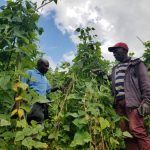
For years, the reality for many of Rwanda’s smallholder farmers was a cycle of season-to-season survival. Staple crops like maize put food on the table but rarely generated the surplus needed to lift families out of poverty, invest in their futures, or withstand increasingly frequent climate shocks. Often, farming has been about getting through the next harvest, not planning for the next generation.
Anatholie Ayinkamiye, a 39-year-old mother of three from Nyagatare District, knows this reality well. Before 2021, she farmed one hectare of land without access to quality inputs, scattering seeds by hand and harvesting just four bags of maize (about 400 kilograms). She farmed under the traditional Tugabane arrangement, a farming practice where land owners and landless members work together and fairly share the harvest. Because of this she was left with only two bags.
“With the two bags, I had to sell one to be able to plant for the next planting season, and we ate the remaining one,” Anatholie says.
After joining Tubura, she gained access to financing, improved seeds, quality farm inputs, and agronomic training; increasing her harvest to 35 bags of maize that season.”.
“I was so happy with my first harvest. But what made me happier was finally completing the loan we had taken to buy our house. I can’t fully express the feeling of owning your own home,”she says.
This is just one story of what happens when farmers have access to the right support. Rwanda’s Vision 2050 and the Fifth Strategic Plan for Agriculture Transformation (PSTA 5) set out an ambitious vision to move beyond increasing farmer production towards a modern, climate-resilient, and market-oriented food system.
Producing More and Better
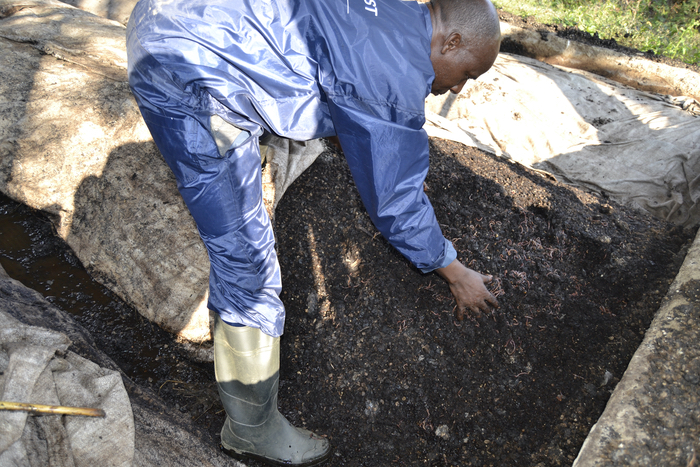
The first pillar of PSTA 5 recognizes that increasing productivity begins with ensuring farmers can access the right tools and support. Quality seed, improved farm inputs, practical agronomic training, and climate-smart farming practices all play a critical role in helping smallholder farmers increase yields sustainably.
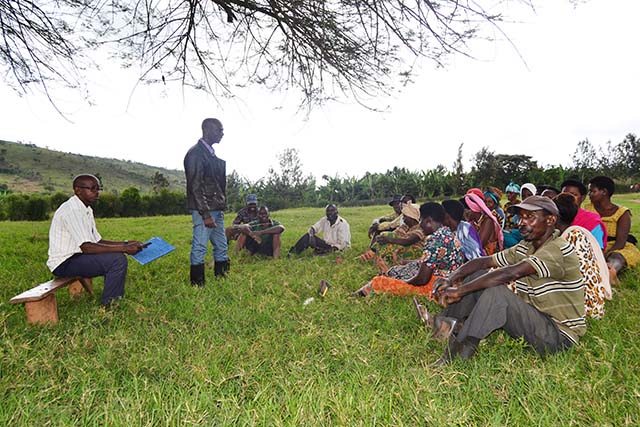
Across Rwanda, organizations such as Tubura are working with Anatholie and millions of other farmers to bring these services closer to their farming communities. Through a network of more than 1,800 Tubura field officers, farmers can access quality inputs and financing within walking distance of their homes, while receiving hands-on training and ongoing support to adopt improved farming practices.
The impact extends far beyond the harvest, giving farming families the opportunity to invest in productive assets, improve household nutrition, educate their children, and strengthen their financial security.
Building Resilience and Opening Markets
As climate change makes weather patterns increasingly unpredictable, resilience has become just as important as productivity. Farmers need climate- smart farming systems alongside reliable markets that enable them to earn a stable income and invest confidently in their futures.
For Odette Mukabarame, a 57-year-old mother of three from Gisagara District, resilience came through receiving support that turned a crop she had always grown into a dependable source of income. For years, she harvested avocados, but without reliable buyers, much of her fruit spoiled before it could be sold.
Odette Mukabarame, an avocado farmer from Gisagara District in Southern Rwanda
“Sometimes I would take the avocados to the market and couldn’t get clients. Because they were ripe, I couldn’t keep them any longer. I ended up giving them to pigs or throwing them away,” she says.
Today, Odette sells her avocados through Tubura’s market access program, where she has a guaranteed buyer and more stable prices.
“I am no longer worried about whatever quantity I may have because they will buy it,”Odette says. “I have a source of income. Now I can plan to buy livestock because I am getting money on time.”
Like agroforestry trees, fruit trees also improve soil health, reduce erosion, strengthen biodiversity, and provide income that is less vulnerable to seasonal rainfall than annual crops. Since 2016, Tubura has distributed more than 145 million trees across Rwanda, helping farming households strengthen both their farms and their financial resilience.
Equally important is connecting farmers like Odette to fair markets. Through training, aggregation services, and access to premium value chains such as avocados, chilli, green beans, and green coffee; farmers are able to earn more from what they produce.
Last year, the organization aggregated and exported more than 378 metric tonnes of Rwanda’s produce, creating greater opportunities for farming families.
Investment in local value addition is equally critical. In partnership with Impact for Africa, we established Avocado Oil Industries, an industrial-scale avocado oil processing facility, which has the capacity to process over 200 metric tons per week.
The organization ensures fruit that once went to waste is processed locally, retaining more value within the country while creating employment opportunities for young people.
A Shared Vision for Lasting Prosperity
The experiences of Anatholie and Odette show what is possible when smallholder farmers have access to the right support at every stage of their journey.
Achieving the Vision 2050 and the success of PSTA 5 will ultimately be measured, not only by harvests, but by whether farming families are better equipped to withstand climate shocks, invest in their futures, and see agriculture as a pathway to prosperity and in turn, largely contribute to the sector.
Continued investment in organisations already supporting farmers across the value chain will be essential to scaling proven approaches, reaching more households, and accelerating Rwanda’s agricultural transformation.
This is what Vision 2050 looks like on the ground: farmers who are no longer farming simply to survive, but who are building resilient livelihoods and creating opportunities for generations to come.
About One Acre Fund Rwanda (Tubura)
One Acre Fund Rwanda, known locally as Tubura, is a Community Benefit Company supporting smallholder farmers to build resilient communities by providing agricultural solutions, financing, and training they need to grow more food and become prosperous. Through its three strategic pillars—Productivity, Resilience, and Markets—the organization directly contributes to Rwanda’s Vision 2050 and PSTA 5.
Founded in 2007, One Acre Fund Rwanda currently serves over 1 Million farmers directly and more through partnerships, reaffirming its commitment to sustainable, farmer-focused development.
For more information, visit www.oneacrefund.org