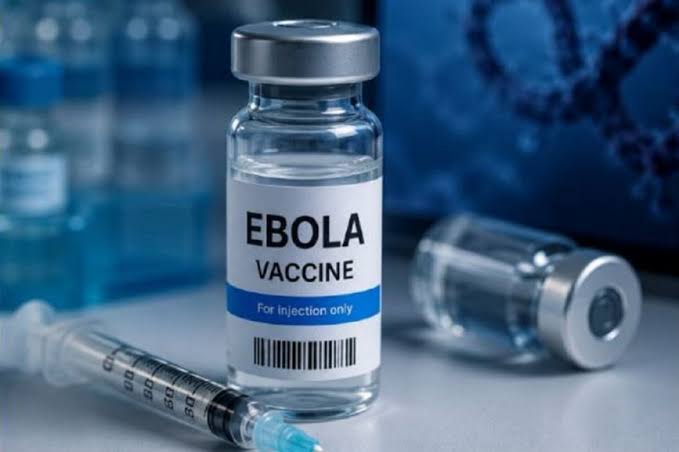
Researchers in Uganda have begun a first-phase clinical trial of a candidate vaccine against the Bundibugyo strain of Ebola, which has caused a major outbreak in neighbouring Democratic Republic of Congo (DRC).
The first participants received the vaccine on October 6 at a research site in Masaka City, southwestern Uganda, according to the University of Oxford, whose scientists developed the candidate.
The study is being conducted by the Medical Research Council/Uganda Virus Research Institute and London School of Hygiene and Tropical Medicine Uganda Research Unit, in partnership with the University of Oxford.
The trial will assess whether the vaccine is safe and whether it stimulates an immune response in healthy adult volunteers. These are the principal objectives of a Phase I study; it is not designed to establish whether the vaccine prevents infection or illness.
Eugene Ruzagira, the study’s principal investigator, said the research was an important step towards developing protection against a form of Ebola for which no vaccine is currently licensed.
“By evaluating the ChAdOx-based Bundibugyo Ebola vaccine candidate in Uganda, we are generating the evidence needed to determine whether it is safe and capable of stimulating the immune responses that could help protect at-risk communities in future outbreaks,” Ruzagira said in a statement published by the research unit.
The vaccine candidate, known as ChAdOx1 BDBV, uses a platform similar to that used in the Oxford/AstraZeneca COVID-19 vaccine. It was developed specifically to target Bundibugyo virus.
The Ugandan study follows an earlier Phase I trial launched in the United Kingdom in July. Both studies are supported by the Coalition for Epidemic Preparedness Innovations (CEPI).
The University of Oxford said the Serum Institute of India had manufactured and stockpiled approximately 620,000 doses of the candidate vaccine in two weeks, with investigational doses supplied for the clinical studies. Having doses prepared in advance could help accelerate later-stage research if early results support further development.
Bundibugyo virus disease is a severe form of Ebola. Unlike the Zaire strain, for which the Ervebo vaccine is licensed, Bundibugyo virus has no approved vaccine or specific treatment.
The distinction is important because a vaccine developed for one Ebola virus species cannot automatically be assumed to protect against another. Researchers must establish the candidate’s safety and immune response and, in later studies, determine whether it offers protection.
The DRC declared its current Bundibugyo outbreak in May. By October 13, the country had recorded more than 9,000 confirmed cases and 4,381 deaths, according to figures reported by Reuters.
The outbreak has also spread beyond the DRC, with Kenya confirming three linked cases by October 16. Uganda, which previously reported cases during the wider outbreak, has been involved in cross-border public health measures.
The new vaccine study is an early step in a longer process. Researchers will need to assess the results before determining whether the candidate can advance to larger trials and eventually become available for use in affected communities.