Artificial intelligence has the potential to expand Sub-Saharan Africa’s economy by roughly 4% over the next decade, but only if regional governments urgently address foundational gaps in electricity, internet connectivity, and digital skills.
Without targeted policy reforms and infrastructure upgrades, the economic dividend will be practically invisible, yielding a negligible 0.2% growth nudge over ten years.
“Frankly, that’s a rounding error,” said Martin Schindler, Deputy Division Chief in the IMF’s African Department and lead author of the paper released on Tuesday. “Policy changes will be key to whether further growth can be unlocked from AI.”
As global tech giants spend hundreds of billions on data centers and energy networks to support AI models, Sub-Saharan Africa ranks lowest on the IMF’s AI Preparedness Index. Behind every region except South Asia in AI adoption, the territory risks missing out on the technology revolution entirely.
The barrier is not a lack of interest, but the physical realities on the ground:Roughly 50% of Sub-Saharan Africa’s population still lacks access to reliable electricity, Only 38% of Africans were using the internet in 2024, compared to a global average of 68% and Deficits in technical skills and regulatory frameworks leave the region ill-equipped to integrate AI or shield local workforce markets from disruption.
“For Sub-Saharan Africa, the central concern is not the risk of technological disruption, but whether countries will be able to adopt, adapt, and scale AI quickly enough to capture its benefits and avoid falling further behind.”
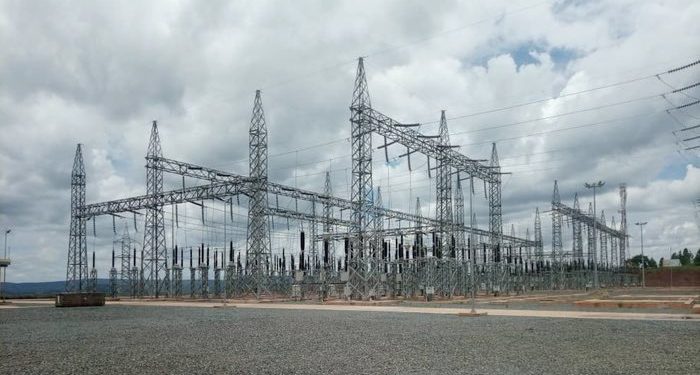
Despite the steep hill, IMF analysts argue that AI demand could actually serve as the catalyst to fix Africa’s legacy energy woes. Large-scale data centers require massive, reliable power—making them prime anchor tenants for new, bankable energy projects.
“It’s hard to have anything without electricity,” noted paper co-author Andrew Tiffin, pointing out that mini-grids anchored around schools, clinics, and community centers could double as local digital hubs.
Private investors are already placing early bets on the continent’s AI future. In Kenya, Microsoft and UAE-based G42 recently announced a $1 billion, 100-megawatt geothermal-powered data center campus.
Also, Cassava Technologies and NVIDIA partnered on a $700 million deal to deploy 12,000 advanced GPUs across South Africa, Nigeria, Kenya, Egypt, and Morocco.
On the continent, 160 data centers, roughly 5.5% of the world’s total, and nearly half are clustered in just three nations: South Africa, Kenya, and Nigeria.
Without broad-based investments in fiber optic backbones and open-access networks, the IMF warns that the AI boom could widen disparities not just between Africa and the rest of the world, but among African nations themselves.