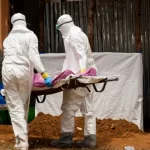
The death toll from the Ebola outbreak in the Democratic Republic of Congo has risen to 600, highlighting the rapid spread of the disease as health authorities struggle to contain it.
The latest figures were released just three days after the number of deaths passed 500, highlighting the speed at which the outbreak is escalating.
On Thursday, the Africa Centres for Disease Control and Prevention (Africa CDC) described the outbreak as the fastest-growing Ebola epidemic ever recorded on the continent.
“Unfortunately, the virus is still ahead of our response. It’s moving faster than our ability to deploy the resources needed to control the situation,” the agency’s head of emergency preparedness said.
The DRC’s Ministry of Health has also confirmed that new infections have been detected in parts of the country that had previously remained unaffected, raising fresh concerns about the virus’s expanding reach.
Confirmed cases have now surpassed 1,700, with community transmission continuing across several regions.
The outbreak, caused by the Bundibugyo strain of the Ebola virus, has been largely concentrated in 37 health zones across Ituri, North Kivu and South Kivu provinces. However, suspected cases have now been reported in Kisangani, in Tshopo Province, and in Haut-Uele, suggesting the virus is spreading beyond its original epicentre.
Health officials say efforts to contain the outbreak continue to face significant challenges, including a shortage of funding, attacks on health facilities and medical workers, and insecurity linked to the ongoing conflict in eastern DR Congo.
According to the World Health Organization (WHO), the outbreak has a case fatality rate of about 34%, based on data provided by Congolese health authorities.
The Bundibugyo strain currently has no approved vaccine or specific treatment. However, two experimental therapies entered clinical trials in the DRC on 2 July, offering hope that new treatment options could help curb the outbreak.
The WHO declared the outbreak a Public Health Emergency of International Concern in May, although officials say the virus had already been spreading undetected for several weeks before the declaration.