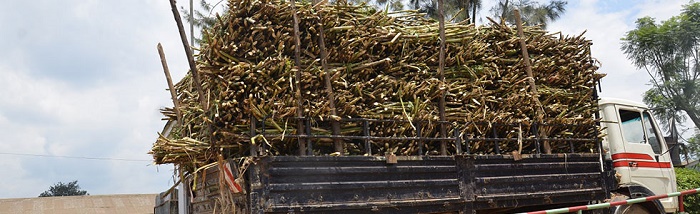
Rwanda is in talks with Kenyan investors to establish a new sugar factory in Nyagatare District, part of a broader plan to close a persistent gap between local production and national demand.
Trade and Industry Minister Prudence Sebahizi told the Chamber of Deputies that the country’s only sugar producer, Kabuye Sugar Works, can no longer keep up with rising consumption from both households and industry.
He said Kabuye currently meets less than 10 percent of Rwanda’s annual sugar demand.
“The issue is not that production has declined,” Sebahizi said. “It is that output has remained almost the same while demand continues to grow.”
To address the shortfall, government is now pushing for at least two to three additional sugar factories to complement existing capacity.
Among the projects under discussion is a proposed investment by a Kenyan sugar company, RAI, which could set up operations in Rwanda. Talks are ongoing over land allocation and production arrangements, including large-scale sugarcane farming.
Sebahizi said the investor has requested about 11,000 hectares in the Mutara region, including Nyagatare, to support both cultivation and factory infrastructure.
He added that the project would go beyond sugar production. It is expected to generate electricity through biomass and produce ethanol, which can be used in industrial processes such as beverage manufacturing.
Responding to concerns from MPs about land use and possible competition with food crops, Sebahizi said the benefits of the project outweigh the risks, noting its potential to boost energy supply and industrial output.
However, he cautioned that the factory is unlikely to be operational within the next four years.
Sugar remains one of Rwanda’s most expensive imports. After petroleum products, it is among the top contributors to the country’s import bill.
In 2025, Rwanda imported 195,610 tonnes of sugar worth about $145 million (approximately Rwf 212 billion). A year earlier, imports stood at 308,000 tonnes valued at $238 million (about Rwf 348 billion).
The figures underscore the scale of the supply gap the government is now trying to close through local production and new investment.
Sebahizi noted that sugar is one of Rwanda’s most expensive imports. After petroleum products, sugar is among the goods that consume the largest share of the country’s import bill.
In 2025, Rwanda imported 195,610 tonnes of sugar worth approximately $145 million (about Rwf 212 billion at current exchange rates).
In 2024, the country imported 308,000 tonnes valued at $238 million (nearly Rwf 348 billion). Sugar ranked as Rwanda’s third most valuable import after fuel and rice.
The planned factory is expected to boost local production, reduce import dependence, create jobs, and strengthen Rwanda’s industrial base as the country pursues its long-term manufacturing and value-addition ambitions.