Tuesday marked a significant step forward for African women’s cycling, with five riders from the continent named to the 2026 World Cycling Centre (WCC) Women’s Continental Team.
It is the joint-highest number of African cyclists ever selected for a professional women’s squad, and the first time the group has included riders from every region of the continent; north, south, east, west and the islands. For many within the sport, it is a clear sign that women’s cycling is beginning to break free from its traditional European centre.
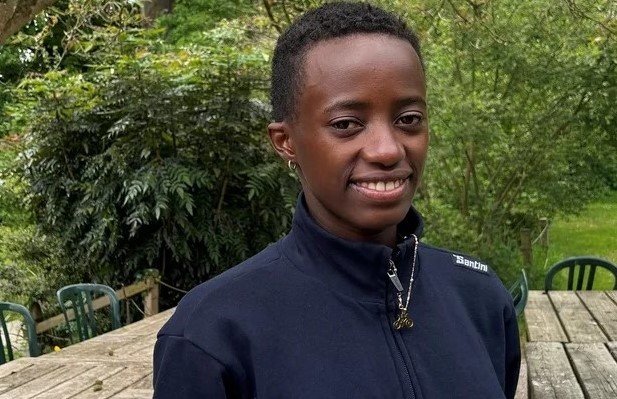
The WCC unveiled its 10-rider roster earlier in the day, with half of the places going to African athletes. Algeria’s Nesrine Houili, Georgette Vignonfodo of Benin, Ethiopia’s Serkalem Taye Watango, Mauritius’ Lucie de Marigny-Lagesse and Rwanda’s Jazilla Mwamikazi will all compete at Continental level in 2026.
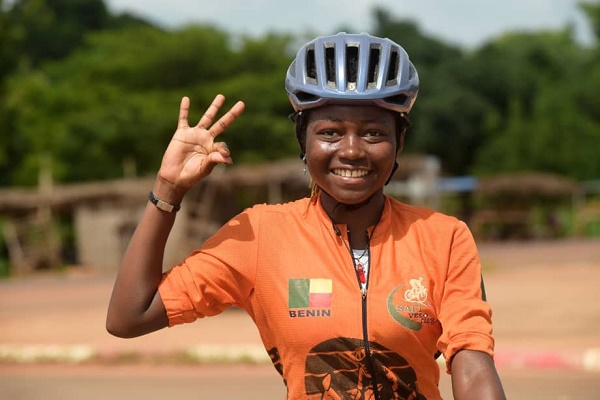
For Vignonfodo, the announcement carries historic weight. She becomes the first cyclist from Benin to earn a contract with a professional team.
“This is genuinely ground-breaking,” said Jeremy Ford of the non-profit organization Africa Rising. “These five women have already shown they can compete at UCI level. Seeing them named to a professional team is a huge moment; not just for their careers, but for African cycling as a whole.”
Georgette Vignonfodo of Benin pictured after her breakthrough season. Credit to coach Adrien Niyonshuti OLY, whose work over the past three years has helped drive Benin cycling forward. Courtesy photo
Jeremy believes the impact of the selection will stretch well beyond the riders themselves.
“This is a real investment in African women’s cycling,” he said. “Having athletes from all corners of the continent on one team sends a powerful message. Young girls across Africa can now see a pathway that simply didn’t exist before.”
He also highlighted a striking shift within the sport: African women are now outperforming African men in one key area, with twice as many women’s national champions currently riding on professional teams.
“For decades, cyclists from outside Europe had very limited chances of making it at the top level,” Jeremy said. “For African women, those opportunities were almost non-existent.”
Across much of the continent, domestic racing calendars remain thin, funding is scarce, and the support systems many European riders take for granted; regular competition, professional coaching and structured teams; are often missing.
The World Cycling Centre’s women’s team was created in 2018 to help close that gap. Its aim is to identify talent from emerging nations, provide elite-level support and, crucially, give riders the visibility they need to progress; something African women have often lacked, even within their own federations.
The naming of five African riders to the 2026 squad stands as one of the clearest signs yet that those efforts are beginning to reshape the landscape of women’s cycling.