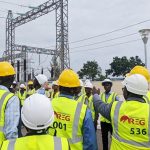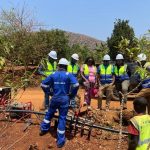
On February 11, 2026, Water for People gave water meter testing machines to WASAC Group, Rwanda’s Water and Sanitation Corporation in a move aimed at reducing water losses and improving billing accuracy across 10 districts.
The machines will be used by 13 private operators that manage rural water supply systems. They allow technicians to test whether customer water meters are accurately recording consumption.
A water meter is considered faulty if it records significantly more or less water than actually flows through it. Inaccurate readings can lead to financial losses for both WASAC and customers, since bills are based on meter measurements.
The new equipment includes a reference meter used to verify others. Technicians connect both the reference meter and the customer’s meter to the same tap, run water through them and compare the results. If the difference between the two readings exceeds 5%, the meter is deemed defective.
Meters that over-record by more than 5% can cause customers to be overcharged. Those that under-record by the same margin can result in revenue losses for WASAC.
The machines, valued at about 14 million Rwandan francs (roughly $11,000), will be deployed in Rwamagana, Kayonza, Ngoma, Kirehe, Nyagatare, Ruhango, Nyanza, Nyamagabe, Ngororero and Nyabihu districts.
WASAC spokesperson Robert Bimenyimana said the utility previously had limited capacity to test meters. “The available machines were not enough compared to the demand,” he said. Faulty meters identified through the new testing process will be replaced.
Water for People said a study conducted in the districts where it operates found that water worth more than 3 million Rwandan francs is lost each month due to substandard meters.
Eugène Dusingizumuremyi, country director of Water for People Rwanda, said the machines are relatively inexpensive compared with the value of water they will help recover, allowing costs to be recouped quickly.
WASAC aims to reduce non-revenue water — currently at 37% — to 25% by 2030 through pipeline repairs, infrastructure upgrades and improved meter accuracy.