In Kirehe District, development is rarely announced with fanfare. Instead, it is shaped in measured discussions in modest office doors, guided by data, field visits, and close engagement with communities. At the heart of this steady progress is the District Council, an institution charged with shaping policy, enforcing accountability, and ensuring that governance responds to the lived realities of citizens.
According to the Chairperson of Kirehe District Council, Prof. Callixte Kabera, the council serves as the backbone of oversight at the district level. Made up of 17 members, it monitors the performance of the executive committee while defining policy directions that underpin Kirehe’s long-term transformation.
“Our responsibility is to keep people at the center of development,” Prof. Kabera observes. “Social transformation is not an abstract concept. It is reflected in whether services reach households, livelihoods improve, and governance responds to real needs.”
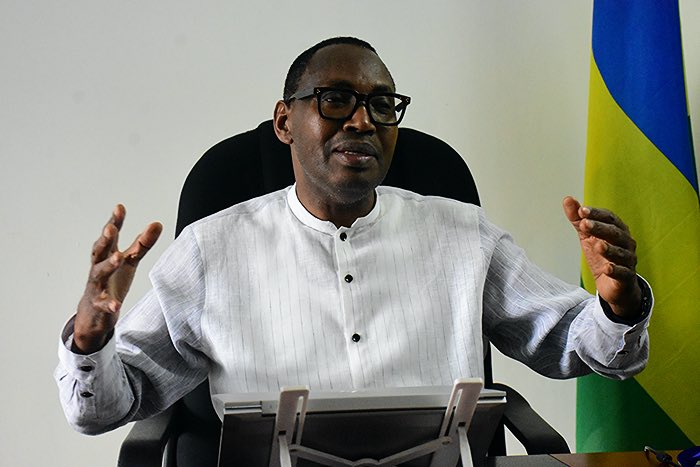
Chairperson of Kirehe District Council, Prof. Callixte Kabera
To deliver on this mandate, the council operates through three standing commissions covering economic affairs, social development, and governance. But decision-making does not stop at policy formulation. Council members routinely conduct field visits to assess projects firsthand, engage residents, and evaluate whether plans are translating into tangible change.
“We do not govern from a distance,” Prof. Kabera emphasizes. “If transformation is to be meaningful, we must see it on the ground and hear directly from the people.”
This hands-on approach also defines the council’s working relationship with the district’s executive leadership. Regular coordination meetings with the mayor, vice mayors, and the executive secretary ensure alignment across all administrative levels, from village assemblies to sector councils and district headquarters.
One of the council’s most critical roles is monitoring the district’s performance contracts, locally known as Imihigo. Reintroduced nationally in 2006, Imihigo is Rwanda’s unique accountability framework under which government institutions publicly commit to development targets and are rigorously evaluated on results that improve citizens’ lives.
In Kirehe, progress reports are closely scrutinized and followed by field verification and audits. “Reports matter, but reality matters more,” Prof. Kabera notes. “When gaps appear, accountability must follow.”
The results reflect this discipline. In the 2024–2025 fiscal year, Kirehe District achieved an overall Imihigo score of 78.68 percent, earning a 14th-place ranking nationwide in assessments conducted by the Ministry of Local Government and the National Institute of Statistics of Rwanda. Momentum has continued into the current fiscal year, with the district posting a 96.8 percent achievement rate in the first half of 2025–2026.
Modeste Nzirabatinya, the Vice Mayor in charge of economic development sees the district at a critical point of transition. While governance provides the framework, he says economic development is shaping Kirehe’s future on ground.
“Kirehe aims to become an economic hub,” he said. “That requires strategic investment in irrigation, water, energy, urban development, and trade.”
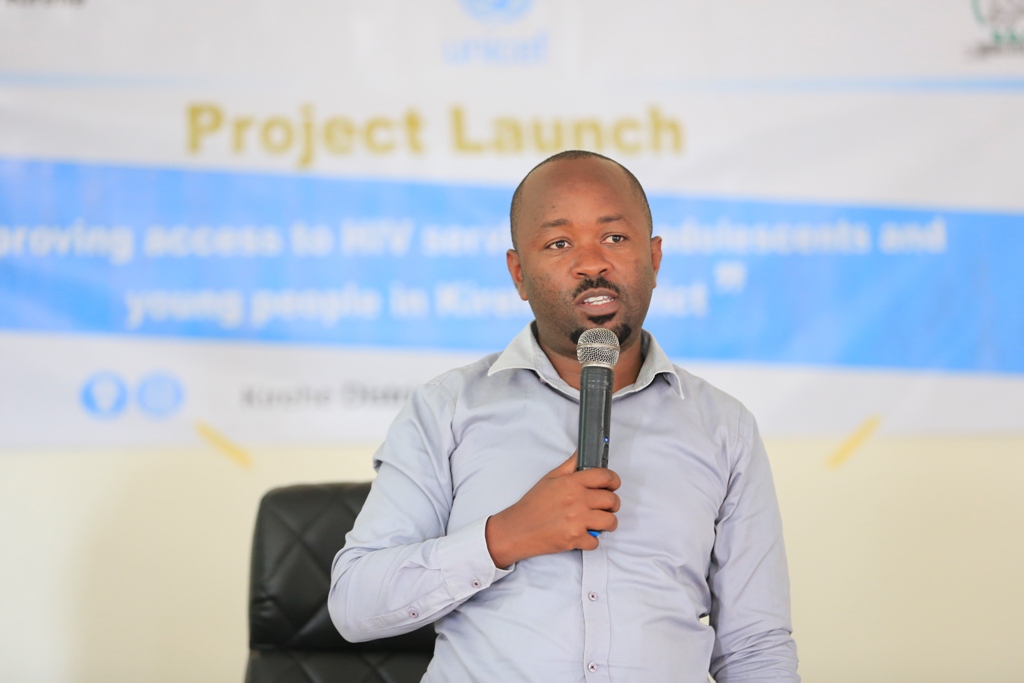
Modeste Nzirabatinya, the Vice Mayor in charge of economic development
Despite recurring droughts, the district is harnessing its lakes and rivers to expand irrigation, particularly in Nasho and Mahama. Supported by national programs and environmental partners, these initiatives have already brought agricultural land under irrigation, strengthening climate resilience and improving incomes for hundreds of cooperative members.
Access to basic services remains a priority. Water coverage stands at about 80 percent, while electricity access has reached roughly 70 percent of households. The district has set a goal of universal access by 2029, supported by plans for a new water treatment plant and expanded rural electrification expected to connect thousands of households by 2026.
“Electricity changes everything,” Nzirabatinya said. “It creates jobs, supports businesses, and opens space for innovation.”
Urban growth is guided by Kirehe’s newly approved master plan, which designates Nyakarambi as a city, supported by emerging urban centers such as Nasho and Kiyanzi. The plan emphasizes orderly land use, environmental protection, and expanded tree planting.
Beyond infrastructure, the district is also leveraging culture and nature as economic assets. In partnership with Rwanda Development Board (RDB), Kirehe is promoting Imigongo art through local cooperatives, while positioning its lakes, forests, and historical sites as emerging tourism destinations.
For both the District Council and the executive leadership, the message is consistent: development must be inclusive, accountable, and rooted in local realities. In Kirehe, progress may be quiet—but it is deliberate, disciplined, and increasingly visible.