Eugene Rwibasira, a prominent Rwandan farmer from Eastern Province, confessed that high post harvest losses where most of the produce is sold as rejects and the growing number of middlemen in the avocado value chain remain some of key challenges for growers in Rwanda to take full advantage of the market benefits and contribute to a more sustainable agricultural system.
Now a proud owner of several hectaresof avocado farm in Kayonza district, Eastern Rwanda, said the tropical fruit is already earning him a sustainable income, despite some challenges still impacting yields and profitability especially in rural areas.
Rwibasira who was speaking during the first Rwandan Avocado Symposium which took place in Kigali, Rwanda, earlier this month, stressed that avocado fruits are susceptible to food loss and waste in Rwanda due to their high moisture content and perishable nature.
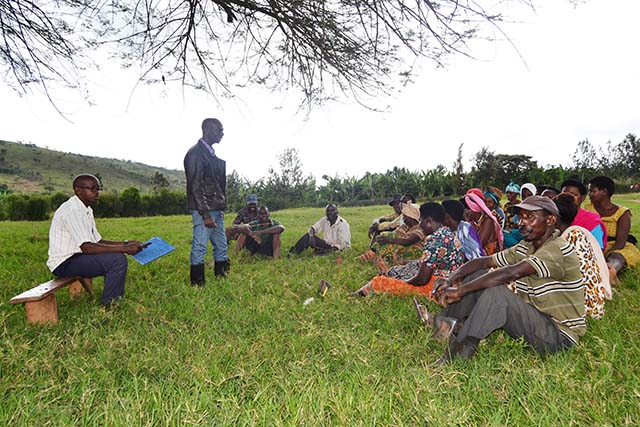
The two-day symposium attracted about 200 representatives of avocado farmers’ cooperatives, industries and representative of Government agencies, under the theme of “Transforming Rwanda’s Avocado Sector Through Technology, Finance, and Global Standards.” (Credit: Avocado Society of Rwanda)
“The adoption of traceability in the value chain, sustainable packaging practices, and innovative storage and distribution methods is crucial facilitate access to markets with stringent sustainability standards,” Rwibasira said.
For avocado farmers in Rwanda like him aiming to sell their produce internationally, meeting strict safety, sustainability, and quality guidelines is crucial.
Investment opportunities in the value chain
Estimates by Rwanda Development Board (RDB) show that several horticulture products present excellent opportunities in Rwanda, driven by strong demand in high-value export markets.
Investment opportunities in avocado include such as expanding commercial avocado orchards (Hass variety), processing plants for value addition pack-houses, export business and logistics and agri-export value chain services.
According to Frank Namara, the Marketing and Crops Value Chain Specialist at RDB, the Government of Rwanda is currently looking for investors to invest in a processing plant for value addition, pack-houses and offtake.
“Processing raw avocado products into value-added products, enhancing their marketability and shelf-life will play a crucial role in the value addition and export of these commodities,” he said.
Latest estimates by the National Agricultural Export Development Board (NAEB) show that the avocado market is expanding rapidly with a percentage rate of 6%–7% globally by 2025.
NAEB figure indicate that exports rose from about 840 tons valued at US$840,500 in 2019/20 to more than 4,201 tons generating over US$8.6 million in 2024/25. Avocados’ share of Rwanda’s total horticultural export revenues increased from 2.93 per cent to over 10 per cent over the same period.
Official data show that Rwanda has currently a total of 9,654 avocado farmers managing 549,074 trees, of which 73 per cent are Hass and 27 per cent Fuerte.
According to Peace Kabanyana, the Regional and International Market Development Specialist, the country is now focusing on leveraging blocs like the EAC, COMESA and AfCFTA to boost agricultural exports for avocado commodities, attract investment in food processing, horticulture, and value addition.
Orchard in Kayonza district, Eastern Rwanda which covers an area of more than 1000ha, planted with trees including, 100,000 avocado (Credit: RDB)
Export destinations include the United Arab Emirates, Belgium, Spain, Saudi Arabia, the United Kingdom, Germany, France, the Netherlands, and Qatar. Around 90 per cent of exports currently go to the UAE, with smaller volumes shipped to Europe or sold through cross-border trade. While air freight remains dominant, exporters are testing sea freight to reduce costs.
High value crop
During the symposium, Pacifique Nshimiyimana Chairperson of the Avocado Society of Rwanda (ASD) highlighted that the gathering yielded a broad set of actionable recommendations aimed at addressing several challenges within the avocado value chain, including standards compliance, investments, farmer’s empowerment, disease prevention and Access to Finance.
He also emphasized that reforms aimed at empowering local avocado farmers will continue to be a priority in order to build a resilient avocado value chain.
The crop has increasingly become a high value crop in Rwanda due to its nutritional value, and usage in the cosmetic industry, as various research indicates.
The most common avocado varieties in Rwanda include Hass, Fuerte, Booth, Nabal, and Puebla, each suited to different agro-climatic zones across the country.
However, Hass remains the most lucrative variety in the export market, primarily due to its longer shelf life and prolonged harvesting season.