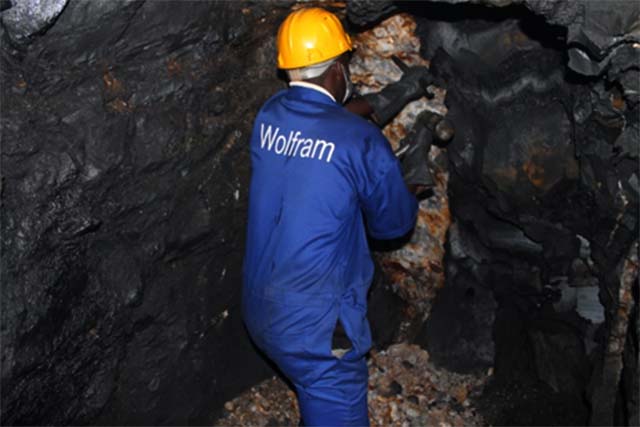
Nearly eight in 10 miners in Rwanda’s tin, tantalum, and tungsten sector work without pensions, health insurance, or retirement benefits, a survey by the Rwanda Extractive Workers’ Union (REWU) shows. Many are casual laborers, paid only for the minerals they extract, leaving them vulnerable to poverty if injuries or age force them out of the mines.
Rwanda’s mining sector has surged in recent years, with mineral export earnings rising from about US$373 million in 2017 to approximately US$1.7–1.75 billion in 2024, according to data from the Rwanda Mines, Petroleum and Gas Board (RMB). The growth reflects increasing global demand for tin, tantalum, and tungsten, minerals used in electronics and aerospace industries. Yet despite this boom, many miners struggle without pensions, health coverage, or other social protections.
Jean, a miner near Rulindo district with more than 10 years’ experience, says he has never seen a payslip showing pension contributions. “No one explained where the contributions go,” he said. “When I asked, I was told it’s handled, but I remain unconvinced.”
Joseline Mukamurenzi, trained through REWU’s Recognition of Prior Learning program, said certification improved her career confidence but did not guarantee employer compliance. “I now feel more confident in my career, but I’m unsure whether my company will make the required contributions to my pension,” she said.
Rwanda’s labor law guarantees social security for all employees. Law n° 027/2023, amended from Law n° 66/2018, mandates that workers including informal and subcontracted employees should receive health insurance, pension contributions, and welfare benefits. Law N° 05/2015 on pension schemes reinforces coverage for all employees, regardless of nationality, contract type, or wage level.
Despite these legal protections, enforcement remains weak in the 3T mining sector. REWU found that while formal workers face an 8% social security deduction split between employer and employee, casual and piece-rate workers often receive nothing.
Union Advocacy and Skills Certification
REWU has more than 22,000 members of roughly 92,000 miners in Rwanda and works to extend formal employment protections to informal workers. One major initiative is the RPL program, implemented with the Rwanda TVET Board and Belgian Development Agency (Enabel) Rwanda.
The RPL program certifies miners who acquired skills informally, helping them transition to formal jobs with health coverage, pension contributions, and written contracts. Over 3,000 miners have been certified to date.
The union has also negotiated collective bargaining agreements with mining companies, securing formal contracts, minimum daily wages, and pension contributions for more than 5,000 miners. Still, roughly 66% of miners remain without formal social protection, according to REWU.
“Certification creates trust with employers and secures work contracts and better pay,” said Engineer Andre Mutsindashyaka, REWU secretary-general. “We aim to increase these numbers and improve delivery so more miners benefit from pensions and healthcare.”
Mutsindashyaka notes that REWU has also been instrumental in pushing for fairer wages and better working terms.
“Previously, miners who didn’t find minerals were not paid, it was a form of exploitation. Now, with support from MIFOTRA and employers, we’ve agreed on a daily incentive of Rwf1,500 even for workers who fail to find minerals. This helps reduce poverty and promote fairness in the sector.”
Government Oversight
The Ministry of Public Service and Labour (MIFOTRA) enforces labor laws in the mining sector. Patrick Kananga, chief labor and decent work administrator, said 296 mining and quarrying establishments were inspected over the past three years for social security compliance. The average compliance rate was 63.1%, leaving 36.9% non-compliant.
Annual inspections cover more than 1,000 formal and informal establishments. MIFOTRA also conducts joint inspections with the Rwanda Social Security Board, focusing on social security contributions and occupational safety. Violations are penalized under Article 120 of Law n° 027/2023, and awareness campaigns aim to educate employers and workers about their rights.
“The informal nature of some establishments affects adherence,” Kananga said. “Some employers do not yet connect compliance with productivity, and a broader culture of labor standards compliance still needs development.”
Private Sector Support
The Private Sector Federation (PSF) works with mining companies, local governments, and trade unions to encourage voluntary enrollment in social protection schemes, including RSSB and the Ejo Heza long-term savings program.
PSF provides training and advisory services to help companies comply with social security obligations. Leon Pierre Rusanganwa, Health Program Coordinator at PSF said informality is a major barrier. “Most mining workers are informal, and since adherence to RSSB and Ejo Heza is voluntary, many neglect to contribute,” he said. “Through collaboration with local governments, associations, and unions, we encourage both formal and informal miners to understand the importance of saving for their future.”
Trade Union Advocacy
The Congress of Trade Unions of Rwanda (CESTRAR) focuses on workers’ welfare, occupational safety, and social protection for informal and vulnerable workers.
CESTRAR works with REWU and other stakeholders to promote access to social security for casual and piece-rate workers, enforce minimum wages, and improve pay equality and safety measures. The union also lobbies for stronger enforcement of labor laws and policy reforms.
Programs like RPL help miners gain formal recognition for their skills, bridging gaps in access to social protection. Certification and formal contracts help miners earn fair wages while gaining health insurance, pensions, and other benefits.
Challenges Remain
Despite progress, major challenges persist. Informal employment dominates, leaving most miners outside social security schemes. Only 4.4% of enterprises are registered with RSSB. Awareness among workers and employers about social protection rights and obligations remains low.
Complex subcontracting arrangements make enforcement difficult, and limited reporting on contributions hinders monitoring. Without improvement, millions of hours of mining labor risk going uncompensated in terms of pensions, health coverage, and welfare benefits.
Progress and Impact
There are signs of improvement. REWU has formalized employment for thousands of miners and continues to expand RPL certification. MIFOTRA conducts regular inspections and penalizes non-compliant companies. PSF provides advocacy, training, and advisory support to improve voluntary social protection enrollment. CESTRAR maintains pressure on employers and policymakers to ensure fair wages and occupational safety.
Collective bargaining agreements, minimum wage regulations, and mandatory health insurance have created pathways to formal coverage. These examples show that collaboration among unions, regulators, and the private sector can deliver tangible results.
Rwanda’s mining sector is a story of contrasts: rapid export growth alongside fragile social protection for the laborers who extract the minerals. Legal frameworks, programs like RPL, and union advocacy provide a foundation, but enforcement gaps, limited compliance, and low awareness leave many miners exposed.
Sustained commitment from unions, regulators, and the private sector is necessary to ensure that all miners—formal, casual, or subcontracted receive social protection.
For Jean and Joseline, the hope is that the minerals they dig will one day translate into security, dignity, and a stable future above ground.