The government of Rwanda, through the Ministry of Agriculture and Animal Resources and the Ministry of Infrastructure, has announced plans to implement incentives that support smooth importation of items that aim for agricultural transformation using renewable energy to bring down the cost and support agricultural productivity.
Incentives include tax exemption for irrigation items, awarding investors in renewable energy, and facilitating farmers and SMEs in the sector to access low interest rates.
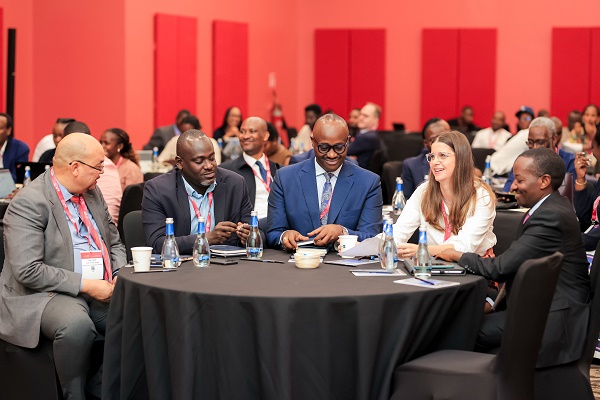
The moves were highlighted during the recently concluded Africa Energy Expo 2025, which ran from 25 to 27 November 2025 in Kigali.
The event was held under the theme “Powering Regeneration, Linking Energy and Agriculture for a Sustainable Rwanda,” and the launch brought together over 100 participants, including government officials, development partners, financial institutions, and private sector leaders.
At the occasion, the government of Rwanda forged the Power for Food Partnership (P4FP) with SNV Rwanda with support from the IKEA Foundation to connect Regenerative Agriculture (RA) and the Productive Use of Renewable Energy (PURE) to drive sustainable, inclusive, and climate-resilient rural transformation.
“We are committed to scaling climate-smart innovations aligned with our national priorities in agriculture, productivity, and climate resilience. Energy and food systems must grow together. Without affordable, reliable, and clean energy, agricultural productivity cannot increase. And without robust, modernized food systems, our rural economies will struggle.” Said Patrick Karangwa, Director General of Agri Modernization at the Ministry of Agriculture.
He noted that by aligning agriculture and energy policies, the country will ensure that farmers have access not only to land and water but also to the clean energy needed for modern, resilient food systems.
According to the Country Director of SNV Rwanda, Eleanor Hartzell, the initiative will essentially support Rwandan farmers to have access to better practices and technologies in agriculture that promote regenerative agriculture.
It will also focus on agriculture that uses natural inputs, restores soil health, and has access to renewable energy.
“It will help Rwandan farmers to produce sustainably and reduce their costs in the long run from using non-renewable energy, as well as produce a better way that’s healthier for the soil, as well as for the farmers and for the consumers that eat food.” He said.
He added that the partnership will help Rwanda reduce its CO₂ credits emissions generation.
Marion Nirere, the Energy Coordinator at the Ministry of Infrastructure, said that the government has initiated the distribution of irrigation systems and AC refrigerators in alignment with promoting productive use of energy.
“We see this as a beginning of what we can do, not just generating energy or providing access to energy, but what we can do for productive use to also benefit and be able to boost the income.” She shared.
Currently, Rwanda has made remarkable progress in energy access, increasing from about 10 per cent in 2010 to over 86 per cent in 2025. Officials said the country aims for 100 per cent universal access by 2029.