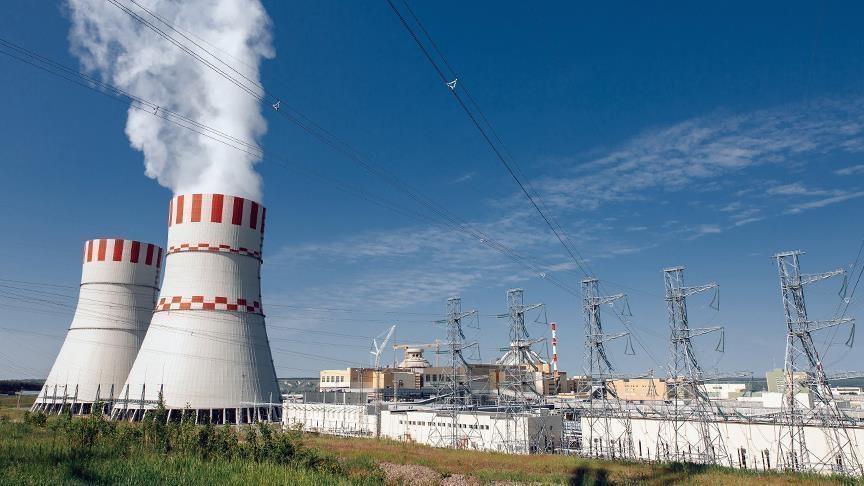
Rwanda is emerging as a continental leader in nuclear energy development, taking bold steps to become one of the first African nations to deploy small modular reactors (SMRs), according to the World Nuclear Association.
Although South Africa remains the only country on the continent with operational nuclear power plants and Egypt is currently building a large-scale facility, Rwanda and Ghana are advancing more rapidly in adopting SMR technology, which offers a smaller, more flexible, and cost-effective approach to nuclear power.
“Rwanda has shown strong leadership,” said Sama Bilbao y León, Director General of the World Nuclear Association, in an interview with Semafor. “President Kagame’s government is very focused on nuclear and has demonstrated clear political will.”
In June, Rwanda hosted a major nuclear energy summit in Kigali, underscoring its commitment to exploring clean and reliable energy options. SMRs, which are quicker to build and easier to integrate into national power grids than traditional reactors, are seen as a viable solution for countries seeking to meet growing electricity demands without relying heavily on fossil fuels.
Bilbao y León praised Rwanda’s efforts but noted that Ghana has also made significant progress, especially in strengthening its regulatory framework, training local professionals, and building international partnerships. Still, Rwanda’s political momentum and regional diplomacy place it among the continent’s most serious players in the nuclear energy space.
Other African countries such as Namibia and Kenya are also exploring nuclear options, while uranium-rich nations like Niger, South Africa and Namibia are pushing to take on greater roles in the global nuclear supply chain — beyond simply mining the resource.
“There’s a clear interest from African countries not just to be passive customers, but to participate fully — from mining to processing and eventually to building their own reactors,” Bilbao y León said.
Globally, more than 20 countries have committed to tripling nuclear power capacity by 2050 as part of clean energy transition efforts. African countries are increasingly viewing nuclear — especially SMRs — as part of that future, offering reliable “baseload” power needed to fuel growing cities, digital infrastructure and industrial expansion.
However, the technology is still in its early stages. China is currently leading the field, with its Linglong 1 SMR expected to begin operations next year — the world’s first of its kind. While SMRs are seen as cheaper and faster to deploy, only time will tell if they can be scaled quickly enough to compete with rapidly falling prices of solar and battery storage.
Bilbao y León acknowledged the challenge: “When we go from building one power plant every 20 years to building 20 each year, that’s when we move from a project to a real program.”
For Rwanda, which continues to push for sustainable development and universal electricity access, nuclear energy could eventually become a key pillar of its energy mix especially as hydropower and solar alone may not be enough to meet rising demand.
The World Nuclear Association says Africa’s energy future may not hinge on a single source, but rather a combination of technologies and Rwanda appears determined to ensure that nuclear plays a part.