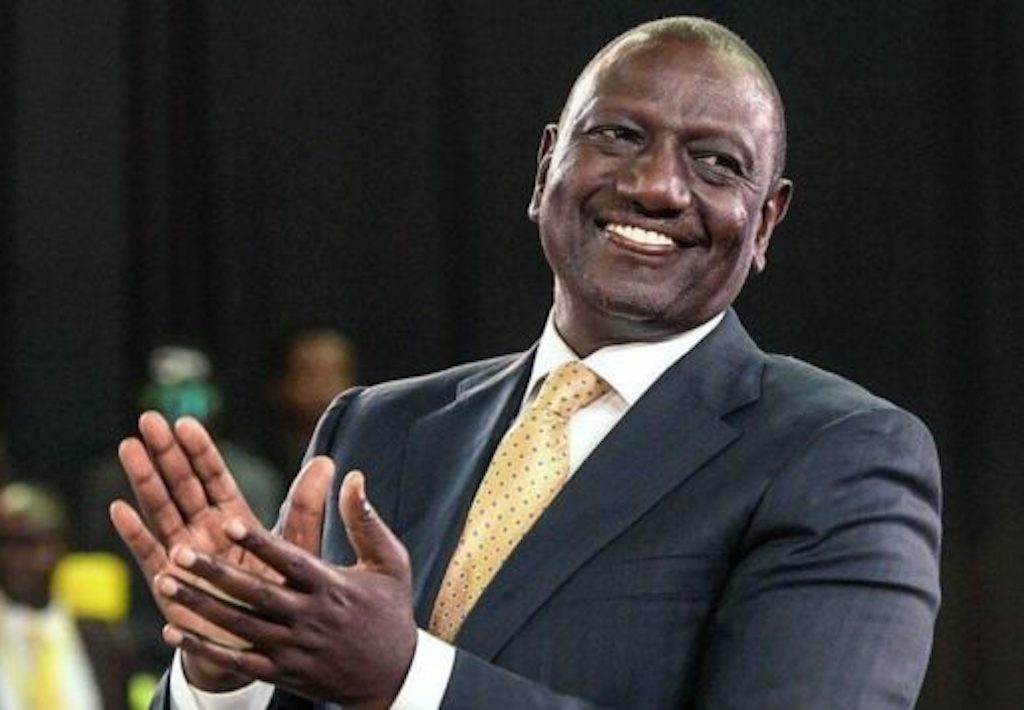
Kenyan President William Ruto has announced that veteran opposition leader and statesman Raila Odinga will be accorded a State Funeral, describing him as one of the founding fathers of Kenya’s multi-party democracy.
Odinga, whose passing was announced this Wednesday morning, leaves behind a towering legacy in the nation’s political history, one marked by reform, and reconciliation.
A five-time presidential candidate, Odinga was known for his fiery campaigns and enduring belief in democratic principles. Despite never securing the presidency, he remained a central figure in shaping Kenya’s political landscape. His frequent court challenges following disputed elections helped strengthen Kenya’s electoral and judicial systems.
One of the most defining moments of his career came after the 2017 general elections, when the Supreme Court annulled President Uhuru Kenyatta’s victory, a first in Africa, and ordered fresh polls. Although Odinga boycotted the rerun, the ruling marked a turning point for electoral justice in Kenya.
In a surprising gesture of unity, Odinga and Kenyatta later reconciled in 2018 through the now-famous “handshake”, easing months of post-election tension and paving way for political stability.
Earlier, in 2007, Odinga’s contested election against then-President Mwai Kibaki triggered one of Kenya’s darkest chapters, as post-election violence claimed over 1,200 lives and displaced hundreds of thousands. A power-sharing deal, mediated by former UN Secretary-General Kofi Annan, saw Odinga become prime minister in a unity government.
Throughout his political journey, Odinga was no stranger to compromise. Following his defeat in the 2022 elections, he joined forces with President Ruto in a “broad-based government,” which brought several of his allies into key positions. Odinga justified the move as vital for national unity after deadly nationwide protests that saw dozens killed in clashes with police.
President Ruto also supported Odinga’s bid earlier this year to become chairperson of the African Union Commission, though he ultimately lost to Djibouti’s Mahmoud Ali Youssouf.
Born in western Kenya, Odinga was revered by his supporters, who affectionately called him “Baba” (Father), “Agwambo”(Act of God), and “Tinga” (Tractor), nicknames that reflected his charisma and political resilience.
A former political prisoner, Odinga spent nearly a decade in detention under President Daniel arap Moi’s regime for his role in opposing one-party rule. His imprisonment and unyielding advocacy for democratic freedoms made him a symbol of resistance and reform.
He was the son of Jaramogi Oginga Odinga, Kenya’s first vice-president, who himself fell out with founding President Jomo Kenyatta, a testament to the Odinga family’s long and complex relationship with power.
As Kenya prepares to lay Raila Odinga to rest with full state honours, tributes continue to pour in from across the continent. Many see his passing as the end of an era, and the beginning of a national reflection on who will carry forward his legacy of defiance, democracy, and dialogue.