The Joint Action Development Forum (JADF) of Muhanga District is a multi-stakeholder platform comprised of members or representatives from the private sector, civil society organisations, the public sector and everyone involved in the development of the district.
This multi-stakeholder platform has a role to coordinate all those different partners working closely with the district to initiate, plan and promote development programs. They discuss ideas to be developed and work together to set annual performance contracts (Imihigo).
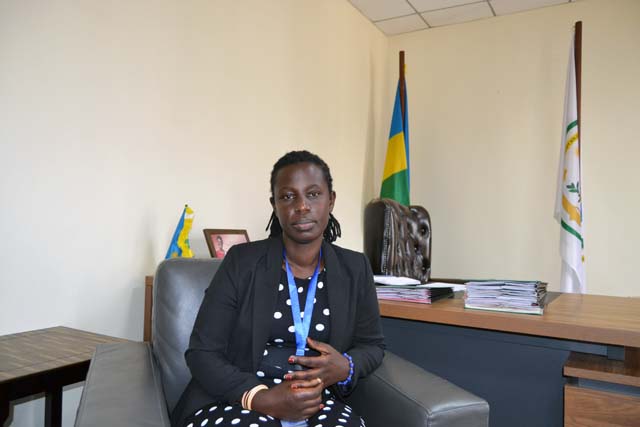
“All these activities we undertake are intended to improve citizen’s lives and accelerate development,” says Prudence Karamira, president of JADF in Muhanga. JADF leads the journey with a target to achieve sustainable development through information-sharing and cooperation among the many actors involved in districts’ socioeconomic development process.

According to Karamira, while there is a still a long way to go, there is already transformative change taking place in our communities but we wish to accelerate development through an inclusive process.
There are methodologies used to have an inclusive process that can lead to sustainable development like involving all stakeholders by conducting joint-planning and consultative meetings between the district and different stakeholders, this also includes citizen participation.
The Mayor of Muhanga District, Jacqueline Kayitare underlines that it’s important to ensure that all concerned parties have a role to play in planning and implementation of IMIHIGO used as a tool to achieve development.
Mayor Kayitare observes that when partners are evaluated they are have found that they are leading a sustainable transformative journey of the community because of involving everyone concerned.
Karamira echoes the mayor’s words that the first role of the platform is work closely with the district in identifying challenges on a daily basis, there are different committees that look into those challenges as the first step of solving them and partners connect them with their beneficiaries.
He emphasizes the role of JADF saying that no one person can achieve development but working together with different partners is the only way to realise positive change in the lives of the community. Each and everyone has a role to play but joint action is the first thing that will help us.
Muhanga is experiencing a transformational change when you see how the district is changing, infrastructures development is improving for example the construction of buildings, roads around the town, electricity, water, housing settlement is spreading out and the increase in economic activities.
Juvenal Kimonyo, the Chairman of Private Sector in Muhanga attributes the changing face of Muhanga town to joint partnerships in undertaking big infrastructure developments. He says that before businessmen used to work alone but since people started working jointly much has been achieved.

Kimonyo gives an example of infrastructures that have been undertaken like Muhanga taxi park constructed by RFTC, a transport cooperative in partnership with the district and other big buildings changing the look of Muhanga’s skyline.
One massive structure is the modern market building under construction by the business community under Muhanga Investment Group (MIG) and the district. MIG owns about 85% of the project worthy over 4 billion while the district has invested 15% into the venture.
When completed this modern market will house all those that have been operating in the old market and MIG is ready to take over other ventures to develop Muhanga.
Investing in Muhanga is also changing as more investors are attracted to the district because of the potentials available, for example in the 12 sectors of the district 11 sectors have mining activities. Before there was a challenge of local businessmen migrating to Kigali but today most have come to believe that the same opportunities are available in Muhanga.
The head of the business community in Muhanga emphasizes that the district has been supportive in creating a conducive environment for businesses to operate and thrive.
The same has been done in other sectors to create a favourable climate in Muhanga where the district has invested massively to uplift its residents out of poverty and particularly transform the main town into a city that provides solutions for residents as well as guests.
Improving citizen welfare
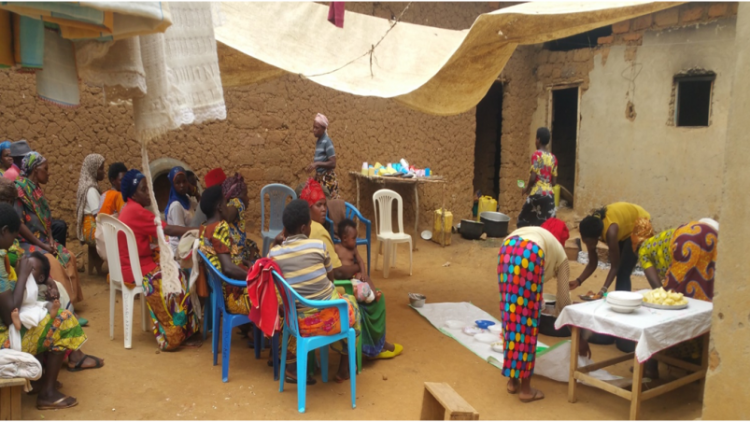
The president of JADF explains that government stipulated the needs and challenges to its partners to support the communities mainly in the rural areas. In areas like Ndiza where there was lack of hygiene, malnutrition and people living in high risk zones, partners agreed to change this by improving such cases for each and every one of their beneficiary.
Hygiene has been improved and this has been part of health targets done through awareness campaigns and sensitization. Stakeholders have had a role in increasing health facilities and sensitizing citizens on Community Based Health Insurance Scheme (CBHI) which has increased to 81%.
Malnutrition and stunting has reduced among Children under 2-years to 32% as well as acute malnutrition in under five years children. This was achieved through sensitizations, increase of home-based ECDs under TUMURERE NEZA Model and encouraging households to plant fruit trees to complement initiatives that fight malnutrition.
Improving settlements is another important target for the district, for urban settlement a new city master plan will soon be launched as it has reached 96% while rural settlements are improved and households living in high risk zones are relocated to integrated viable settlements.
Previously, Muhanga inaugurated Horezo model village in Ruhango, Rongi sector in Ndiza mountains resettling there 116 families from high risk areas. In the financial year 2019-2020, 33 households were relocated from scattered and high risk zones, 121 houses for vulnerable households were constructed, 349 houses rehabilitated and 7,207 toilets rehabilitated.

provision of basic services like here in Horezo model village in Ruhango, Rongi Sector.
The vulnerable residents of Muhanga are also supported through core social protection programs, in Imihigo FY2019-2020 VUP Direct Support (DS) benefited 3,050 households, 2,626 households beneficiaries employed under Classic Public Works (cPWs) and 48 households beneficiaries employed under Expanded PWs.
The Girinka program has also benefited many poor families increasing access to complementary livelihood to enhance their economic empowerment as well as other social protection programs and different stakeholders have played a big role in these achievements.
Karamira notes that poverty is still prevalent but declining and the welfare of communities in Muhanga is improving every day. He says that the decline can be seen where family’s welfare are improved and those supported to overcome challenges like malnutrition don’t backslide but maybe new cases sprout from other families.
The role of partners and families in stamping out malnutrition and stunting is one of the factors seen to judge the impact that stakeholders are improving people’s welfare.
JADF commits to continue drive forward the district development agenda together because different stakeholders especially NGOs have work that is based on existing community realities while the private sector fall on both sides of the aisle.