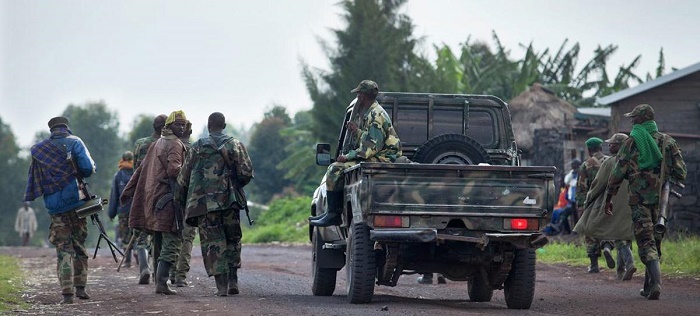
The AFC/M23 rebel group fighting against the government of the Democratic Republic of Congo (DRC) has denied reports that it is withdrawing from its positions, stating instead that movements observed on various front lines are part of routine “troop rotations.”
In a statement shared late Saturday on X, spokesperson Lawrence Kanyuka said “The activity observed across different front lines is only part of normal and tactical military rotations of M23 military units.”
“These are simply normal and tactical troop rotations,” he explained
Kanyuka added that the group remains committed to respecting “confidence-building measures within the Doha peace process” and emphasized its intention to “protect civilians” while remaining ready to “eliminate any threat wherever it comes from.”
The DRC government has not issued an official response to M23’s latest claims. A spokesperson for the DRC army told BBC News via text message that they had no comment on the matter.
M23’s statement follows reports earlier this week from some DRC-based media outlets suggesting the group had been retreating from certain positions in North Kivu province or relocating its fighters.
Midweek reporting by Radio Okapi, a United Nations-supported broadcaster in the DRC, cited local officials and residents who reported that M23 fighters had moved out of some areas in Lubero territory during the night from Monday into Tuesday. The fighters were said to have occupied those positions for more than a year.
But while attention remains on the battlefield, pressure is also building internationally, particularly on Rwanda.
The United States has recently imposed sanctions on the Rwanda Defence Forces (RDF), and four of its senior military officials, accusing them of directly supporting M23 operations in eastern Congo.
According to U.S. officials, that support includes training, equipment, and even active involvement in combat alongside the rebel group, claims Rwanda has consistently denied.
The measures go beyond financial restrictions. Washington has also introduced visa restrictions targeting senior Rwandan officials, signaling a broader diplomatic push to increase pressure.
According to Erik Kennes, a Senior Research Fellow at the Egmont Institute, the shifting alliance between Washington and Kinshasa ‘led to the issuing of important new US sanctions against the Rwandan Defense Force and Rwanda’s military leadership’
Kennes notes that a common failure in regional agreements is the ‘lack of implementation once the military threat is over, because of the absence of a sanctioning mechanism, more specifically of the non-military aspects including local reconciliation’
Crucially, these sanctions are now entering a new phase. A wind-down period for existing transactions is set to expire staring April 1, after which the restrictions are expected to fully take effect, potentially tightening the squeeze on Rwanda’s military and its international dealings.
On Thursday, during a United Nations Security Council meeting, Massad Boulos, senior adviser on Africa to U.S. President Donald Trump, reiterated calls for Rwanda to remove what he described as “defensive measures,” withdraw its troops from DRC territory immediately, and respect the country’s sovereignty.
Boulos also stressed the need for the DRC government to dismantle the FDLR rebel group in areas under its control, describing this as a key step toward addressing ongoing security concerns and regional instability.
Reports from UN experts, the DRC government, and several Western countries have accused Rwanda of supporting M23 through training, troop deployments, equipment, and strategic guidance.
Rwanda has denied these allegations, stating that its actions are purely defensive. It has also accused the DRC government of cooperating with the FDLR rebel group, which operates within DRC territory, an accusation the DRC denies.
M23 currently controls significant parts of North Kivu and South Kivu provinces, including the cities of Goma and Bukavu.
Boulos also referenced a peace agreement signed in Washington in December last year between DRC President Félix Tshisekedi and Rwanda’s President Paul Kagame, facilitated by President Trump. He described the agreement as “a very important step forward” demonstrating both sides’ commitment to resolving their differences.
In a message posted on X, Boulos highlighted the ongoing hardships faced by “millions of people who have long been deprived of peace, security, and economic opportunities.”
Conflict in eastern DRC has escalated again since late 2021, continuing a pattern of instability that has persisted for nearly three decades.