Kigali officials said informal housing remains a major challenge in the capital, despite a steady decline over the past decade, as the city pushes for planned development and greater professionalism in construction.
The City of Kigali said 40.1% of residents live in informal settlements, down from 62% in 2012. Mayor Samuel Dusengiyumva shared the figures while speaking to members of the Association of Building and Public Works Companies in Rwanda, urging collaboration to end unplanned housing.
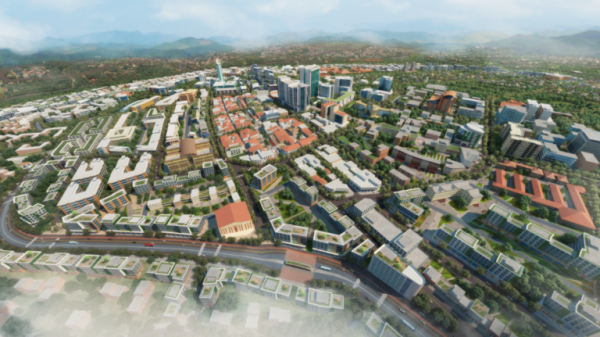
Dusengiyumva said the city has a large housing program planned under its master plan to build new homes and provide better housing for residents. He cited National Institute of Statistics of Rwanda data showing that Kigali needs 187,000 additional housing units by 2029 to address affordable housing demand and reduce informal settlements.
“The goal is to increase housing stock so city residents can live in decent conditions,” Dusengiyumva said. He added that the growing housing demand presents major opportunities for local builders.
He noted that 80,000 people applied for construction permits in 2024, indicating a widening market of people with funds to build. He urged contractors to work professionally and closely with homeowners, warning that errors often arise when projects are left solely to workers without proper supervision.
AEBTP President Sadate Munyakazi said the construction sector suffers when builders are listed on permit documents but do not supervise work on site. He called for accountability and said the association would impose penalties, including removal from the approved contractor list, for those found violating professional standards.
Infrastructure Minister Jimmy Gasore said the construction sector is a key driver of national development, contributing about 7% of Rwanda’s gross domestic product. He called for stronger cooperation between the government and private contractors to improve service delivery and remove obstacles facing the industry.
The Association of Building and Public Works Companies in Rwanda, founded in 1997, represents contractors across the country’s construction sector.