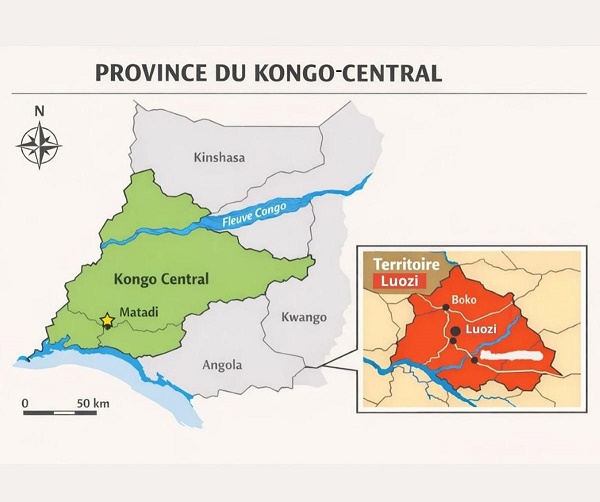
A disease of unknown origin has struck the Mangembo health zone in Luozi territory, Kongo-Central Province, Democratic Republic of Congo (DRC) raising alarm among local health authorities.
According to a preliminary report released on Wednesday, February 18, by emergency health services, the illness primarily affects schoolchildren and has already claimed the lives of five people, including four students.
The provincial health division in Kongo Central Province reports that the outbreak is concentrated in the village of Madimba, within the Bienga health area, situated 59 kilometers from the central office in Mangembo, in the Kenge sector. The first symptoms observed include severe headaches, followed by a rapid loss of consciousness, which in some cases has led to death.
Since January 31, six cases have been recorded. Among the fatalities are four students from Institute 2 Madimba, aged 12 to 18. Another 12-year-old child is currently hospitalized at the Bienga health center, receiving both antibiotic and antimalarial treatment. A community investigation also identified a sixth fatal case: an adult from the neighboring village of Lundu exhibiting similar symptoms.
Health officials are urgently considering the possibility of a bacterial meningitis outbreak, though no formal diagnosis has yet been confirmed. Authorities are calling for rapid action to identify the causative agent, contain the spread of the disease, and protect schoolchildren and other residents in the affected areas.
Local health sources have told UN sponsored radio Okapi that the response has been complicated by several challenges, including a shortage of medications, lack of ambulances to transfer critical patients to Mangembo General Referral Hospital, and limited communication due to poor network coverage in this remote area.
In response to the crisis, authorities are emphasizing the urgent need for medical and logistical support to prevent further fatalities and contain the outbreak.