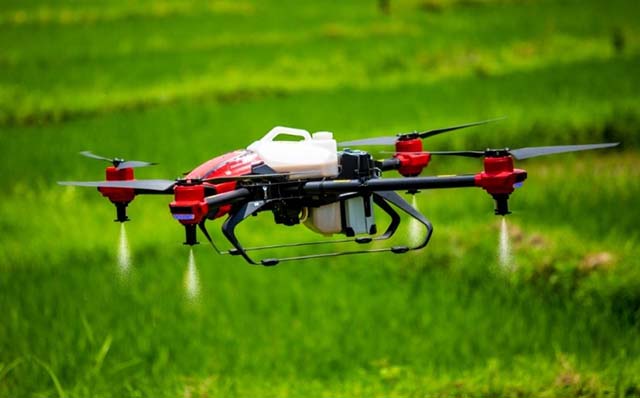
Charis UAS Ltd, a Rwandan company specializing in civil drone services for agriculture and health, has partnered with the Rwanda Biomedical Centre (RBC) and GIZ to launch a new drone-based initiative to fight malaria. The program was officially launched on Friday in Ruhuha Sector, Bugesera District.
The initiative follows successful trials in Kigali since 2020. Bugesera, one of the districts with the highest malaria cases in Rwanda, recorded 6,386 cases in 2025, ranking third after Gasabo and Kicukiro districts in Kigali. Nationwide, over 90,000 malaria cases were reported in July alone.
The high incidence in Bugesera is largely attributed to the numerous swamps that provide breeding grounds for mosquitoes. Drones will now be used to spray insecticides directly over these areas.
Residents, like Innocent Harerimana of Ruhuha, expressed optimism about the technology. “Malaria had troubled us for a long time because we live close to swamps where mosquitoes breed. The government helped, but malaria continued to spread. I believe this new technology will help control it in addition to existing prevention methods,” he said.
Bugesera District Mayor, Richard Mutabazi, described malaria as one of the leading causes of illness in the district. He welcomed the addition of drones to the ongoing anti-malaria efforts. “We have traditional prevention methods, but drones will allow us to target mosquito breeding sites in swamps, which are often inaccessible by conventional spraying,” he said.
Dr. Emmanuel Hakizimana, Head of RBC’s Vector Control Unit, said that Ruhuha has long been a focus area for malaria control. “Our 2015 research showed that mosquitoes breed both in rice fields and homes, especially near stagnant water. Previously, spraying these areas was limited. Drones can reach all areas, regardless of rain or sun, improving coverage and effectiveness,” he said.
According to Kamali Karenzi Paul, Program Manager for Malaria Control at Charis UAS, the project will cover four sectors in Bugesera. “We will start in Ruhuha, targeting over 93 hectares of rice field swamps. Drones will significantly reduce the time required to spray areas that would otherwise take a full day by conventional methods to just ten minutes,” he said.
RBC reports that between 2024 and February 2025, 657,365 malaria cases were recorded nationwide. Officials hope that integrating drone technology will strengthen Rwanda’s fight against the disease.