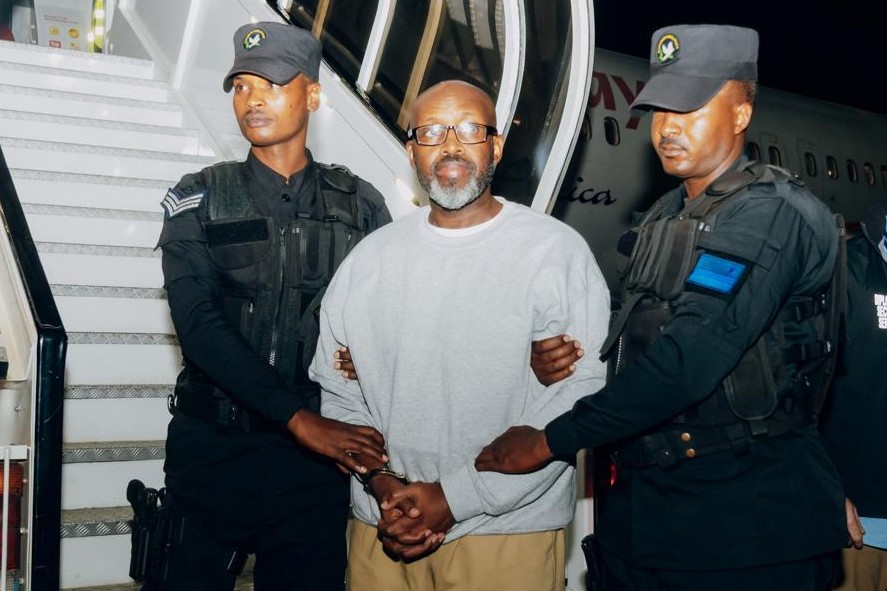
Jean Léonard Teganya, a former medical student accused of involvement in the 1994 Genocide against the Tutsi, has been returned to Rwanda after being deported from the United States, where he was convicted of immigration fraud and perjury for concealing information about his alleged activities during the genocide.
Rwanda’s National Public Prosecution Authority (NPPA) received Teganya on the night of November 9, 2026, following his deportation from the United States, the prosecution authority announced.
Rwanda has sought his prosecution since 2014 over alleged involvement in genocide and crimes against humanity committed in the former Butare Prefecture, now part of Huye District in Southern Province.
His return follows years of legal proceedings in Canada and the United States, where his alleged activities during the genocide became the subject of investigations and a federal criminal trial.
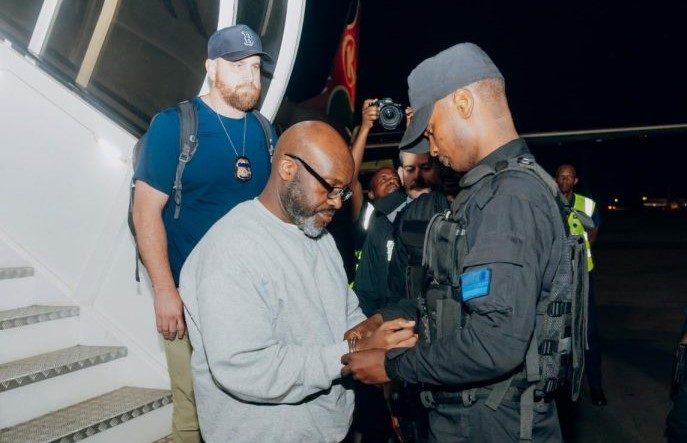
The American case resulted in convictions for immigration fraud and perjury. The genocide allegations, however, remain a separate matter for Rwandan authorities.
Allegations at Butare University Hospital
Teganya was born in Rwanda in 1971 and was a third-year medical student at the former National University of Rwanda in Butare when the genocide began in April 1994. He was also undertaking medical training at Butare University Hospital, now known as Butare University Teaching Hospital.
According to the US Department of Justice, Teganya was a member of the MRND, the political party that controlled the government at the time, and the Interahamwe, its youth militia wing.
Evidence presented during his American trial indicated that he participated in martial arts and weapons training associated with the militia.
US prosecutors said Teganya led groups of soldiers and Interahamwe members through the hospital searching for Tutsi patients and refugees hiding there.
According to evidence presented at trial, people found hiding at the hospital were taken away and killed behind the maternity ward.
The US Department of Justice said evidence presented during the trial demonstrated that Teganya participated in the killings of three Tutsi people at the hospital and four Tutsi students he found in the dormitory where he lived.
The prosecution also presented evidence that he participated in five rapes involving two Tutsi women who had sought refuge at the hospital.
These allegations formed part of the evidence examined during the American criminal proceedings. His convictions in the United States were for immigration fraud and perjury, rather than genocide.
From Rwanda to Canada and the United States
Teganya left Rwanda in July 1994, travelling first to the Democratic Republic of Congo before moving through Kenya and India.
He arrived in Canada in 1999 and applied for asylum.
Canadian authorities rejected his application in 2002. Following further legal proceedings and appeals, his application was rejected again in 2012.
According to US court records, Canadian authorities found that he was not entitled to asylum because of his alleged involvement in atrocities committed at Butare hospital during the genocide.
After years of immigration proceedings, Teganya crossed into the United States from Canada on August 3, 2014.
He was apprehended by a US Border Patrol agent near Houlton, Maine, while walking within a few miles of the international border.
He subsequently applied for asylum in the United States.
In his application, Teganya disclosed that his father had belonged to the MRND but did not disclose his own alleged membership in the party and the Interahamwe. He also denied participating in the persecution of people on protected grounds, according to the US Court of Appeals.
Convicted on five counts in the US
US authorities charged Teganya in August 2017 with immigration fraud and perjury relating to his asylum application.
On September 27, 2017, a federal grand jury in Massachusetts indicted him on five counts: two counts of fraud and misuse of visas, permits and other documents, and three counts of perjury.
His trial lasted 18 days. Teganya testified in his own defence, but a jury found him guilty on all five counts on April 5, 2019.
On July 1, 2019, US District Judge F. Denis Saylor IV sentenced him to 97 months in prison.
The judge also applied an additional sentencing enhancement for obstruction of justice, finding that Teganya had committed perjury while testifying during the trial.
Teganya appealed the convictions and sentence, but the US Court of Appeals for the First Circuit upheld the judgment on May 17, 2021.
The appellate court found no reversible error in the proceedings, leaving the convictions and sentence in place.
Rwanda welcomes US cooperation
Faustin Nkusi, spokesperson for Rwanda’s National Public Prosecution Authority, said Teganya’s return demonstrated continued cooperation between Rwanda and the United States in pursuing people suspected of involvement in the genocide.
He said the two countries were also working together on other cases involving people being pursued by Rwandan authorities in the United States.
Nkusi warned that people suspected of genocide crimes should not believe they can escape accountability by living abroad.
“These crimes do not expire. Everyone has their day,” he said.
He added that Rwanda had issued 1,232 arrest warrants for people suspected of genocide crimes, saying authorities would continue pursuing suspects regardless of where they were living.
In its statement issued on November 9, the NPPA thanked US judicial authorities for their cooperation in returning genocide suspects to Rwanda, providing legal assistance and supporting international efforts to combat impunity.
The authority said the cooperation was important in ensuring that people suspected of committing genocide crimes are held accountable.
Teganya’s return places him back in Rwanda, where authorities have been pursuing a separate case over his alleged involvement in the 1994 Genocide against the Tutsi.
The NPPA’s announcement did not specify the date of his first court appearance or the next procedural steps in the case.