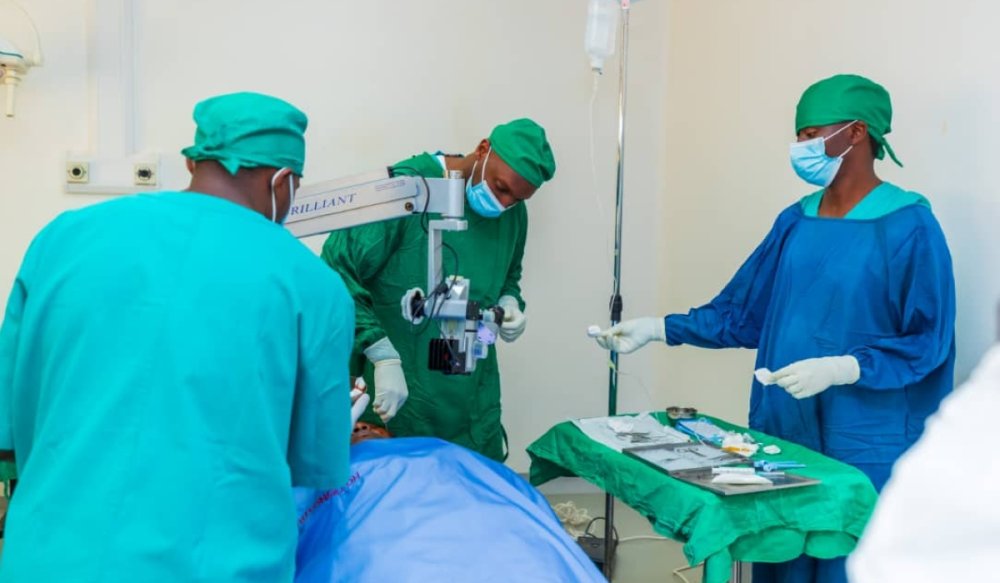
Rwanda’s public health facilities continue to face staffing gaps, particularly among doctors, as the World Health Organization (WHO) warns that the world could be short of 11 million health workers by 2030.
Figures from Rwanda’s Ministry of Health show that, as of December 2025, permanent staff filled 68.4 per cent of approved positions across public health professional groups. General practitioners filled 32.5 per cent of approved posts, while specialists filled 31.9 per cent. Nursing positions had a staffing rate of 78.8 per cent.
The figures measure staffing against approved positions in the public sector, not the proportion of all health workers employed nationally. The ministry has also noted that population growth and the expansion of health facilities are increasing demand for staff.
The staffing challenge reflects concerns raised in WHO’s National Health Workforce Accounts: Health Workforce Levels and Trends 2026. The report says nearly one in four doctors worldwide is older than 55 and expected to retire within the next decade, raising concerns about the loss of experienced professionals as health systems work to meet growing demand.
The retirement estimate is based on data from 122 countries. In high-income countries, nearly one in three doctors is approaching retirement age. The report does not establish the proportion of doctors nearing retirement in Rwanda.
WHO says the global health workforce has expanded substantially over the past two decades. The density of doctors, nursing and midwifery personnel, dentists and pharmacists rose by 52 per cent between 2006 and 2025, from 44.8 to 67.9 per 10,000 people. More than 70 million people now work in health and care worldwide.
However, the growth has not been evenly distributed. WHO reports that the density of doctors in its European Region was 13 times that of the African Region, while the density of nursing and midwifery personnel was six times higher. These disparities underline the difficulties many countries face in building and retaining a health workforce that can meet local needs.
Rwanda has launched its own effort to expand the supply of health professionals. The 4×4 Health Workforce Development Reform, introduced in 2023, aims to quadruple the production of health workers within four years.
In a progress update published in February 2026, the Ministry of Health said more than 16,360 students had enrolled in health professional programmes by December 2025. Residency programmes had increased from 17 to 24, while fellowship training had expanded from eight to 25 subspecialties.
The enrolment figure represents students still in training, rather than professionals already available to fill vacancies. The effect on staffing will depend on students completing their programmes and entering the workforce.
Rwanda’s broader workforce figures provide further context. The Ministry of Health recorded 2,647 medical doctors, 15,664 nurses and 2,226 midwives in June 2024, according to its annual health statistical report for the 2023/2024 fiscal year. A separate WHO assessment published in February 2025 put the country’s density of doctors, nurses, midwives, pharmacists and dentists at 13.4 per 10,000 people in 2022, below national and international recommendations.
Rwanda’s staffing figures show the challenge facing the 4×4 reform: increasing the number of graduates while filling existing vacancies, particularly among doctors.