African countries need to turn registered carbon projects into bankable investments that generate verified credits and deliver benefits to communities, officials and development experts said on Wednesday, October 14, at the Carbon Markets Africa Summit in Kigali.
Rwanda’s Environment Minister, Dr. Bernadette Arakwiye, the chief guest at the summit’s opening, called for stronger cooperation between governments, investors, project developers and international partners to move African carbon markets beyond policy frameworks and project registration towards financing and actual transactions.
“Africa is no longer waiting for opportunity, it is creating it,” Arakwiye said, arguing that the continent had made progress in developing carbon market frameworks and authorising projects but still faced difficulties mobilising finance and ensuring that communities benefit from carbon trading.
The summit, running from October 13 to 15 at the Kigali Convention Centre, has brought together policymakers, investors, carbon credit buyers and project developers to discuss ways to attract capital and expand Africa’s participation in global carbon markets.
Arakwiye identified inadequate project preparation, shortages of technical expertise and limited early-stage financing as major obstacles. Developers often need funding for feasibility studies, emissions baselines, validation and monitoring before projects can attract investors or generate verified credits.
She called for methodologies suited to African conditions, dedicated project-preparation facilities and longer-term demand for high-quality carbon credits.
Tanzania urges focus on bankable projects
Tanzania’s Minister of State in the Vice-President’s Office responsible for Environment and Union Affairs, Hamad Yussuf Masauni, said African countries should prioritise projects that can reach implementation and generate verifiable results instead of measuring progress by the size of their project pipelines.
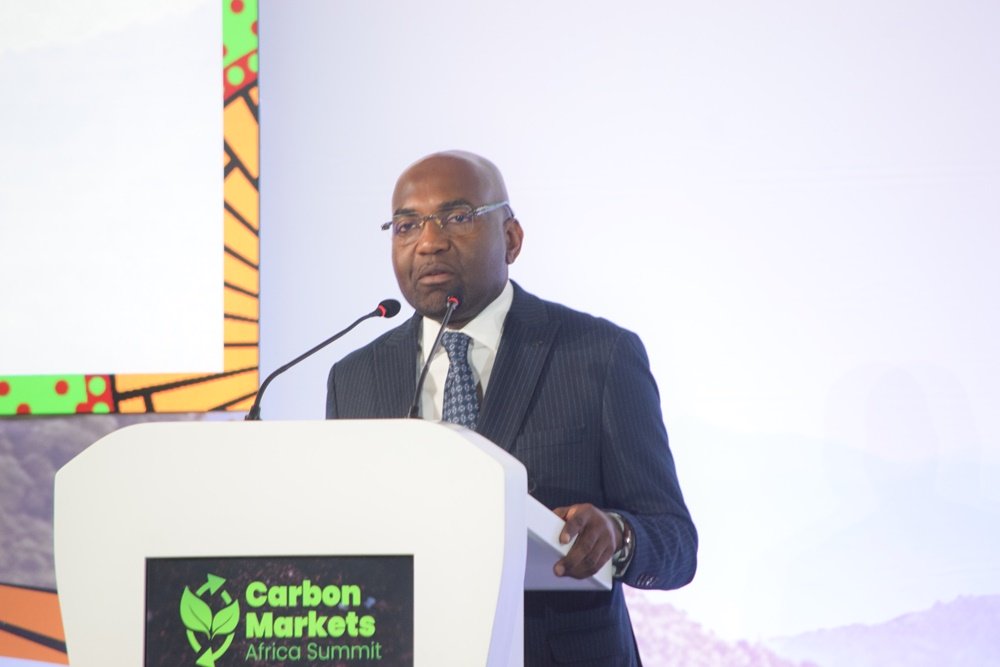
Tanzania had registered more than 170 carbon market projects through its National Carbon Monitoring Centre by mid-2026, he said. The projects cover forestry, clean cooking, renewable energy, waste management and agriculture, as well as emerging blue carbon opportunities.
“It is better to take a smaller number of high-quality bankable projects all the way to issuance and off-take than to celebrate large pipelines that remain on paper,” Masauni said.
He called for stronger partnerships with investors, development finance institutions and international buyers to help projects overcome financing constraints and reach the stage where credits can be issued and sold.
Rwanda considers recycling carbon revenue
Arakwiye said Rwanda was exploring a proposal to channel part of the proceeds from carbon transactions through the Rwanda Green Fund to prepare and pre-finance new climate projects.
The proposal could help developers meet costs incurred before projects become attractive to investors. However, the minister did not announce an approved scheme, a funding allocation or a timeline for implementation.
Rwanda has registered 29 carbon market projects across forestry, agriculture, land conservation, electric mobility, waste management and renewable energy. Despite that range, improved cookstove projects account for about 87% of its issued carbon credits, according to Arakwiye.
The same proportion appears in Rwanda’s official carbon market data based on credits issued through December 2020, so it should not be interpreted as a new assessment of the market in 2026.
Arakwiye called for more investment in renewable energy, electric mobility, sustainable waste management, industrial decarbonisation and nature-based solutions. She also stressed the need for credible verification systems and transparent arrangements for sharing revenue with communities.
Buyers urged to back projects with financing
Maxwell Gomera, UNDP Resident Representative in South Africa and Director of the UNDP Africa Sustainable Finance Hub, called for stronger community consent, predictable government authorisation and funding to cover project preparation and verification.
“Carbon market is not an ideas market. It’s a performance market,” Gomera said, urging financial institutions and buyers to provide early-stage funding and long-term purchase commitments.
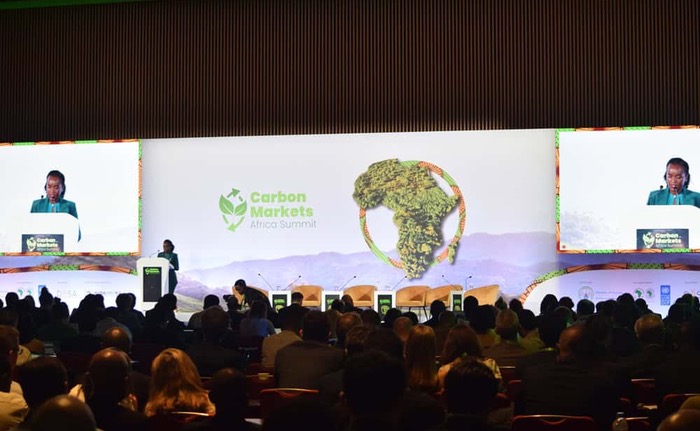
Reshma Shah, Lead for Carbon Markets at FSD Africa, also called for transparent policies, credible verification and stronger partnerships between investors and project developers. She said the summit had brought together representatives from 52 countries, including 29 African countries.
Carbon credits represent verified reductions or removals of greenhouse gas emissions and can provide financing for climate projects. International transfers under Article 6 of the Paris Agreement require careful accounting to prevent the same emissions reductions from being counted more than once.
Discussions are continuing in Kigali through Thursday, October 15, with policymakers, investors, carbon credit buyers and project developers examining ways to finance credible projects, strengthen market integrity and ensure that carbon revenues deliver tangible benefits to local communities.