Joseph Kabila, the former president’s alliance with AFC-M23 figures raises questions about political ambitions, internal divisions and the future of negotiations to end the conflict the Democratic Republic of Congo.
Former Democratic Republic of Congo President Joseph Kabila’s decision to lead a new political-military coalition alongside figures associated with the M23 rebellion could reshape the opposition to President Félix Tshisekedi’s government, while adding uncertainty to efforts to end the fighting in the country’s east.
The Front for the Refoundation of the Nation (FRN) was announced in Goma on October 12. Its creation brings Kabila into a formal leadership position alongside figures from the Congo River Alliance (AFC), the political organisation associated with M23, at a time when diplomatic efforts have yet to secure a lasting end to the conflict.
The coalition’s declaration says the FRN succeeds the AFC and brings its existence as a separate organisation to an end. However, the declaration does not separately clarify the future organisational status of M23 or how the new structure will assume the previous alliance’s commitments under the Doha peace process.
That uncertainty points to the central question surrounding Kabila’s move: whether the new coalition represents a substantive change in the opposition’s leadership and strategy or primarily formalises an existing political and military alignment.
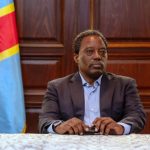
Kabila, who governed the DRC from 2001 to 2019, will lead the new movement. Corneille Nangaa and Bertrand Bisimwa have been named vice-presidents, while Sultani Makenga, the M23 military commander, will serve as chief of the general staff with vice-president rank. Freddy Kaniki has been appointed secretary-general, with Benjamin Mbonimpa as his deputy.
At the announcement, coalition adviser Claude Ibalanky said the FRN aimed to unite and coordinate resistance forces to challenge what it described as tyranny, including through the use of force.
The declaration does not set out a specific timetable for military operations or announce a new offensive. Its immediate significance is therefore political and organisational, although the inclusion of established military figures gives the initiative a direct connection to the ongoing conflict.
A broader challenge to Kinshasa
Kabila’s involvement could give the coalition greater national political visibility. As a former president, he has experience of the country’s institutions and political system. His participation also places the confrontation with Tshisekedi within a wider contest over political authority, rather than limiting it to the security situation in eastern Congo.
Kabila has accused Tshisekedi’s administration of corruption, poor governance and failures in managing insecurity. He has also criticised the government’s approach to mineral agreements with the United States. These are the former president’s political arguments, rather than independent findings about the administration.
Debate over the country’s political future provides another dimension to the confrontation. Tshisekedi’s second term is due to end in 2028, and discussion about possible constitutional changes has fuelled opposition concerns over the presidential term limit. Claims about the president’s intentions beyond that date should be treated as political allegations unless supported by a formal decision or other evidence.
The FRN could provide opponents of the government with a more coordinated platform, but its ability to attract support beyond its existing political and military networks remains unproven. Kabila’s political experience does not automatically translate into broad national support or unified command over the armed groups associated with the coalition.
Internal divisions remain a test
The new movement also faces questions about whether its leaders share the same objectives.
Reporting on the United Nations Group of Experts’ findings has pointed to differences within AFC-M23 over whether to pursue power in Kinshasa or concentrate on consolidating control in eastern Congo. Reports have also highlighted mistrust between Kabila and Makenga.
These differences could become important as the coalition attempts to define its strategy. Political leaders seeking influence over the national government may have different priorities from military commanders whose immediate concerns centre on territorial control and security in the east.
The announcement of a new leadership structure does not resolve those differences. The coalition will need to demonstrate that its political and military components can coordinate their activities and agree on the outcome they want to achieve.
Kabila also faces significant legal and political obstacles. In September 2025, a Congolese military court sentenced him to death in absentia on charges including treason, war crimes and crimes against humanity linked to alleged support for the rebellion. He has rejected the proceedings as politically motivated. The United States imposed sanctions on him in 2026 over his alleged support for rebel groups.
Those developments could complicate any effort to present Kabila as a conventional political alternative to Tshisekedi, while deepening the confrontation between the former president and the current administration.
The Doha process faces new questions
The coalition’s formation creates a practical challenge for mediators seeking to end the fighting: determining who has authority to represent the non-government side in negotiations.
The Congolese government and AFC-M23 have been engaged in a peace process facilitated by Qatar. A joint statement issued in August 2026 outlined efforts to implement the Doha framework, while the African Union’s panel of facilitators called on October 7 for respect for the ceasefire and continued engagement in the negotiations.
Against that backdrop, the FRN’s declaration that it succeeds the AFC raises questions about the continuity of existing commitments and the status of the parties already involved in the process.
Congolese legal scholar Roger-Claude Liwanga called on Qatar to seek written clarification about the new coalition’s status and its capacity to represent the non-government side. His concern, reported by Actualite.cd on October 13, centres on whether the reorganisation changes the identity or authority of the party negotiating with Kinshasa.
The distinction matters because peace agreements depend on clearly identified representatives who can make commitments and help ensure they are implemented. If the FRN assumes the AFC’s role without a clear understanding among the parties, mediators may need to resolve questions about representation and continuity before negotiations can progress.
A more coherent political leadership could potentially help a settlement if it can coordinate its factions and secure compliance with agreed terms. Conversely, unresolved divisions or competing demands could complicate the process further.
The announcement alone does not establish that the Doha talks have collapsed. The response from the parties and mediators, and the coalition’s willingness to engage with existing commitments, will be more telling than the reorganisation itself.
Regional implications
The conflict has wider consequences for the Great Lakes region, where insecurity in eastern Congo has repeatedly strained relations between Kinshasa and Kigali.
Congolese authorities, United Nations experts and Western governments have accused Rwanda of supporting M23, allegations that Kigali has denied. Kabila’s announcement does not independently establish that the Rwandan government created, directs or supports the FRN, and claims about the coalition’s external relationships require separate evidence.
For regional governments, the immediate concern is whether the new arrangement prolongs instability or creates a clearer political framework for negotiations. Continued fighting could deepen humanitarian pressures and sustain diplomatic tensions, while progress towards an enforceable settlement could help address the conflict’s security and political dimensions.
The FRN’s regional significance will depend on its conduct, its relations with existing political and military structures, and whether it supports or complicates ongoing diplomatic initiatives.
Kabila’s move has placed a former president at the head of a coalition involving prominent figures associated with M23. But whether that produces a more effective challenge to Kinshasa or exposes deeper divisions within the opposition will depend on the coalition’s ability to establish a coherent strategy and clarify its role in the peace process.