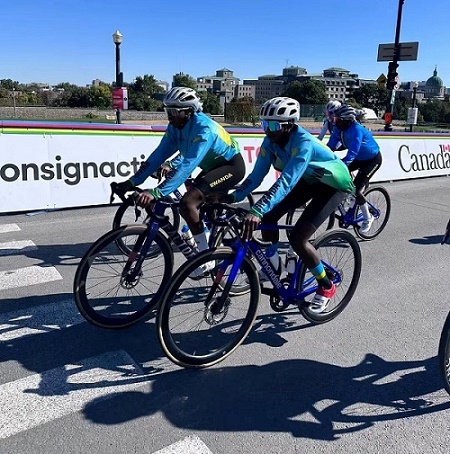
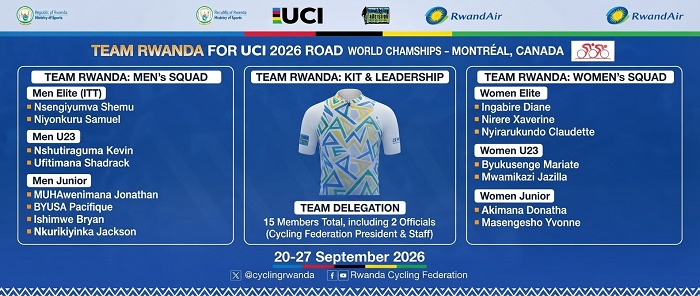
“When the national team camp broke in Montreal, two names failed to answer roll call. Today, an investigation by Rwanda Dispatch lead investigator/ Muhinde Jejje can reveal the identifies of the riders who went off the radar, the domestic clubs they represented, age, location, and the moments preceding their disappearance.”
Following our initial report on the sudden disappearances, official cycling federation body (FERWACY) channels maintained strict silence. Now, after reviewing delegation manifests, and peaking with sources close to the FERWACY, this investigation can reveal the true indities of the two riders who walked away, the careers they let behind and the timeline of their exit.
Kevin Nshutiraguma and Pacifique Byusa were among Rwanda’s young riders in Montréal. One had already raced for a foreign continental team; the other was emerging as a national junior champion.
“Pacific left camp first… walking out of the hotel. There was no one monitoring the national team at the time, with only two officials traveling with the delegation.”
“At 7:00 AM, while teammates slept, Kevin Nshutiraguma walked out of the unmonitored Montreal hotel, marking another turning point in the team’s disappearance.”
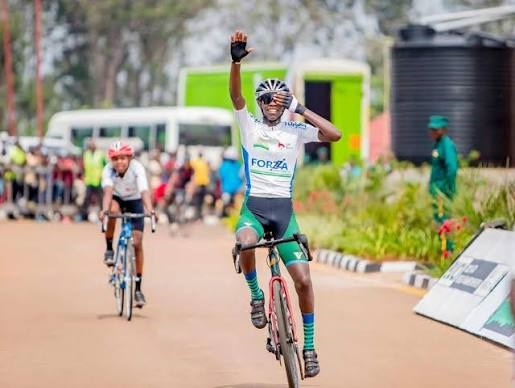
From celebrating gold in Bugesera to a tragic disappearance in Montreal: Pacific Byusa, winner of the 2025 Rwanda Youth Racing Cup (junior men’s), is among the riders reported missing in Canada.
Two young Rwandan cyclists who travelled to Canada for the 2026 UCI Road World Championships did not return with the national delegation, according to sources familiar with the team.
The two riders are Kevin Nshutiraguma (U23), and Pacific Byusa who competed in the junior category, this investigationconfirmes.
The Rwanda National Cycling Federation (FERWACY) has not publically made any statement, or released a communiqué. The Ministry of Sports has confirmed that, it is working with Canadian immigration authorities and the Rwandan Embassy in Canada to establish what happened after the riders left the delegation.
The development has put the spotlight not only on their disappearance, but also on who the two young cyclists are and the careers they had built before arriving in Montréal. Both had already represented Rwanda internationally. But their paths through the sport have been different.
Kevin Nshutiraguma; from Cine Elmay to Team Amani and back, was born in Musanze in 2006, came through the Cine Elmay/Rafiki Bike Cycling Club, one of the clubs that has developed young national riders.He was already producing results before moving into senior competition.
In 2024, he finished third overall in the Rwanda Youth Racing Cup, scoring 166 points over eight races. At the 2025 Heroes Cycling Race, he finished third overall and won the Under-23 category. He then moved to Kenya-based Team Amani at the beginning of 2025. The move was significant f0r the young rider moving from a Rwandan club into a UCI Continental team. But the relationship did not last long.
In April 2025, Nshutiraguma and Team Amani ended their agreement by mutual consent. He told local journalists that the team had failed to honour parts of its agreement relating to payments and equipment. He returned to Cine Elmay/Rafiki Bike Cycling Club. There was another consequence.
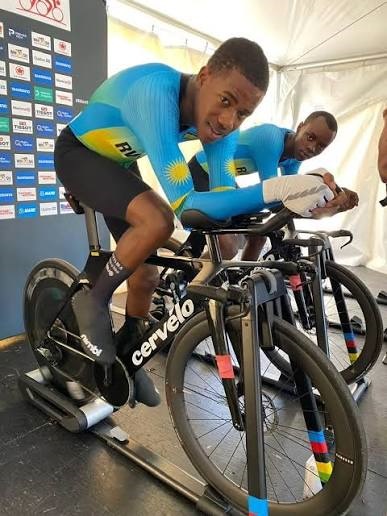
Kevin Nshutiraguma in the photo above left the hotel when the rest of thet teammates and officials were sleeping.
Nshutiraguma was not included in Team Amani’s line-up for the 2025 Tour du Rwanda, which was held from February 23 to March 2.His return to the national scene did not stop his international progress. In 2026, he was selected for Team Rwanda’s six-man squad for the Tour d’Algérie, from April 17th to where he completed the 10-stage race 55th overall. ProCyclingStats records him finishing 24th on the opening stage, 20th on stage nine and 33rd on the final stage.
The race covered more than 1,200 kilometres across Algeria and gave the young Rwandan another opportunity to compete in a UCI 2.2 stage race. He also remained part of the national-team selection process for the 2026 Tour du Rwanda. In a pre-Tour selection race, Nshutiraguma finished second among the Under-23 riders, behind Shadrack Ufitimana.
His 2026 season therefore included national-team racing, international stage racing and the World Championships. At the Montréal championships, he finished 53rd in the Under-23 individual time trial. He later started the 174.2-kilometre Under-23 road race but did not finish.
Pacific Byusa is a Rwandan junior champion and Youth Racing Cup winner. Byusa’s route has been different. Born in Kayonza on July 30, 2008, according to ProCyclingStats, he rides for Les Amis Sportifs de Rwamagana.He has quickly built a reputation on Rwanda’s junior racing circuit. In January 2025, Byusa won the opening race of the Rwanda Youth Racing Cup in Bugesera in the junior men’s category. He completed the 28.8-kilometre race in 53 minutes and 25 seconds, beating Tuyipfukamire Jean Faustin and Mugabo Jules.
By the end of that season, he had done enough to win the overall junior men’s Youth RacingCup, finishing with 163 points. That result made him one of the country’s leading junior riders.
He was also part of the wider group of riders considered for the 2025 Tour du Rwanda. Team Rwanda coach David Louvet included Byusa among the riders invited to the national training camp from which the final five-man Tour du Rwanda team would be selected. He did not appear in the final Tour du Rwanda start list, however. That distinction matters. Being invited to a national-team camp is not the same as competing in the UCI 2.1 race. Byusa continued to collect results in domestic racing.
In the 2025 Kirehe Race, he won the junior category, a year after also taking the junior victory there. FERWACY crowned him the junior winner in 2024. He also finished second in the junior category at the 2026 Heroes Cycling Cup. At the 2026 national championships, he won the junior men’s road race. His international record is more limited than Nshutiraguma’s.
ProCyclingStats currently lists only a handful of recorded results for Byusa, including the 2026 Race to Remember, where he finished third overall, and the Kigali Criterium. The database records no UCI points or professional wins for him. That is not unusual for an 18-year-old junior rider.
At the 2026 World Championships in Montréal, Byusa finished 64th in the junior men’s individual time trial, recording 28 minutes 57 seconds.
He had already appeared on the world championship stage in Kigali in 2025, when he finished 53rd in the junior men’s individual time trial. He was the first rider to start that event for Rwanda. The circumstances surrounding Byusa’s failure to return to the delegation have added another layer to the story
Yousuf Sebugwiza, director general of Les Amis Sportifs in Rwamagana, said the club had considered Byusa mature and responsible enough to travel with the delegation. Byusa was also studying at the University of Adventists of Kigali (UNILAK).
Sebugwiza said the club had previously warned its riders about the consequences of disappearing while abroad, particularly the damage such incidents could cause to Rwanda’s image and cycling.
According to Sebugwiza, Byusa competed in the race in Montréal before joining other riders afterwards. He later went to freshen up and did not return. The club suspects he may have had a relative, friend or other contact in Canada, although there is no independent evidence publicly establishing that.
The circumstances remain unclear, and neither the club nor Rwanda’s authorities has publicly established why Byusa left the delegation or where he went.
Nshutiraguma had already experienced the reality of trying to move into professional cycling outside Rwanda. His short spell with Team Amani ended after a dispute over payments and equipment, according to his account reported by The New Times. Byusa, meanwhile, was still at the beginning of that journey His strongest results have largely come in Rwanda’s junior and domestic racing system.
The contrast is important.One rider had already tested life in a UCI Continental team. The other was still building a record through junior racing and national competitions. Neither career, however, provides evidence on its own of why the two remained in Canada.
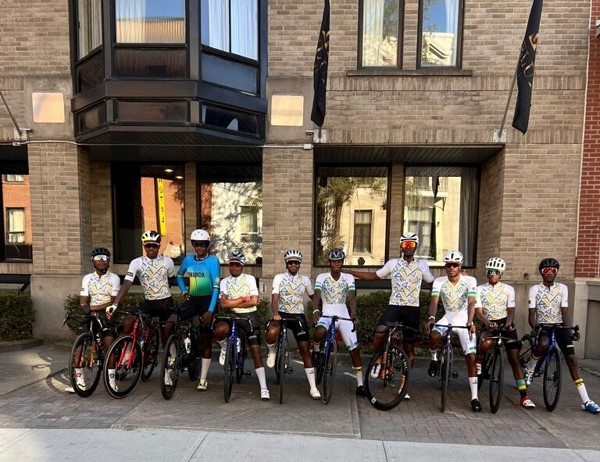
A snapshot of Team Rwanda’s delegation. Comprising 15 members in total, the team traveled with minimal administrative oversight, managed by only two officials—the federation president and one staff member. Courtesy photo.
That question remains unanswered. Rwanda’s cycling system has long faced a money problem The financial side of cycling is not a new issue in the country. A 2015 report in Rwanda Focus described disputes between riders and the federation over payments and insurance. Veteran Rwandan professional cyclist Adrien Niyonshuti said at the time that there was a significant difference between what cyclists earned in Rwanda and what riders could earn in South Africa.
More recently, reporting on women’s cycling in Rwanda has again highlighted the lack of regular income at club level. A 2025 report quoting cycling officials and coaches said many Rwandan clubs do not pay riders a monthly salary and that cyclists often rely on prize money from races. The same report described significant differences in equipment between clubs.
That does not establish a motive for Nshutiraguma or Byusa. It does, however, provide context for understanding the economic environment in which young Rwandan cyclists develop.
Team Africa Rising, which helped build Rwanda’s cycling programme, has also documented the cost of developing competitive riders, including equipment, salaries, training camps, food, transport and international travel. Its records show that even the early Team Rwanda programme operated on relatively modest budgets compared with international professional teams. Former national coach and cyclist Abraham Ruhumuriza has described Rwanda’s cycling development as being built on passion, sacrifice and leadership rather than abundant financial resources.
The question for Rwanda is therefore not simply why two riders stayed in Canada. It is also what happens when talented young athletes reach the point where competing internationally gives them a view of opportunities beyond the domestic system. Montréal is not the first.
Rwanda has faced similar cases before.The most prominent recent cycling case involved Samuel Mugisha, the 2018 Tour du Rwanda winner.In September 2022, Mugisha travelled to the United States with South African team ProTouch for the inaugural Maryland Cycling Classic. He arrived at Washington Dulles International Airport on August 31 but did not take the arranged team transport to the hotel. Instead, he arranged to be collected at the airport. He never reached the team hotel and did not appear at the race. ProTouch and race organisers reported him missing. Security CCTV footage later showed him leaving the airport with people he appeared to know.
Mugisha’s case also exposed another problem facing African athletes: international travel and visas. A Rwandan cycling federation official at the time, Abdallah Murenzi, questioned whether Mugisha should immediately be described as missing because he had a valid US visa. The case nevertheless had consequences for other Rwandan riders. At the 2022 World Championships in Australia, several Rwandan cyclists who had been expected to compete missed the event after failing to obtain visas.
The Montréal case therefore comes against a longer history of difficulties involving Rwandan athletes travelling abroad. Not only in cycling but other sports, like athletics, boxing and handball.
“When kids do not have hope they leave”
It has happened outside cycling too. At the 2018 Commonwealth Games in Gold Coast, Australia, members failed to return to the delegation. The former National Olympic and Sports Committee later confirmed that powerlifting coach Jean Paul Nsengiyumva and beach-volleyball player Denise Mutatsimpundu could not be located. Contemporary reports also recorded missing athletes from Uganda, Cameroon and Sierra Leone.
The episode became part of a wider discussion about African athletes using international competitions as opportunities to remain abroad. Australian migration officials and refugee organisations subsequently dealt with athletes seeking advice about their immigration status. It is important, however, not to assume that the circumstances are the same in every case. There is currently no public evidence establishing that Nshutiraguma or Byusa have sought asylum in Canada, and the Ministry of Sports has not said that they have done so. What does Rwanda owe its young riders?
The two cyclists’ missing leaves a bigger question for Rwanda’s sporting authorities. Young riders are being sent into an increasingly international cycling system. They race alongside riders from continental and professional teams, travel across Africa and Europe, and see what is available to athletes outside Rwanda. The system therefore has to do more than produce riders capable of reaching the start line. It has to retain them.
That means asking practical questions about contracts, equipment, salaries, insurance, international opportunities, education and what happens to athletes when their competitive careers begin to change.
Nshutiraguma’s experience with Team Amani provides one documented example of how financial and equipment issues can affect a young rider’s career. Byusa’s progression shows another side of the story: a junior rider can win domestic races and a national title, represent Rwanda at two World Championships and still have no recorded professional UCI wins or points.
The gap between promising talent and a sustainable professional career remains significant.
For now, the whereabouts and intentions of the two riders remain the immediate unanswered questions. The Ministry says it is investigating. FERWACY and have not publicly revealed the two riders, although sources familiar with the delegation have identified them as Nshutiraguma and Byusa. Until those questions are answered, the reasons behind their decision remain unknown.
What can already be established is who they were before Montréal: two young cyclists at different stages of their careers, both already carrying Rwanda’s flag on the international stage, and both now at the centre of questions that extend well beyond one cycling delegation.
Next in Part 3
While today’s report unmasks the riders behind the disappearance, a deeper mystery remains’ who cleared their path?(More on the system failure and accountability in Part 3)