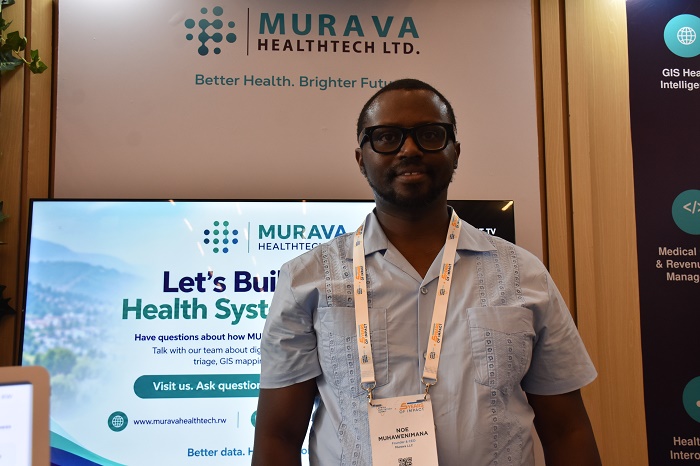
A US-founded health technology company that opened its Kigali branch three months ago is testing an artificial intelligence system that could allow patients to report symptoms by phone or SMS and be directed to the appropriate level of care before reaching a hospital.
A healthcare technology company founded in California is testing an artificial intelligence-powered patient triage system in Rwanda as it seeks to expand its digital health services across the country.
Murava HealthTech, headquartered in Torrance, California, opened its Kigali branch in 2026 and has been operating in Kichukiro District for about three months.
The company is currently testing its AI triage system in Rwanda, with the longer-term plan of making the technology available across hospitals and other health facilities, according to founder and CEO Noe Muhawenimana.
Muhawenimana speaking during the fifth Africa HealthTech Summit, held at the Kigali Convention Centre from September 30 to October 2.
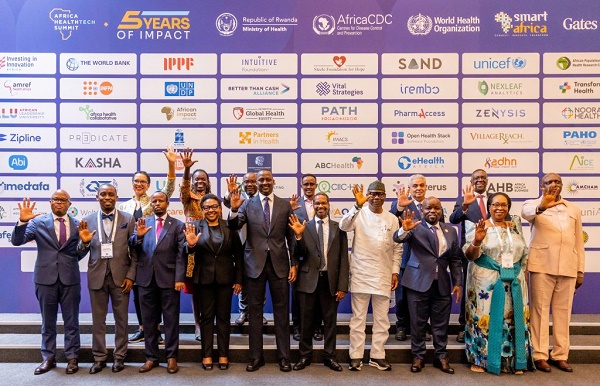
The summit brought together health professionals, government officials, technology companies, researchers and investors to discuss the use of digital technology and artificial intelligence in African healthcare. Organisers said the 2026 edition attracted 2,601 delegates from 65 countries.
How the AI triage system works
Murava’s main patient-facing technology is an SMS- and call-based AI triage system.
The company says patients using basic mobile phones can report their symptoms before travelling to a health facility. The system asks questions about the patient’s condition and assesses the urgency before directing them to an appropriate point of care.
Depending on the reported symptoms, the patient could be directed to a community health worker, health post, health centre, clinic or hospital emergency department.
Murava says the system is designed to identify urgent cases earlier while reducing unnecessary visits to hospital emergency departments.
The company says its triage system is not a diagnostic tool and operates under human clinical oversight.
Muhawenimana said the idea is to change what happens before a patient arrives at a health facility.
“The patient will arrive at the hospital when they are already prepared for them.”
Instead of a patient arriving at a hospital, joining a queue and only then beginning the initial assessment, the system is intended to collect information before the journey begins.
A patient with a serious condition could be escalated for urgent assistance, while someone with a less serious condition could be directed to a community health worker or another appropriate health facility.
Murava says the system can operate through both SMS and telephone calls, potentially allowing people without smartphones to use the service.
The company says its broader digital health platform also includes electronic health records, clinical documentation, medical coding, revenue-cycle management and health analytics.
Murava was founded in California in 2023 before expanding its operations to Rwanda.
The company’s current public information lists its headquarters in Torrance, California, and a branch in Kigali, with Rwanda serving as part of its wider East African expansion.
Muhawenimana said the company has been in Rwanda for about three months and is now looking for partnerships with hospitals, clinics and other health-sector institutions.
The immediate work involves testing and adapting its technology to the Rwandan health system before wider deployment.
“We are looking for partners and also talking to the Ministry of Health to see how we can work together,” Muhawenimana said.
He said the company’s ambition is eventually to make the system available across Rwanda’s hospitals and other healthcare facilities.
The company says it currently has active deployments in two countries, the United States and Rwanda, and has served more than 50 organisations. It also reports more than 15 health facilities and 20 insurance partners among its wider footprint. Those figures are company-reported.
A 94% accuracy claim
Murava says its AI triage system has achieved a 94% triage accuracy rate in its existing operations.
For the Rwanda deployment, Muhawenimana said the company has also tested the system in cases involving 15 mothers.
The testing is part of the company’s effort to understand how the technology performs in the local health environment.
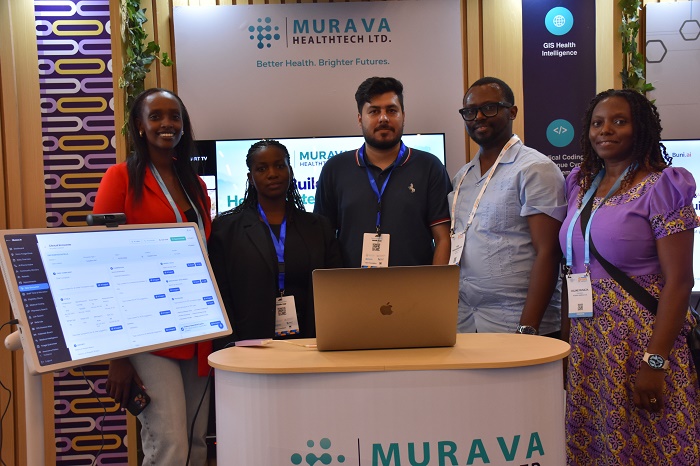
The 15 cases should not be presented as proof that the system is clinically validated. They are better described as part of the company’s Rwanda testing unless Murava provides evidence of a formal clinical validation study.
Who is responsible when AI gets it wrong?
The expansion of AI into healthcare also raises questions about responsibility when a system makes an incorrect recommendation.
Murava says its technology operates under human clinical oversight and does not replace doctors or clinical consultations.
Muhawenimana said the company remains responsible for the technology, while clinical decisions remain subject to healthcare professionals.
That distinction will become increasingly important if the system moves beyond testing and into routine use.
A triage system does not have to diagnose a patient to influence the care they receive. If it wrongly classifies an emergency as a minor condition, for example, a patient could be directed away from urgent hospital care.
That makes clinical oversight, patient data protection and clear lines of responsibility important parts of any wider deployment.
Rwanda’s growing digital health system
Murava’s arrival comes as Rwanda expands its use of health data and artificial intelligence.
The Ministry of Health launched the National Health Intelligence Center in April 2025 to collect, integrate and analyse real-time data from across the country’s health system. The centre draws information from community health workers, health posts, health centres, district and referral hospitals and other health-sector systems.
Rwanda is also using digital technology to link health workers and specialists through virtual-care initiatives.
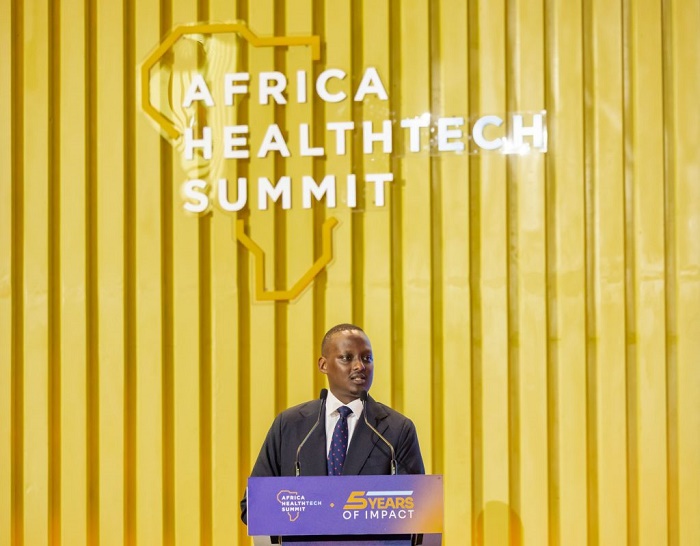
At the Africa HealthTech Summit, Minister of State for Health Dr Yvan Butera said Rwanda’s experience with health intelligence was being followed by other African countries.
He said 11 African countries were establishing similar health intelligence centres, including Tanzania, Nigeria, Ethiopia, Liberia and the Central African Republic.
He also highlighted the use of technology to connect specialists with district hospitals, including in the management of high-risk pregnancies.
The Health Intelligence Centre for Africa, headquartered in Kigali, is intended to support countries in using health data for decision-making and sharing knowledge across borders.
The next test is scale
For Murava, the next stage is moving from a newly established Rwanda operation and local testing towards wider partnerships.
The company’s website describes its approach as starting with a specific healthcare workflow, measuring its results and then expanding within an organisation.
Muhawenimana said the company wants to work with hospitals, clinics, pharmacies and other health-sector institutions in Rwanda.
But whether the technology can move from a promising demonstration to a system used routinely across the country will depend on more than the technology itself.
It will need to show that the system works reliably with Rwandan patients, protects sensitive health information and can safely direct patients to the right level of care.
For now, Murava’s Kigali operation is at the beginning of that process, bringing a system developed in the United States into a health system that is already rapidly expanding its own use of data and artificial intelligence.