DRC peace talks return to Geneva with a question at their centre: can a fragile peace deal deliver security in the eastern DRC, or will another agreement fail to change conditions on the ground? The Democratic Republic of the Congo(DRC) and Rwanda are seeking progress, but years of conflict, displacement and the legacy of the 1994 war continue to complicate their efforts.
The talks run on September 16 and 17, giving the two countries only a limited time to address the gap between diplomatic commitments and events on the ground.
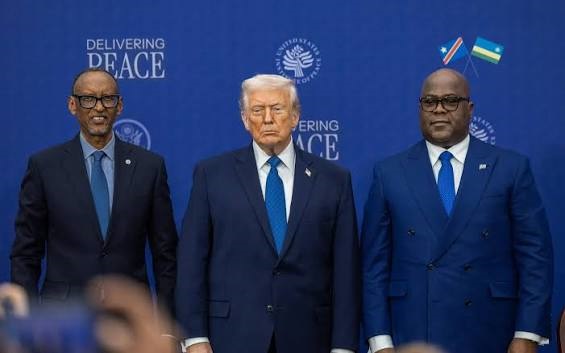
The agenda focuses on implementing the Washington Accords, the United States-brokered security agreement signed last year to end decades of conflict in the eastern Congo. Its provisions include security measures, military operations and obligations concerning armed groups, while Rwanda has linked its position to defensive measures along the border.
The process is overseen by the Joint Security Coordination Mechanism, or JSCM. Its task is to test whether promises made by the DRC and Rwanda are being carried out. Mediators from the United States, Qatar, Togo and the African Union are expected to monitor progress. References to President Donald Trump and the wider US role may matter politically, but the immediate test is whether the mechanism can produce verifiable results, not more news or another statement without action.
Why the meeting matters
The original peace agreement was signed in Washington in June 2025. A follow-up deal, the Washington Accords for Peace and Prosperity, was reached in December and reaffirmed the same commitments between the Democratic Republic of the Congo and Rwanda.
Two obligations sit at the centre of the peace agreement. The DRC is expected to neutralise the Democratic Forces for the Liberation of Rwanda, known as the FDLR. Rwanda, in turn, is expected to withdraw its forces and lift the defensive measures it has maintained along the border. The two commitments are closely linked: Kigali sees action against the FDLR as essential to its security, while Kinshasa regards the withdrawal of Rwandan forces as necessary to protect its territorial integrity.
Neither side has fully delivered on its obligations, leaving the deal vulnerable and limiting the prospect of lasting peace.
Fighting has not stopped
While diplomats hold talks in Geneva, the situation in the eastern DRC tells a very different story. The peace deal has not ended the conflict, and control of territory continues to shift between government-aligned forces and rebels.
UN Radio reported that clashes broke out again on Wednesday around Kasake, in the Bahunde chiefdom of Masisi territory, North Kivu. The fighting involved Wazalendo fighters allied with the Congolese army and AFC/M23 rebels, although battlefield claims should be treated with caution until independently verified.
A day earlier, fighting that began at about 2am and continued beyond 6pm reportedly ended with Wazalendo forces retaking Remeka, Katuunda, Miko, Kareta and the surrounding Ufamandu I area.
Major Dieudonné Kasereka, spokesman for the 34th military region, said the recaptured positions included parts of Ufamandu, as well as the Katoyi and Osso-Banyungu sectors in Masisi. Other localities in Walikale’s Luberike grouping were also reportedly regained.
Further clashes were reported around Bibatama, Mitimingi and Katoyi-Centre. The reports underline the gap between the diplomatic peace process and the military reality facing civilians in North Kivu.
An old dispute
The FDLR traces its origins to 1994, when fighters and militia members linked to the former Rwandan army and the Interahamwe fled across the border after the genocide against the Tutsi. The armed group has remained one of Rwanda’s central security concerns, while its presence in the eastern Congo continues to shape the wider conflict.
Rwanda accuses the Democratic Republic of the Congo of continuing to arm and shelter the group. Kinshasa, for its part, accuses Kigali of backing the M23 rebel group and helping it expand its territorial influence in eastern DRC.
Rwanda denies that allegation.
Rwanda’s Minister of Foreign Affairs and International Cooperation, Olivier Nduhungirehe, has consistently argued that armed groups operating from Congolese territory, particularly the FDLR, pose a direct threat to Rwanda’s national security. The Congolese government, in turn, has accused Kigali of supporting armed groups seeking to seize territory and influence in the east, an allegation Rwanda rejects.
Speaking to Mama Urwagasabo TV on September 15, the eve of the Geneva session, Nduhungirehe accused Kinshasa of continuing to arm the FDLR and of trying to give the group political legitimacy by backing sympathetic politicians. “It does not make sense that the Government of Congo does whatever it wants,” he said. He also alleged that Congolese forces had continued shelling and carrying out drone strikes in civilian areas of Masisi, Minembwe and Mushaki, while the international mediator had failed to act on violations Rwanda had repeatedly raised. Those claims require independent verification.
M23 first emerged in 2012, withdrew after losing ground and re-emerged in 2022 with a new offensive. By 2025, the M23 rebels had captured Goma and Bukavu, the capitals of North and South Kivu, marking a major turning point in the conflict.
M23 is not a signatory to the Washington Accords, but the rebel group remains central to any peace agreement. A parallel Qatar-led dialogue between Kinshasa and M23 produced the Doha Framework for Peace in November 2025, illustrating why a settlement cannot depend only on the two governments.
The FDLR question remains the hardest part of the peace process to resolve.
In late July, the DRC said that one FDLR faction had signed a protocol covering disarmament, demobilisation and cantonment. Kinshasa presented the signing as evidence of progress towards addressing Rwanda’s security concerns.
Rwanda disagreed. Kigali’s position, communicated through diplomatic channels, is that the Washington agreement requires the FDLR to be neutralised, rather than negotiated with, and that a bilateral protocol with the group falls short of that political commitment.
The disagreement carries weight beyond the FDLR itself. Rwanda has linked the withdrawal of its troops and the lifting of its defensive measures to verifiable progress against the group. The dispute therefore affects both sides of the peace agreement at once.
This week’s talks follow the sixth meeting of the Joint Security Coordination Mechanism, held in Geneva in August. At that session, both countries agreed to advance two initiatives to strengthen monitoring and verification along their border, while asking Washington to provide feedback on the process.
The DRC also presented its disarmament, demobilisation and reintegration plan for the FDLR and answered questions from JSCM members. That presentation may represent progress, but it will matter only if the plan leads to verifiable action against the group and addresses Rwanda’s security concerns.
The two sides also agreed to hold a trilateral planning conference in October. The meeting is expected to produce a revised operations order to guide coordinated efforts, including monitoring, border security and the implementation of the peace agreement.
For now, the talks continue in Geneva while fighting continues across the Kivu region. The FDLR remains at the centre of both tracks, and the next test will be whether the signing of another joint statement can lead to an actual peace deal: the withdrawal of Rwandan troops, an end to attacks by rebels, respect for the DRC’s territorial integrity and measurable progress within days rather than another promise next year.