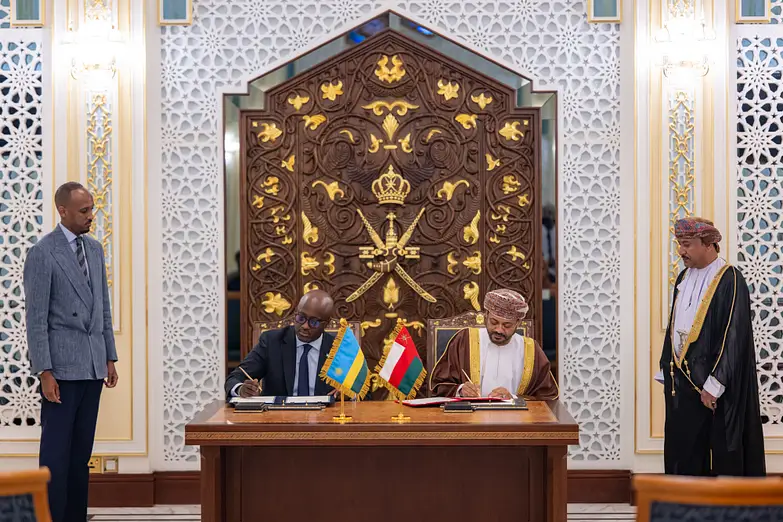
Rwanda and Oman have agreed to deepen cooperation in logistics, dry-port development and investment as the two countries seek to expand economic ties and create new opportunities for trade between East Africa and the Gulf.
The two countries signed two agreements and six memorandums of understanding on Tuesday in Salalah during President Paul Kagame’s official visit to Oman, covering areas ranging from agriculture and supply-chain services to investment, labour and strategic cooperation.
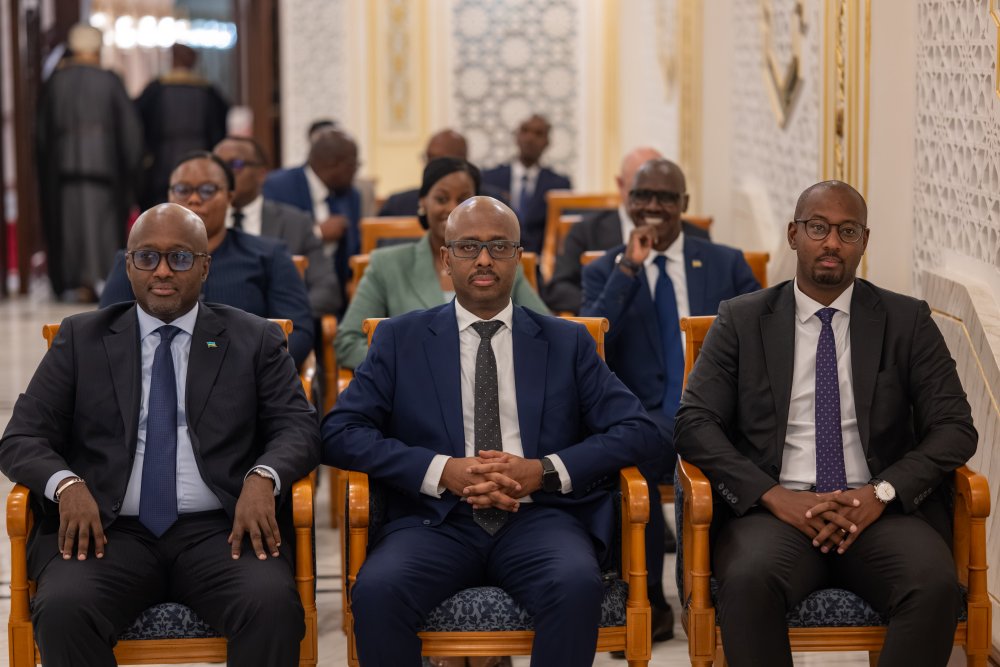
The package includes a mutual visa exemption for holders of diplomatic, service and special passports and an agreement to avoid double taxation.
The six memorandums cover agriculture, logistics, land and dry-port development, supply-chain services, investment promotion, labour, strategic partnership and investment activation.
For Rwanda, the logistics agreement is particularly relevant as the landlocked country depends on regional transport corridors to move goods to and from seaports.
The cooperation on land and dry ports also builds on earlier discussions between the two countries on logistics services and the development and operation of inland ports and related supply-chain facilities.
The issue featured in talks between Kagame and Sultan Haitham bin Tarik on Monday, when the two leaders discussed cooperation and investment in mining, renewable energy, food security, land ports, logistics and health care.
The new agreements broaden that cooperation beyond logistics. The investment component covers promotion and activation of investments, while the agriculture and labour agreements open additional areas for economic cooperation.
Oman has also identified Rwanda as a potential gateway to East African markets for its investors, with opportunities previously highlighted in sectors including tourism and hospitality, agriculture, mining, health and pharmaceuticals, information and communications technology, special economic zones and infrastructure.
The agreement on double taxation is intended to provide clearer tax treatment for individuals and companies operating in both countries and prevent the same income from being taxed twice.
The visa agreement, meanwhile, applies only to holders of diplomatic, service and special passports. It does not provide visa-free travel for ordinary Rwandan and Omani passport holders.
The agreements come as transport links between the two countries expand. SalamAir launched direct flights between Kigali and Muscat in July, operating twice a week.
The new air connection has added another link between the two countries as they seek to expand tourism, trade and investment.
The latest agreements build on earlier cooperation between Rwanda and Oman, including agreements signed in 2025 on telecommunications and the digital economy.
Rwanda and Oman established diplomatic relations in 1982.