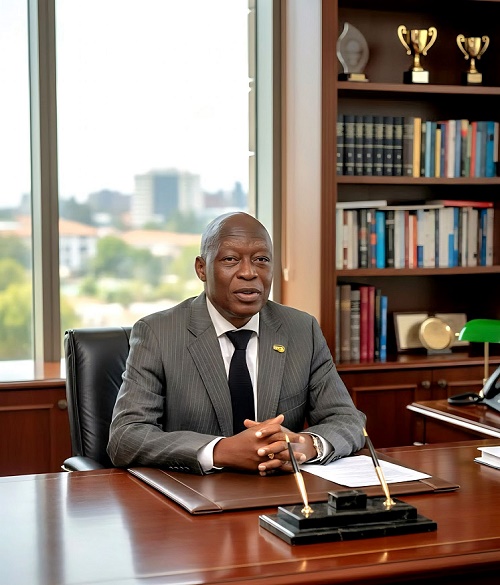
The President of African Cycling Confederation (CAC), Dr. Yao Allah-Kouamé, was voted out of his long-held role as President of the Ivorian Cycling Federation (Fédération Ivoirienne de Cyclisme – FIC).
The vote took place on August 23, 2026, during a general assembly at the National Olympic Committee headquarters in Cocody, Abidjan.
Delegates ousted Kouamé following mounting domestic dissatisfaction over stagnant progress and a lack of grassroots cycling development in Ivory Coast.
He is succeeded by Sylvestre Ouattara, a former national champion and experienced mountain bike rider whose technical expertise has raised hopes for local reform.
While the vote does not automatically strip Kouamé of his continental mandate leading CAC for the UCI, it casts a shadow over his administration. The ouster has intensified scrutiny among regional observers over whether the continental body will face calls for an extraordinary assembly to address his leadership.
According to cycling observers, the downfall of Kouamé leaves a contitnental governance gap, and administrative concerns surrounding the CAC Executive Committee elected in early 2025:
Under Kouamé, Ivory Coast managed just 16 UCI points in 2025, failed to host a national championship, and has never produced a professional cyclist.
Critics argue the administrative disconnect extends beyond rankings into operational decision-making, for instance, the 2025 African Continental Cycling Championships were abruptly rescheduled for late November in southeastern Kenya. Because points and jerseys apply to the 2026 season, any subsequent 2026 championships held before October would render the Kenya results void , prompting several top riders to skip the event.
CAC recently announced an expensive, in-person African Cycling Awards gala in Kigali, replacing a virtual voting system that operated effectively since 2012.
Critics noted that directing limited federation budgets toward executive travel and hotel stays diverts resources away from talent identification, young rider development, and essential equipment.
Observers noted, while 34 African nations financed travel to the World Championships in Kigali, only 18 hosted a domestic national championship in 2025. Progressive federations, such as Algeria’s Madar Pro Cycling Team ecosystem, chose to skip high-cost travel to focus locally, redirecting funds into training camps for over 30 young women riders.
With Sylvestre Ouattara taking the helm in Abidjan, focus turns to whether the 54 member federations of CAC will demand greater administrative accountability and structural overhaul across the continent.