It has turned out that while the government is busy curing the country of bad alcohol, local football remains intoxicated by its own incurable curse.
This week, we have been waking up to a familiar morning routine: arrests, seized alcohol, closed bars and another government warning about what not to drink. This morning, however, came with a different kind of hangover.
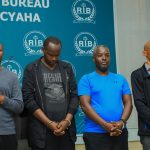
The Rwanda Investigation Bureau (RIB) had another arrest to announce, but this time, there was no bottle of kanyanga involved. The man at the centre of the news was Fabrice Shema, president of the Rwanda Football Federation (FERWAFA), arrested over an alleged bounced cheque.
There is an old joke in sports administration that the ball is round, but the president’s chair is slippery. At FERWAFA, that chair has proved unusually difficult to hold on to. Shema, who only recently swept into office promising a “Dream Team” for Rwandan football, has now joined the growing list of high-profile figures finding themselves on the wrong side of a RIB investigation.
For a country that has spent the week chasing bad alcohol, it was an oddly familiar headline: something had gone wrong with the bottle, except this time, it was the cheque that allegedly failed to hold its liquor.
For Rwandan football, the presidency of the FERWAFA appears to come with an unusually short shelf life. The latest occupant of the seat, Shema, was supposed to be different.
But then, less than a year after winning the confidence of an overwhelming majority of clubs and fans, the pharmaceutical businessman is in detention at Kicukiro, facing an allegation of issuing a bounced cheque.
Well, a friend this morning said, “The FERWAFA presidency has become one of the few jobs where you leave office with a legacy, or leave it in handcuffs.”
Shema was due to travel for the Cecafa member meeting, but was told to postpone the trip and report to RIB.
RIB confirmed on Tuesday that Shema had been arrested and was being held at its Kicukiro while investigators continue looking into the cheque allegation and other alleged offences. Authorities have not disclosed details of the other allegations.
The timing of Shema’s arrest was striking. He was due to travel to Tanzania for the CECAFA General Assembly, where the regional football body was expected to announce him, as the new representative to the Confederation of African Football (CAF).
He never made the trip.
Sources inside FERWAFA, who asked not to be named because they were not authorised to speak publicly, said Shema had been summoned by RIB before to explain the federation’s governance and how it was being run.
Even in his absence, Rwanda had reason to celebrate. The country was awarded the rights to host the two conecutive CECAFA Kagame Cup editions: 2027 and 2028.
And so, almost on cue, FERWAFA finds itself staring at another leadership crisis.
There is an old saying that when a pot has been cracked for too long, changing the cook does not necessarily fix the problem.
For FERWAFA, changing the president has not always brought the stability football fans hoped for.
A seat that rarely stays occupied.
Look back over the past decades and the pattern is difficult to miss.
The first gentleman was Ephraim Gasasira, he became FA president between 1994–1995. He inherited FERWAFA at one of the bleakest moments in Rwanda’s history. The country was emerging from the 1994 Genocide against the Tutsi, and football was among the institutions trying to find its feet again.
There was little money and little functioning infrastructure. Clubs had been disrupted, players scattered and the federation itself was barely operational. Gasasira’s job was less about winning trophies than putting football back on the pitch. He helped reorganise clubs and restart domestic competitions, using football as one of the small spaces in which a fractured country could begin to reconnect.
His time at the top lasted only about six months. But rather than cling to the chair, he helped organise elections and handed over power. He then largely disappeared from the national football spotlight, returning to civilian life and occasional sporting advisory roles.
Ephraim handed the touch to Major General Caesar Kayizari,. On record, Caesar served as FERWAFA president from 1995 before stepping down in February 2006, making him the longest-serving president in the FERWAFA’s history.
He led the FA, and Rwanda qualified for the 2004 Africa Cup of Nations (AFCON) in Tunisia, the country’s first and only appearance at the tournament.
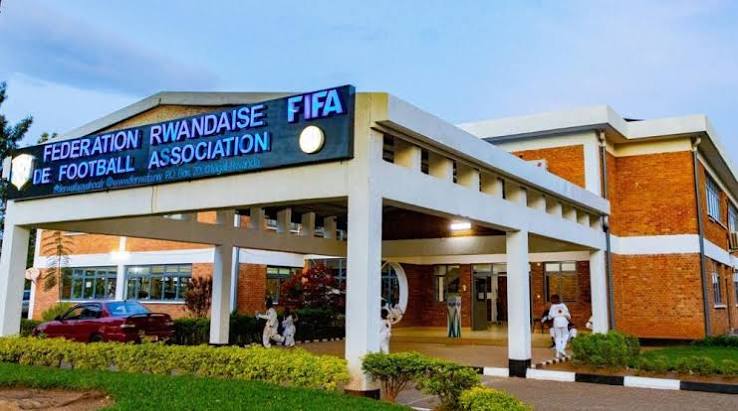
But his final years delivered something just as durable: permanent roots. Through FIFA’s Goal Project, Kayizari secured funding to build FERWAFA’s Remera headquarters and national technical academy, giving the sport its first true administrative and training hub.
Choosing not to seek another term after ten years, he handed his successor, Jean-Bosco Kazura, a fully structured federation with real infrastructure to show for it.
For a federation whose presidency would later become synonymous with controversy, Gasasira’s short tenure almost looks like a different era: arrive, repair what you can, organise a handover and leave.
This was was followed by Maj. Gen. Jean-Bosco Kazura (2006–2011): Afande Kazura inherited a federation that had just experienced its longest period of leadership. He put considerable emphasis on developing young players, most notably through the creation of Isonga FC.
Rwanda also hosted the 2009 U20 Africa Cup of Nations and the 2011 U17 tournament during his tenure. The latter campaign ended with Rwanda qualifying for the 2011 FIFA U17 World Cup a notable achievement for the country’s youth football.
But Kazura’s presidency also had its troubles. In 2010, he travelled to the World Cup in South Africa without the required military leave. He was recalled and temporarily detained by the military before later being pardoned. In September 2011, he resigned following a poor run by the national team.
Football was not the end of Kazura’s career. Far from it. He went on to hold senior military and international positions, including Force Commander of the UN peacekeeping mission in Mali and, later, Chief of Defence Staff of the Rwanda Defence Force.
Célestin “Abega” Ntagungira (2011–2013)
Ntagungira arrived at a very different FERWAFA. A former FIFA World Cup referee, he took over as an interim president after Kazura’s departure, with the immediate task of keeping the federation steady.
His focus was largely on restoring order, particularly in refereeing, after a period of turbulence.
But when the time came to compete for a full four-year mandate, Ntagungira chose not to. In December 2013, he voluntarily stepped aside rather than seek the presidency.
He returned to the world he already knew well, working as a CAF match commissioner, FIFA referee instructor and sports analyst.
For once, the FERWAFA chair did not end in a scandal, a resignation under pressure or a dramatic fall. Ntagungira simply took his turn, stabilised the federation and walked away.
That, in itself, would become something of a rarity.
In 2014, FERWAFA was dealing with internal problems and a new face was needed. Vincent “De Gaulle” Nzamwita took over and completed his four-year term, leaving behind a mix of progress, ambition and controversy.
He was also a man of the media. Journalists covering Amavubi remember frequent flights with the national team and easy access to the players and officials. Nzamwita was visible, approachable and willing to engage with reporters, a welcome change for many in the press.
Beyond that relationship, he pushed to strengthen ties with foreign federations, particularly Morocco, creating opportunities for injured Rwandan players to receive treatment there. He also championed the FERWAFA hotel project, which remains one of the federation’s major infrastructure investments.
On the pitch, he appointed English coach Stephen Constantine and pursued other foreign coaching options. Rwanda climbed the FIFA rankings, reaching 68th in the world and 19th in Africa, its highest position at the time. The Amavubi also reached the quarter-finals of the 2016 CHAN, hosted in Rwanda, while a national U15 programme was introduced.
But his tenure had its low point. The 2014 “Daddy Birori” identity saga ended with Rwanda being disqualified from the 2015 AFCON qualifiers by CAF.
Nzamwita completed his mandate in December 2017 and did not seek re-election. He returned to his agricultural businesses and other sporting activities.
His legacy remains mixed, but clear: he showed that FERWAFA could make visible progress when administration, investment and football development moved in the same direction.
Rtd. Brig. Gen. Jean-Damascène Sekamana (2018–2021)
Sekamana (on Rayon Sports ticket) arrived promising something football administrations often struggle to maintain: discipline.
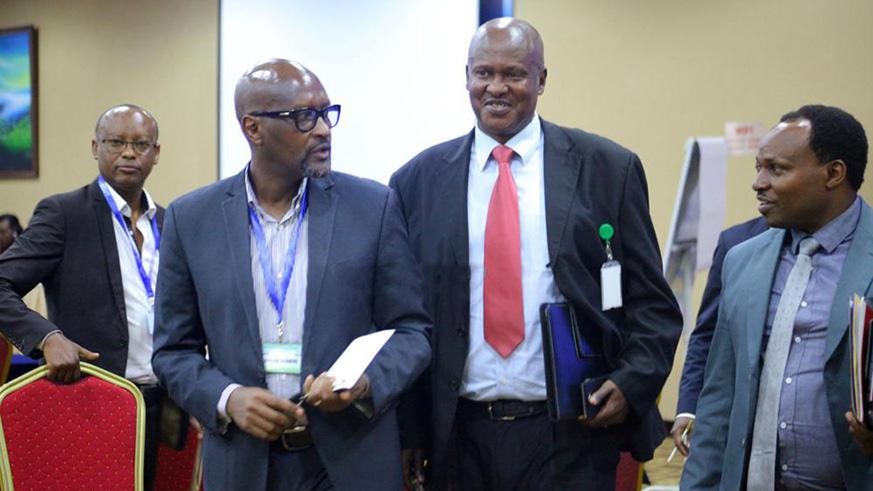
Rtd Brig. General Jean-Damascène Sekamana (red tie) and his predecessor Vincent de Gaulle Nzamwita courtesy photo.
His administration pushed corporate governance, auditing and tighter financial controls, however he was not media friendly. On the pitch, Rayon Sports reached the quarter-finals of the CAF Confederation Cup, giving Rwandan club football one of its better continental runs.
But the presidency did not last. His biggest challenge was, he forgot this was a sport
Sekamana resigned in April 2021, saying he could no longer balance his personal commitments with the demands of running FERWAFA. There was no dramatic election defeat or arrest at the end of his tenure. He simply walked away. He couldn’t handle the pressure
He returned to his private-sector activities and military retirement, leaving behind a federation that had, at least on paper, been pushed towards greater institutional discipline.
Olivier Mugabo Nizeyimana then arrived with his own plans for the game.
He was elected in June 2021, but less than two years later, in April 2023; he stepped down, citing personal reasons and the difficulty of combining the federation’s demands with his other responsibilities.
Nizeyimana arrived with a different proposition: make football more commercial.
His administration pursued sponsorship opportunities and helped bring the 73rd FIFA Congress to Kigali, putting Rwanda’s football administration on a much bigger international stage.
But behind the public-facing successes, tensions were building inside the federation.
His presidency ended abruptly in 2023, only about 22 months into his term. The immediate trigger was an internal dispute surrounding an unauthorised Rwf2 billion kit-supply agreement reportedly signed by the Secretary General.
Nizeyimana resigned rather than fight on.
He returned to his business interests, including Volcano Express and his Hyundai dealership, while remaining involved in sports sponsorship. For a federation that elects its president to a four-year mandate, that is a rather quick exit.
And once again, the FERWAFA chair was empty.
Alphonse Munyantwali was then brought in during an extraordinary general assembly from 2021. He received 50 of the 56 votes cast and was given a two-year mandate to take the federation through the remainder of the previous administration’s cycle.
For many, Munyantwali was first and foremost a politician. He had served as mayor of Nyamagabe District before becoming governor of the Southern Province for six years and later the Western Province for another four and a half. Football was part of his life, but it was not the career that had made his name.
When he took over, expectations were hardly sky-high. He had arrived after the resignation of Olivier Mugabo Nizeyim. He was also the sole candidate-unopposed incumbert.
Munyantwali did not exactly walk into the federation promising to reinvent Rwandan football. His job was more modest and simple: steady the ship, keep the FA running and prepare the ground for the next election.
Infact, during his tenure, FERWAFA did push some administrative reforms, perhaps that is the fairest way to remember his brief spell: not as the man who transformed Rwandan football, but as the caretaker who was expected to keep the lights on until the next occupant arrived.
Unlike Munyantwali, Shema came with a much stronger football résumé, having led AS Kigali since 2019 and overseen several trophies at the club. He arrived promising professionalism, sustainability and growth.
The irony is difficult to miss. Munyantwali came into the FERWAFA with limited expectations but left after completing the transition. Shema arrived with considerably higher expectations, and less than a year into his four-year mandate, the federation is once again dealing with the kind of crisis that makes its presidential chair look less like a trophy and more like a trap.
Then came Shema.
On 30 August 2025, the former AS Kigali president was elected unopposed, winning 51 of 53 votes. He was handed a fresh four-year mandate and arrived promising to change the way football was run and strengthen Rwanda’s football development.
Less than a year later, the revolving door appears to be turning again.
From “Dream Team” to detention
Shema’s election had started to offer football supporters something they had been asking for: stability. The recently concluded CECAFA Kagame Cup 2026 was his beginning if I may say. After 28 years, Rayon Sports won the title at Amahoro National Stadium that was history. Oh Rayon!
He is not an outsider to football administration. He led AS Kigali and had built a reputation in club football before moving to the federation’s top job.
His election was therefore seen by many as a chance to bring a more professional approach to an organization that had endured repeated changes at the top.
Instead, his first year in office has turned the federation’s president in the custody of investigators.
RIB said the immediate allegation concerns a bounced cheque. Its spokesperson, Thierry Murangira, said investigators were also pursuing other alleged offences, without giving details.
That distinction matters.
Being arrested does not mean Shema has been found guilty. The allegations remain allegations, and the investigation and any subsequent court proceedings will have to establish what happened.
But for FERWAFA, the damage may not be limited to one man’s legal problems.
Football is a business of confidence.
Sponsors need to trust the federation. Clubs need to know who is making decisions. Players and coaches need certainty. And supporters, who already have a long list of complaints about the national game, need to believe that the people running it know where they are taking it.
What happens next?
The immediate question is what happens to Shema in the coming days.
Rwanda’s regulatory framework treats a bounced cheque as a matter with both financial and legal consequences.
Under the National Bank of Rwanda’s (BNR) regulations, a cheque is considered to have bounced when it is not paid because there are insufficient funds in the account or when it is drawn on a closed account.
The rules also provide administrative sanctions for a cheque defaulter. Depending on whether it is a first or subsequent incident, restrictions can include being denied access to credit facilities, being issued a new cheque book or opening a new bank or microfinance account. The regulations also require the return of cheque books.
The regulations further state that these measures apply without prejudice to criminal provisions relating to the offence of issuing a bouncing cheque.
For Shema, however, the crucial questions will be more specific: What was the value of the cheque? Who was it issued to? Why did it bounce? Was there an attempt to settle the payment? And what are the “other offences” RIB says it is investigating?
Those answers will matter far more than the noise currently surrounding the arrest.
For now, the presumption of innocence remains.
And then there is Camarade
Shema’s case also arrives at an uncomfortable moment for FERWAFA.
“Yet Shema is hardly the first FERWAFA chief to see his ambitious campaign promises cut short by sudden administrative turmoil. In fact, looking back across three decades reveals that finishing a full four-year term in Remera is the exception, not the rule.”
Another former senior federation official, Adolphe Kalisa, better known as “Camarade”, was in detention over allegations linked to his time as Secretary General.
Kalisa who was released yesterday facing charges of alleged embezzlement and use of forged documents. Prosecutors allege that more than $21,000 was misappropriated in connection with an Amavubi trip to Nigeria in 2024.
The allegations centre on money FERWAFA had disbursed for the national team’s stay at the Ibom Hotel and Golf Resort in Uyo.
According to the prosecution’s case, more than $43,000 had been provided for the trip. After returning to Rwanda, Kalisa reported that the funds had been spent. Prosecutors allege that he diverted part of the money and point to discrepancies between hotel invoices submitted to FERWAFA.
Kalisa has not been convicted.
Just when this publication was drafted Kalisa in the picture above was released after spending eleven months in Mumagerere Prison
But his case has already dragged FERWAFA’s financial governance into the courts. In June 2026, the High Court in Kigali rejected his request for provisional release, meaning he remained in detention pending the substantive hearing.
There is another layer.In July, FERWAFA suspended its Director of Finance and Administration, Peggy Kagwire, over allegations involving Rwf406m. Sources cited by The New Times alleged that Kagwire and Kalisa authorized or signed documents connected to the release of the money. The allegations remain under investigation.
Taken separately, these are different cases involving different people.
Taken together, however, they raise a difficult question for Rwanda’s football authorities:
Why does financial controversy keep finding its way to the door of FERWAFA?
The fans have seen this film before
On social media, the reaction to Shema’s arrest was less about the cheque itself and more about what it represents.
Some fans expressed frustration that football appears unable to escape another leadership controversy.
Others urged caution, warning against treating an arrest as proof of guilt.
And there is humour too.
One football follower has summed up the mood with a joke about the FERWAFA presidency having an “ejector seat”: a job where the press release announcing the departure seems almost as predictable as the appointment.
It is funny because it has become familiar.
The federation has had presidents resign before completing their mandates, senior officials leave during periods of internal turmoil and former officials end up facing serious financial allegations.
Even Nizeyimana’s departure in 2023 was followed within days by the resignation of then Secretary General Henri Brulart Mihire, who also cited personal reasons.
For supporters, the concern is no longer simply who occupies the chair, who’s next
It is whether the chair itself can support a stable administration.
The biggest casualty of leadership turmoil is rarely the person whose name appears in the headline.
It is the institution.
Rwanda’s national football team, the Amavubi, still needs to prepare for matches, both APR FC and Rayon Sports are preparing for the CAF Champions League and Confederation competitions. The 2026/2027 domestic league needs administration. Clubs need competitions organized. Sponsors need agreements honoured. Youth football needs investment. And thousands of supporters simply want to watch their teams play.
Leadership uncertainty makes all of that harder.
Shema’s arrest therefore creates an awkward situation for an organization like FERWAFA whose president was elected to provide four years of direction.
Well, it is too early to say what the investigation will uncover, or whether Shema will ultimately face charges beyond the allegation already made public.
But the timing is uncomfortable.
He had barely settled into the chair. Perhaps calling the FERWAFA presidency “cursed” is unfair.
After all, football is not cursed. Football is football. Administrations change, people resign and institutions survive. Look at what is happening at FIFA.
This pattern of premature departures isn’t just a local quirk. From Kigali to FIFA headquarters in Zurich, where Gianni Infantino currently faces intense pressure over billion-dollar commercial deals, football governance globally struggles with the same fatal flaw: institutional friction outlasting individual leaders.
But for Rwandan football supporters who have watched president after president come and go, the joke writes itself.
Nzamwita completed his term, Sekamana resigned, Nizeyimana resigned and Munyantwali served out the remainder of the previous cycle.
Shema arrived promising a new chapter. Now he is under investigation.
As the Rwandan proverb goes, “Uwera aratinda, ariko ntacya.” Even the cleanest garment eventually gets stained.
For FERWAFA, the challenge is no longer simply finding another person to sit in the presidential chair.
It is finding a way to make the chair less important than the institution around it, because Rwandan football has changed presidents often enough.
What it needs now is continuity.
Is the problem the people sitting in the FERWAFA chair, or is there something wrong with the chair itself?