Rwanda recorded a decline in reported bribery over the past year, but authorities say corruption risks remain in sectors where public officials exercise significant discretion, particularly the processing of construction permits.
Findings released Friday in the Rwanda Bribery Index 2025 show that 14.6% of respondents said they had been asked for a bribe, either directly or indirectly, during the previous 12 months, down from 18.5% in the preceding survey. The report also found that 64.6% of respondents believe corruption remains low in Rwanda, while 83.2% said they were satisfied with government efforts to tackle the problem.
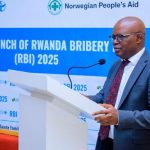
The findings were presented during a national consultation on corruption prevention attended by government institutions and development partners.
Chief Ombudsman Madeleine Nirere said the survey points to sectors where opportunities for corruption have yet to be eliminated despite the country’s broader progress.
“As the survey shows, there are institutions that have reached 76%, while others remain in the 50% range, and those are the areas where corruption loopholes still exist,” Nirere said.
She identified construction services and the issuance of permits—especially building permits—as areas that require closer attention because of the financial value of projects and pressure to speed up approvals.
“There is still a challenge in construction and in issuing permits, particularly building permits. That is why we have recommended that permits be processed through technology and that applicants interact directly with the system. Those are some of the measures intended to reduce those loopholes,” she said.
The report identified local public services, public procurement, management of public assets and some commercial transactions as the sectors most vulnerable to bribery.
Justice Minister Dr. Emmanuel Ugirashebuja said corruption has consequences that extend beyond financial losses, arguing that it also weakens public trust in state institutions.
“In Rwanda, preventing and fighting corruption is not simply about enforcing the law. It is a major investment in the country’s development,” Ugirashebuja said. “We believe that good governance, integrity and respect for the rule of law are the foundation of a peaceful, prosperous and inclusive nation.”
Under Rwandan law, corruption offences are not subject to a statute of limitations, meaning cases can be investigated whenever evidence becomes available.
The latest findings come as Rwanda continues to rank among Africa’s strongest performers in international assessments of public-sector integrity. Transparency International’s 2025 Corruption Perceptions Index placed Rwanda 41st globally, third in Africa and first in East Africa. By comparison, the global average score was 42, while Sub-Saharan Africa recorded an average below 32, making it the lowest-scoring region worldwide.
Over the past three decades, Rwanda has established institutions aimed at preventing and prosecuting corruption, including the Office of the Ombudsman, the Office of the Auditor General of State Finances, the Financial Intelligence Centre, the Rwanda Public Procurement Authority, the National Public Prosecution Authority and the Rwanda Investigation Bureau. The country has also enacted laws on asset declaration, illicit enrichment, whistleblower protection, anti-money laundering and asset recovery as part of its broader anti-corruption framework.
While the latest survey suggests bribery is becoming less common, officials said closing the remaining gaps in public service delivery will be critical to sustaining public confidence in government institutions.