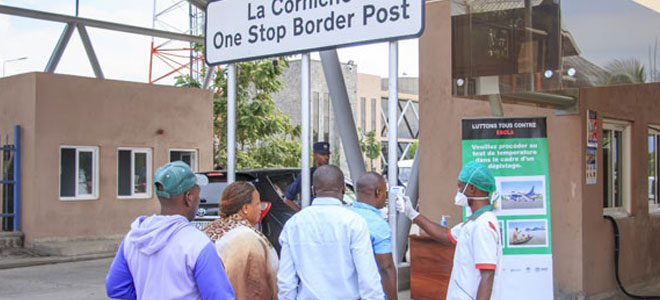
Rwanda has stepped up Ebola prevention measures at its borders and strengthened disease surveillance as authorities monitor a growing outbreak of the Bundibugyo strain of Ebola in eastern Democratic Republic of Congo and neighboring Uganda.
Prime Minister Justin Nsengiyumva said Rwanda has intensified screening and monitoring at all points of entry, expanded laboratory testing capacity and strengthened rapid response systems to prevent the virus from entering the country.
Nsengiyumva made the remarks while representing President Paul Kagame at a virtual meeting of African heads of state, government officials and development partners focused on efforts to contain the outbreak.
He said Rwanda remains free of Ebola cases, attributing the situation to sustained investment in the country’s health system and emergency preparedness.
“We have strengthened disease surveillance and monitoring at all border entry points, increased laboratory testing capacity, enhanced rapid response mechanisms and continued public awareness campaigns,” Nsengiyumva said.
In a statement issued Tuesday, the Ministry of Health said it is closely monitoring the outbreak, which was declared in May in Ituri Province in eastern Congo. The outbreak is caused by the Bundibugyo strain of the Ebola virus, for which there is currently no internationally approved vaccine or specific treatment.
The ministry said no Ebola cases have been detected in Rwanda or in communities along the country’s border with Congo. While the risk of the disease reaching Rwanda remains low, authorities said they are maintaining heightened vigilance and reinforcing prevention and early detection measures.
The measures include enhanced health screening at border posts, increased public awareness campaigns, strengthened disease surveillance and preparations to rapidly isolate and manage any suspected cases.
Health Minister Sabin Nsanzimana said preventing even a single Ebola infection is critical because of the potential impact the disease could have on Rwanda’s public health system, economy and social well-being.
“We do not want even one case because a single case would be enough to disrupt our economy, our health system and the lives of our citizens,” Nsanzimana said in an interview with CGTN Africa.
He said Rwanda has increased monitoring of travelers crossing its borders, conducts health screenings and has established procedures to isolate anyone showing symptoms associated with Ebola.
Nsanzimana also emphasized the importance of regional cooperation in containing the outbreak before it spreads further.
“The most important thing we can do as a region is to support efforts to fight the outbreak where it is occurring,” he said. “Even if we are not directly affected, we are contributing where possible to help bring the outbreak under control quickly.”
Ebola is a severe viral disease that spreads through direct contact with the bodily fluids of an infected person or contaminated materials. Symptoms can include fever, fatigue, vomiting, diarrhea and, in severe cases, internal and external bleeding.
Health officials say there is no approved vaccine or specific treatment for the Bundibugyo strain currently circulating. However, early diagnosis and supportive medical care can significantly improve a patient’s chances of survival.
The Ministry of Health has urged the public to remain vigilant, follow official health guidance and promptly report suspected Ebola symptoms through designated toll-free emergency lines.
Rwanda has previously responded to regional Ebola threats by strengthening border surveillance, training health workers and establishing emergency response mechanisms. Authorities say those measures remain in place as the country continues to monitor developments in the outbreak across the region.