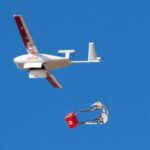
A Cabinet meeting chaired by President Paul Kagame on June 8 approved a series of policies and programs, including the leasing of state land in Karongi District to Zipline Rwanda Ltd. for the expansion of its medical drone delivery network.
The decision supports the continued growth of Zipline, a logistics company that uses drones to deliver blood, medicines and other medical supplies to health facilities across Rwanda.
Zipline began operations in Rwanda in 2016 with its first distribution center in Muhanga District in the Southern Province. The site in Shyogwe became the company’s first drone base in Africa, initially focused on delivering blood to hospitals in emergencies.
The company later expanded to Kayonza District in the Eastern Province to broaden coverage nationwide. In April, the Rwandan government and Zipline Rwanda signed agreements to further expand services, including into Kigali and the Western Province.
Zipline Rwanda Country Director Pierre Kayitana said the new Kigali operations will use more advanced drones that do not require fixed launch pads.
“These are special drones that do not require launch pads,” he said. “They go directly to where items are picked up, take off, and deliver them immediately.”
He said the Karongi site will become Zipline’s third major distribution center in Rwanda after Muhanga and Kayonza, extending services to Rusizi, Nyamasheke and nearby islands.
The government approved the leasing of four hectares of state land in Karongi to allow construction of the new facility.
The move follows a broader expansion plan backed by a $150 million investment package linked to the United States aimed at scaling Zipline’s operations across five African countries: Rwanda, Ghana, Nigeria, Côte d’Ivoire and Kenya. The agreement was signed in February 2026, following an earlier arrangement in November 2025 between Zipline and the U.S. State Department.
Kayitana said construction of the Karongi facility will begin immediately and is expected to be completed by August.
“We are now starting to build another Zipline station in Karongi so that we can provide services everywhere, including Rusizi District,” he said.
The Karongi center, located in Bwishyura Sector, is expected to cost more than $2 million and create 45 jobs, in addition to more than 250 existing Zipline employees in Rwanda.
It is expected to operate 35 drones, serving about 200 health facilities and 60 major medical centers, and reaching an estimated 2.8 million people.
Zipline Rwanda currently employs more than 250 staff and completed more than 200,000 deliveries in 2025. By April 2025, the company had reached 1 million total deliveries since launching operations in the country.
Initially focused on delivering blood, Zipline now transports more than 10 categories of medical products, including more than 200 types of medicines.
The company also plans to launch urban delivery services using a new generation of drones known as Platform 2 (P2), starting in Kigali before expanding nationwide.
Globally, Zipline operates across four continents. The company says a drone takes off every 30 seconds on average, serving more than 5,000 health facilities. Its aircraft have flown more than 193 million kilometers.
Zipline’s expansion plan aims to reach more than 130 million people across Africa and increase the number of health facilities it serves from 5,000 to 15,000 worldwide.