On Tuesday, the Minister of internal security, Dr. Vincent Biruta said the 1994 Genocide against the Tutsi was a result of decades of planning and anti-Tutsi persecution, rejecting claims that the mass killings were triggered by the death of then-President Juvénal Habyarimana.
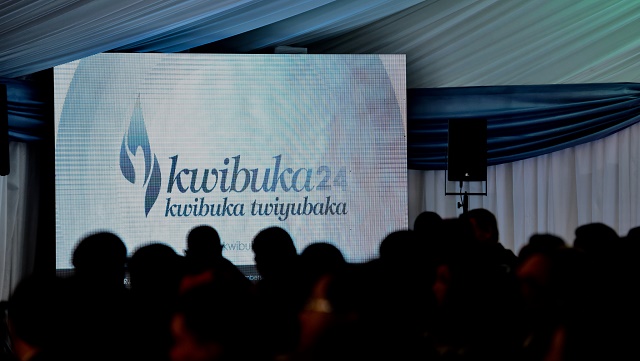
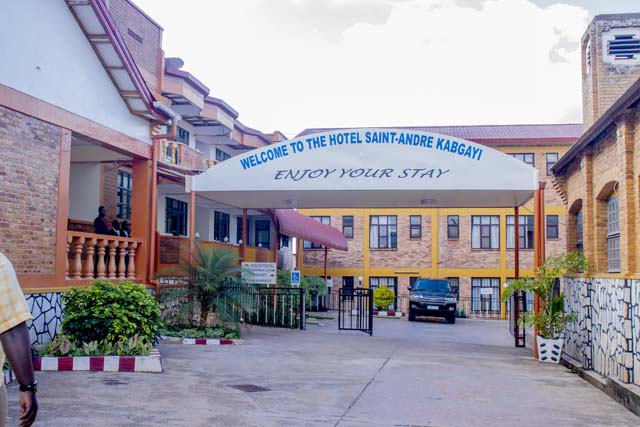
Speaking during a commemoration marking the 32nd anniversary of the genocide at the Kabgayi Genocide Memorial in southern Rwanda, Dr. Biruta said the genocide was a deliberate campaign prepared and carried out by the government in power at the time.
Biruta’s remarks come as Rwanda continues efforts to counter genocide denial and distortion, including narratives that portray the killings as a spontaneous reaction to the downing of Habyarimana’s plane on April 6, 1994.
“The genocide was not caused by the plane crash,” Biruta said. “Its roots go back much further, beginning during the colonial period and continuing through the First and Second Republics.”
The commemoration honored thousands of Tutsi who sought refuge in Kabgayi during the genocide, believing the prominent Catholic center would offer protection. The memorial site is the final resting place of more than 12,000 victims.
Biruta described Kabgayi as a significant location in the history of anti-Tutsi discrimination, pointing to decades of violence and exclusion that preceded the genocide. He recalled attacks against Tutsi in 1973 while he was a student at St. Léon Minor Seminary in Kabgayi, saying the events reflected a pattern of persecution that had begun years earlier.
“These are not stories we read in books,” he said. “We witnessed them ourselves.”
He cited a series of incidents that occurred before 1994, including attacks against Tutsi communities, the rejection of Tutsi refugees, killings in Kibirira in 1990 and inflammatory speeches by political and military figures. According to Biruta, those events demonstrated that the genocide was planned well before April 1994.
The minister said Kabgayi became a refuge for tens of thousands of Tutsi fleeing violence from across the country after the genocide began. Many believed the area’s religious significance, along with its hospitals and other facilities, would provide safety.
Instead, many of those who sought shelter there were killed.
According to Biruta, more than 50,000 people fled to Kabgayi during the genocide. By the time fighters of the then-rebel Rwandan Patriotic Front reached the area on June 2, 1994, fewer than 15,000 remained alive.
“By then, we were surrounded and waiting for what would have been the final assault,” he said.
The Genocide against the Tutsi, carried out over approximately 100 days between April and July 1994, claimed more than 1 million lives, the vast majority of them Tutsi, according to the Rwandan government.
Biruta also criticized the international community for failing to stop the killings and warned against what he described as continuing efforts to deny or minimize the genocide, particularly on social media platforms.
“Genocide is not a legitimate form of political expression,” he said. “It is a crime against humanity.”
He said some individuals and groups continue to distort the history of the genocide despite extensive evidence documenting its planning and execution.
The commemoration also included the burial of eight newly recovered genocide victims whose remains were recently discovered in different parts of Muhanga District.
Speaking on behalf of bereaved families, Nduwayezu Venuste, whose parents were among those killed, appealed to anyone with information about undiscovered victims to come forward.
“We are still asking people who know where our relatives are buried to tell us,” he said. “After 32 years, we have seen that it is still possible for families to recover and bury their loved ones with dignity.”
Thousands of Tutsi began gathering in Kabgayi on April 11, 1994, seeking protection as killings spread across Rwanda. Many were later taken away by militias and killed at various sites, including along the Nyabarongo River.
The event concluded with the burial of eight newly identified victims, underscoring the ongoing efforts to recover the remains of those killed during the genocide and provide families with an opportunity to lay their loved ones to rest with dignity more than three decades later.