AfroChampions and the African School of Governance (ASG) have launched a new initiative aimed at strengthening Africa’s ability to negotiate major international deals, from mining contracts and sovereign debt agreements to climate finance and trade partnerships.
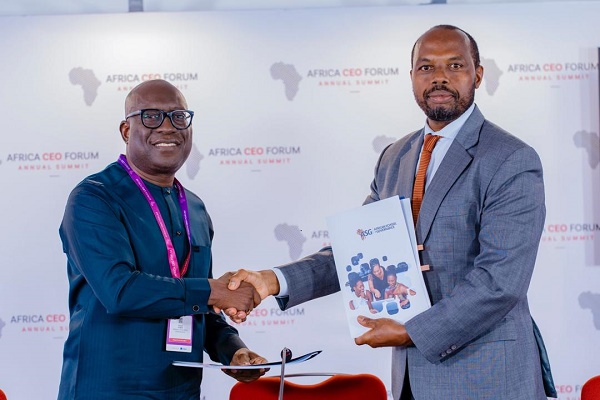
The initiative, called the Sankoree Institute of Global Negotiators (SIGN), was formally unveiled and signed on the sidelines of the Africa CEO Forum in Kigali on 14 May 2026. Organisers describe it as Africa’s first structured credentialling programme focused specifically on sovereign negotiations, a field they say has long lacked formal training despite the enormous financial and political stakes involved.
The programme is being developed jointly by AfroChampions and ASG as part of the broader Accra Reset agenda, a pan-African movement focused on expanding sovereign agency and improving how African countries engage with global institutions and multinational corporations.
The agreement establishing SIGN was signed by Paulo Gomes, Co-Chair of AfroChampions, and Francis Gatare, President of ASG, with backing from several prominent African leaders, including Ghanaian President John Dramani Mahama, former Ethiopian Prime Minister Hailemariam Desalegn, former Nigerian President Olusegun Obasanjo, and former Liberian President Ellen Johnson Sirleaf.
At the core of the initiative is a concern shared by many African policymakers and economists: that African governments often enter high-stakes negotiations at a disadvantage compared to multinational corporations, creditors, and foreign governments with deeper technical resources and more experienced advisory teams.
Each year, African states negotiate deals worth billions of dollars involving critical minerals, infrastructure, healthcare procurement, debt restructuring, and investment partnerships. According to the organisations behind SIGN, uneven preparation and limited institutional continuity have too often led to agreements that weaken long-term policy flexibility or reduce the economic value retained on the continent.
SIGN aims to address that gap by treating sovereign negotiation as a professional discipline rather than an ad hoc political exercise.
Based at ASG’s Kigali campus, the programme will combine practical negotiation training with case studies drawn from African experiences and historical dealmaking across the continent. Participants will work through simulated “Deal Labs” built around real-world scenarios, while also using AI-supported intelligence tools designed to provide precedent analysis, scenario modelling, and access to a growing library of negotiation case studies.
Graduates will receive Associate and Fellow designations, which will be renewed every three years as part of a broader effort to create a continent-wide network of trained negotiators operating under shared professional standards.
The programme also fits into the wider ambitions of the Accra Reset initiative, which brings together current and former heads of state from across the Global South. The initiative focuses on issues ranging from health industrialisation and labour mobility to climate finance, critical minerals, and reforms to global governance systems.
Supporters of SIGN argue that many of those broader policy goals ultimately depend on one thing: the ability of African governments to negotiate effectively.
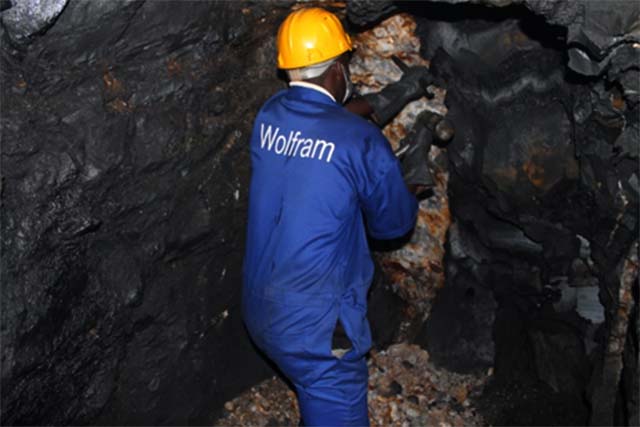
For example, initiatives aimed at increasing local value addition in critical minerals require negotiators capable of structuring joint ventures that keep more processing and industrial activity within Africa. Similarly, health-sector reforms and pharmaceutical manufacturing partnerships rely heavily on procurement agreements and complex international contracts.
ASG brings the academic and institutional framework to the project, including accreditation systems and partnerships with international institutions such as the Lee Kuan Yew School of Public Policy. The school itself was co-founded by Rwandan President Paul Kagame and Hailemariam Desalegn.
AfroChampions, meanwhile, contributes political networks and policy expertise developed through years of continental advocacy work. Organisers say SIGN’s curriculum will also draw heavily from the Sankoree Institute’s archive of African negotiation case studies, which forms part of the programme’s intellectual foundation.