In a move aimed at tackling the challenge of malnutrition in Western Province, the Rwanda Biomedical Centre (RBC) has received a significant boost in its quest to safeguard the health of the nation’s youngest citizens.
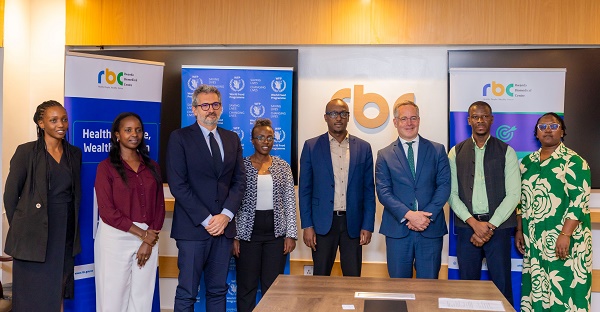
On Tuesday, the World Food Programme (WFP) handed over a suite of nutrition surveillance equipment to the government; a move officials say will sharpen the country’s ability to catch growth delays before they become permanent.
The consignment, which includes 144 height boards (infantometers) and 144 weighing scales, is destined for Ngororero and Rutsiro, two districts currently grappling with stunting rates well above 33%.
RBC Director General Claude Mambo Muvunyi noted that while the country has made strides, malnutrition remains a top-tier priority that requires “evidence-based interventions.”
“Ending malnutrition cannot be achieved in isolation,” observed WFP Country Director Andrea Bagnoli during the handover. “It requires partnerships that address not only food insecurity but also education and broader health challenges.”
The initiative is heavily backed by the Swiss Development Agency (SDC), whose Deputy Head of Cooperation, Ueli Maurderli, emphasized that while the gear is a “concrete outcome,” the real victory lies in coordination.
He noted that the tools provide the foundation for sustainable progress, but stakeholders must stay aligned to see measurable changes on the ground.
The timing of this support is critical. Rwanda is currently racing against a self-imposed deadline to slash stunting rates from 27% to 15% by 2029.
In districts like Ngororero, where stunting sits at 35.8%, these height boards, used to measure a child’s height against global age-based standards, are the first lines of defense. By identifying “at-risk” children under five early, health workers can intervene with nutritional support before growth challenges become irreversible.