Ruhango District has taken a bold step toward rethinking how it handles waste, launching a first-of-its-kind recycling project with support from the French government.
The pilot initiative aims not just to manage waste but to turn it into something useful, compost for farmers, paving materials, and other products, while easing the pressure on overflowing landfills.
Speaking at the launch, Ruhango District Mayor Valens Habarurema said the project builds on the district’s ongoing “Clean Ruhango” efforts, but with a sharper focus on efficiency and sustainability.
“This project will allow us to process nearly all our waste. Before, about 40 percent ended up discarded untreated. Our goal is to bring that down to just 10 percent,” he said, emphasizing both the environmental and practical benefits.
The system encourages households to separate waste using designated bags, while public bins have been installed in markets, shops, and along busy roads. Electric-powered bicycles collect the materials and ferry them to a central processing facility.
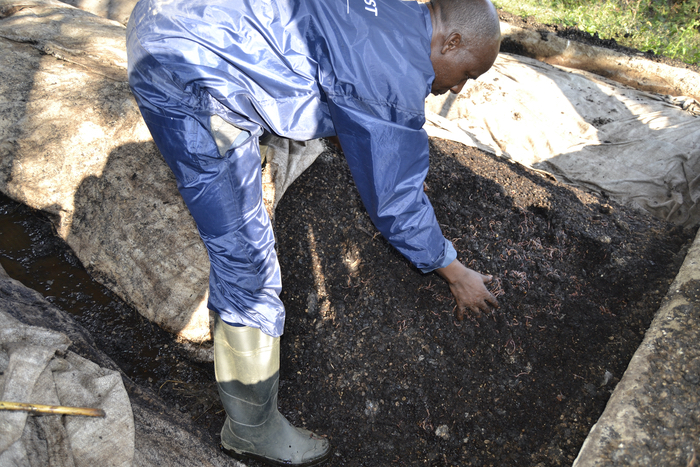
Once there, waste is sorted into categories, organic, plastic, metal, glass, and medical waste. Organic material undergoes a three-month composting process, then is tested and distributed to local farmers. Plastics and glass are processed through specialized machinery. Some are crushed and mixed with sand and cement to make paving stones; others are recycled or prepared for resale, turning what was once discarded into valuable resources.
The project is being implemented with technical support from SOSEN and will run for an initial three-month trial. If successful, officials hope it can serve as a blueprint for other districts across Rwanda.
Representatives from neighboring districts, including Muhanga, Kamonyi, and Nyanza, attended the launch to witness the initiative in action.
Beyond its environmental promise, the project is expected to generate economic opportunities. COPED highlighted that recycling activities can create new revenue streams while also improving sanitation and reducing health risks in the community.
The French government has contributed more than €400,000 (roughly 650 million Rwandan francs) toward waste-processing equipment. Officials also indicated that other districts adopting similar models could access funding of up to €1 million.
Early results are already visible. Structured waste collection systems are in place, compost and paving materials are beginning to roll out, and previously overcrowded dumping sites are slowly being cleared.