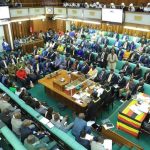
Members of Parliament on Monday debated a proposed road safety law that would allow drivers to consume alcohol provided their blood alcohol concentration does not exceed 0.8 grams per liter, while also giving the transport minister authority to lower that limit through a ministerial order.
The debate took place as lawmakers reviewed the draft legislation ahead of its adoption. Several legislators raised concerns about the potential implications of granting the minister discretionary power to alter a threshold they described as a core element of the law.
MP Germaine Mukabalisa said setting the alcohol limit in legislation while allowing it to be changed by ministerial order could undermine legal certainty. She warned that such flexibility could lead to frequent changes, leaving the public unsure of the applicable standard.
“This is a fundamental provision of the law,” she said. “Once Parliament sets a limit, citizens should clearly know what applies on a permanent basis.”
Mukabalisa called for further consultations by the parliamentary Committee on Foreign Affairs, Cooperation and Security, including a review of how alcohol limits are regulated in neighboring countries and elsewhere.
Other lawmakers echoed similar concerns. MP Yvonne Mujawabega said the government should clearly explain the circumstances under which the limit could be reduced, noting that the issue directly affects public safety.
MP Christine Mukabunani questioned the criteria the minister would use to justify lowering the limit, warning that vague guidelines could create opportunities for abuse or corruption.
The chairperson of the Committee on Foreign Affairs, Cooperation and Security, Ambassador Hope Gasatura Tumukunde, said the proposal represents progress because alcohol limit was previously set out in a presidential decree rather than in law.
“We discussed this extensively and agreed it was better to enshrine the limit in legislation,” he said.
Some lawmakers cautioned that ministerial orders should not supersede laws passed by Parliament. MP Erneste Nsangabandi said that without clear safeguards, a ministerial order could effectively override the law, which would contradict the legal hierarchy established by the Constitution.
He noted that the 0.8 grams-per-liter limit was based on scientific research and should therefore remain fixed in the law.
Mukabalisa added that lowering the limit outside Parliament could expose drivers to severe penalties without legislative oversight, including imprisonment and vehicle impounding.
Dr. Jimmy Gasore, Minister of Infrastructure (Right) at parliament
Responding to the concerns, Infrastructure Minister Dr. Jimmy Gasore said adjusting alcohol limits would not be unprecedented and emphasized that Rwanda’s current threshold is higher than that of many countries.
“The 0.8 limit is relatively high by international standards,” he said, adding that in some countries violations can lead to severe sanctions, including loss of residency rights.
Gasatura said the proposed ministerial order would not remove the right to consume alcohol but would require drivers to exercise caution. He noted that authorities in Rwanda have applied the 0.8 limit for years with positive results.
The provision was ultimately approved as lawmakers continued reviewing other sections of the draft law. Under the bill, drivers who dispute roadside test results would be entitled to request a confirmatory analysis at a national forensic laboratory.