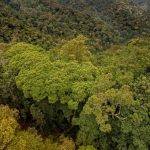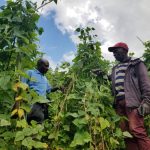
The Rwanda Environment Management Authority (REMA), in partnership with the NAP Kora Wigire project funded by the Global Environment Facility (GEF), has planted Calitris trees on more than 1,400 hectares of rocky hills in the Mpanga, Nasho, and Kigina sectors in Kirehe district.
The initiative aims to combat climate change and restore degraded lands exposed to intense sunlight.
Once barren and unable to retain water, the hills saw little vegetation and suffered from scarce rainfall. Local residents say the Calitris planting program has restored hope, improved soil productivity, and begun to transform livelihoods.
“Before, this place was so hot that nothing could grow,” said Nsengiyumva Anatole, a resident of Mpanga. “When it rained, the water would run off into Tanzania. Now, we focus on protecting the trees and planting mixed crops and trees on large farms.”
Muganza Eric, also from Mpanga, said the initiative has changed how the community views environmental protection. “Where there were no trees, the air was unpleasant and hot. After learning the importance of trees, we decided to plant and care for them,” he said.
REMA’s media officer, Ngendahimana Cyprien, said Calitris trees are especially suited for harsh environments. “This area was mostly rocks, and people doubted anything could grow here. But Calitris has shown that even difficult landscapes can regain life, giving hope for projects that restore degraded land and increase soil fertility,” he said.
The NAP project also promotes agroforestry, combining trees with crops to improve soil health, reduce erosion, and enhance air quality.
Rangira Bruno, the Mayor of Kirehe district said local authorities are encouraging a culture of planting and nurturing trees despite frequent strong sunlight.
“Trees are essential for livelihoods and combating malnutrition. They contribute to the economy, improve well-being, and support broader development,” he said.
Rangira Bruno, the Mayor of Kirehe district
Calitris trees stabilize rocky soils with deep roots that prevent erosion and landslides. They tolerate heat and drought, making them ideal for areas where other trees cannot survive. Internationally recognized for land restoration, Calitris is used in Australia, Morocco, and New Zealand to rehabilitate degraded land and combat drought.
This year, the NAP Kora Wigire project plans to plant 22,500 fruit trees, integrate trees with crops on 1,600 hectares, and restore 1.5 million square meters of additional land. Community forest restoration will cover 150 hectares.
Rwanda has also made significant progress nationally. According to the Rwanda Forestry Authority, forest coverage now reaches 724,695 hectares, or 30.4% of the country’s land exceeding previous targets, with forests now covering 35% of national territory.