A new irrigation project in eastern Rwanda is helping farmers in Kirehe District rebound from years of severe drought that wiped out crops and pushed families to the brink of displacement.
The initiative, known as LDF3, is led by the Rwanda Environment Management Authority and is valued at 11 billion Rwandan francs (about $8.5 million). The project aims to reduce poverty by expanding access to consistent, climate-resilient irrigation.
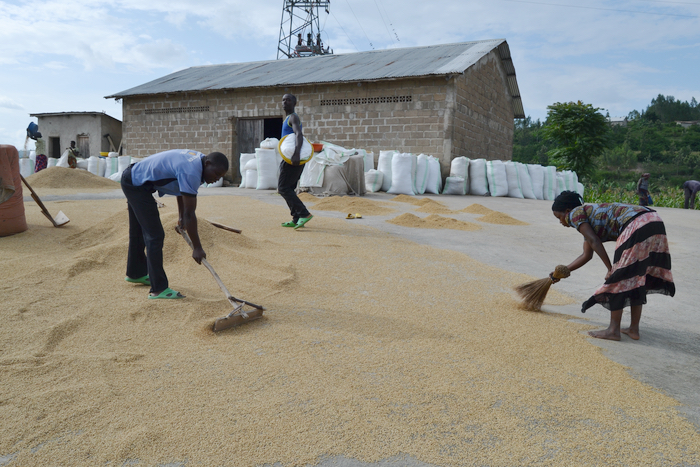
Launched last year, LDF3 began by irrigating 20 hectares. It has since expanded to 120 hectares in the Gicuma valley, now farmed by about 280 members of the Abanyamurava cooperative. The land supports maize, beans, vegetables and potatoes crops that previously struggled to survive under traditional rain-fed farming.
For years, Musaza Sector residents battled intense heat and erratic rainfall that routinely destroyed fields. The new system uses solar power to pump water from the Akagera marshland to reservoirs on higher ground, where it is then distributed across farmland.
Farmers say the technology has brought dramatic change. Average maize yields have tripled, rising from about 2 tons per hectare to as much as 6 or 7 tons with full irrigation.
For Musabimana Violette, a mother of five in Gicuma village, the results have been transformational. She said she once planted without hope of a harvest.
“Before, I planted without expecting anything because the sun destroyed everything,” she said. “Now I harvest a ton of maize and more than 800 kilograms of beans. I can feed my family and still sell some.” She credited national leadership for supporting the initiative.
Jean Marie Murekezi, president of the Abanyamurava cooperative, said the contrast between irrigated and non-irrigated land is striking.
“Where we used to harvest 2 tons of maize, now we get more than 6,” he said. “We used to struggle to get enough food. Now we supply markets in other sectors that face drought.”
Project coordinator Charles Sindayigaya said the effort is supported by the Global Environment Facility through the U.N. Development Programme and is being implemented in both Kirehe and Gakenke districts. Additional land will be added, he said, allowing farmers to plant year-round.
“This area used to produce almost nothing,” he said. “The sun that once caused hardship is now part of the solution. No planting season is wasted.”
Project coordinator Charles Sindayigaya
Kirehe Mayor Bruno Rangira said the district is among the most affected by prolonged dry spells and climate change. He said the project is helping farmers adapt and restore secure livelihoods.
Rangira said potatoes and other crops once considered unsuitable for the region are now thriving. He urged residents to use the new system to boost production for both home consumption and local markets.
The project, which runs from 2022 to 2028, is expected to benefit about 500 households in Kirehe and Gakenke districts.