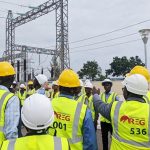
The Prime Minister says technology-driven, environmentally responsible mining will drive Rwanda’s next phase of economic growth.
Prime Minister Justin Nsengiyumva on Tuesday opened the 2025 Rwanda Mining Week, highlighting the country’s ambitions to grow its mining sector into a $2.17 billion industry by 2029.
Speaking to more than 2,000 participants, including investors, government officials, and development partners, Nsengiyumva emphasized that Rwanda’s mining industry is increasingly technology-driven and focused on environmental sustainability.
“Mining is not only about extracting resources; it is also about creating wealth and innovation,” Nsengiyumva said. “This sector provides real benefits to communities, supports good governance, and protects our environment.”
The Prime Minister said the sector currently employs more than 92,000 Rwandans and contributes roughly 3% to the country’s gross domestic product. He also highlighted Rwanda’s growing reputation as a reliable global supplier of key minerals, including tin, tungsten, tantalum, and gold.
Alice Uwase, Chief Executive Officer of the Rwanda Mines, Petroleum and Gas Board (RMB), said the country has made significant progress in moving from traditional mining to value-added processing, citing new domestic facilities for refining gold, tantalum, and tin.
Rwanda earned $1.75 billion from mineral exports in 2024. The government has set a goal to increase that to $2.17 billion by 2029, driven by expanded investment and new exploration initiatives. Currently, 52 exploration sites are active across the country, targeting lithium, beryllium, gold, and other minerals.
In May 2025, the RMB released the Rwanda Mining Investment Pitchbook, outlining 10 new mineral zones spanning more than 13,000 hectares. Officials plan to publish an updated version on Wednesday.
Nsengiyumva said the government is committed to ensuring that mining growth aligns with environmental standards as the global economy transitions toward low-carbon technologies.
“This week should remain a platform for dialogue, collaboration, and renewed commitment to building a mining sector that grows our economy while protecting our planet,” he said.
Rwanda’s key minerals include wolframite, cassiterite, coltan, and gold, with annual production ranging from 8,000 to 10,000 tons. Uwase said the sector’s modernization, including technology adoption and professionalization, has helped increase domestic value addition and improve competitiveness.
The prime minister reaffirmed the government’s commitment to supporting investors and workers in the mining sector.
“Our vision is clear: we are building a responsible, inclusive mining sector aligned with international standards,” Nsengiyumva said. “Rwanda will continue to be a trusted partner committed to sustainable development.”