[FREETOWN, SIERRA LEONE]: The mobilization of large-scale investments in Africa is crucial to accelerate renewable energy adoption across the continent as a solution addressing poverty, fostering economic growth, and powering industrialization, according to experts.
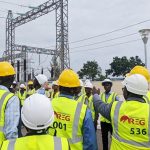
Energy developers, scholars and policy makers from across Africa and other stakeholders gathered in Freetown, the capital city of Sierra Leone, from 22–23 October 2025, resolved to generate potential solutions, dedicated to advance identified projects on renewables energies and to mobilize investment readiness for supporting implementation efforts across the continent.

The discussions on the sidelines of the second edition of the Accelerated Partnership for Renewables in Africa (APRA) Investment Forum in Freetown also emphasized the importance of reducing perceived risks and addressing structural barriers to investment, including issues related to revenue models, infrastructure limitations, and market stability.
Latest official statistics show that Africa’s current energy generation mix continues to rely on fossil fuels, while renewable sources account for nearly 18 percent of the electricity output. At the same time, Africa is one of the least electrified regions globally: over half a billion people lack access to electrical energy connections.
The two-day event built on the success of the inaugural forum in Nairobi, which mobilized in 2024, a project pipeline valued at USD 2.7 billion and around 1 gigawatt of potential renewable power generation capacity. The current APRA initiative aims to deliver 15 GW of new clean power capacity by 2030 while catalyzing sustainable industrial growth.
Switching to a green industrialization
The International Renewable Energy Agency (IRENA) is currently supporting renewables-based energy transition promises to deliver vast socio-economic benefits to countries across Africa, improving energy access, creating jobs and boosting energy security.
Key focus, according to Francesco La Camera, the Director-General of IRENA, is to help African countries leveraging renewables and distributed energy resources to achieve universal energy access.
“Renewables have become the most affordable source of power generation, yet the gap between Africa’s vast renewable energy potential and actual deployment remains wide,” he said.
Latest estimates by the African development bank show that Africa has the potential to diversify its economy by emerging as a major exporter of power, green hydrogen, and derivatives like ammonia.
Data show that surging global demand for the “transition minerals” needed for solar panels, wind turbines, batteries and electric vehicles will create further opportunities for industrial development and export.
In order to fill this gap, the Accelerated Partnership for Renewables in Africa (APRA) which is supported by IRENA has committed to advancing renewable energy transitions and green industrialization on the continent
The initiative leverages especially the political leadership to drive action, innovation, and other new models of cooperation especially in Djibouti, Ethiopia, Ghana, Kenya, Mozambique, Namibia, Rwanda, Sierra Leone, Uganda and Zimbabwe, under support by Denmark, Germany, Japan, the United Arab Emirates and the United States.
The International Renewable Energy Agency (IRENA) stresses the need to mobilize significant investments as a catalyst for boosting renewable energy in Africa in order to meet global climate and development goals, with a target of at least $1.4 trillion annually by 2025-2030.
Commenting on these efforts, Dr. Kandeh Yumkella, Energy Sector Lead, Chairman of the Presidential Initiative on Climate Change and Renewable Energy and Food Security (PI-CREF) and Energy Governance Coordination Group (EGCG) in Sierra Leone, hailed the signing of a 2.2 billion deal that was concluded in Freetown, between APRA members countries and donors to boost shares of renewables from current 46% up to 52% in Africa.

However, IRENA Director-General Francesco La Camera noted that filling the [existing] gap between Africa’s vast renewable energy potential and actual deployment requires to remove persistent financial barriers and ensure that the affordable capital reaches viable projects on the continent.
“There is a pressing need to unlock innovative financing and channel capital [for renewables],” he told delegates.
Abundant renewable resources in Africa
Experts gathered on the sidelines of the second APRA forum also urged appropriate mechanisms to eliminate all key hurdles to Africa’s renewable energy adoption, requiring innovative policies and international collaboration.

They said the suggested move is essential for helping African countries to transition to renewable energy and reducing carbon emissions and mitigating climate change.
Across different regions in Africa, data show that solar arrays and wind turbines are concentrated in sunny and windy areas, and transmission infrastructure is needed to move this power over long distances to boost industrialization, it said.
During the implementation phase, IRENA as the lead intergovernmental agency for the renewables-based energy transition is helping countries to adopt innovations while working towards a systemic change across the energy sectors.
With its abundant renewable resources such as solar, wind, hydropower, and biomass, latest estimates show that Africa as the uniquely positioned continent to play a key role in the global low carbon energy transition.
A recent study conducted by a team of researchers from different universities from Nigeria and China revealed that harnessing just 25 % of Africa’s renewable energy potential could significantly reduce energy poverty, contributing to a sustainable, low-carbon future.
The study published in May 2025, by the ‘Energy Strategy Reviews’ scientific journal, suggests that targeted investments in renewable energy could drive a just transition, improve energy access, and foster long-term socio-economic development across the continent.
Based on these findings reflecting the current situation, IRENA is deploying its full range of project facilitation tools and partnerships to de-risk investment, unlock innovative financing, and channel capital where it is most needed.
The 2022 Renewable Energy Market Analysis – Africa and its Regions report shows that the demand for power in Africa, is projected to surge over the coming decades, more than two times by 2030 and eight times by 2050.
The official report jointly published by IRENA and the African development bank (AfDB), attributes primarily this growth to the industrialization as African countries are currently pushing to electrify and grow their economies while decarbonizing in line with the global energy transition.
Data show that renewables are expected to play a central role in Africa’s power sector development, with capacity expected to grow to 180 GW by 2030 and 1.2 TW by 2050.
The final ministerial statement on the second APRA forum in Freetown, Sierra Leone stresses the critical Role of Technology Transfer to support economies of scale, noting that none of the Sustainable Development Goals (SDGs) are achievable without energy access.
The official statement also welcomes the mission 300 Initiative under which African countries have established a clear pathway for energy transition by 2030.