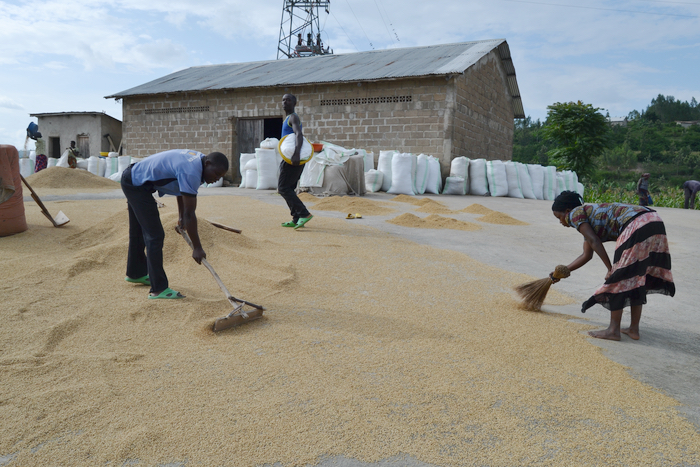
Rwanda’s Agriculture and Animal Resources Development Board (RAB) has announced that 819,000 hectares will be cultivated during the 2026A planting season, with farmers urged to follow best practices to boost productivity and ensure food security.
The land will be used to grow priority crops across the country, including beans, maize, cassava, potatoes, wheat, soybeans, rice, vegetables, and fruits.
Launching the season in Kinazi Sector, Ruhango District, RAB Deputy Director General for Crop Development, Dr. Florence Uwamahoro, said the program will be reinforced through more than 13,000 “Food Basket Sites” nationwide, covering nearly 500,000 hectares. The initiative is designed to facilitate crop monitoring and increase yields.
Dr. Florence Uwamahoro, RAB Deputy Director General for Crop Development
“This program builds on the land consolidation model, through cooperatives, marshlands, radical terraces, and other community-based initiatives, where farmers grow one crop collectively,” Uwamahoro said.
Citing maize as an example, she noted that Rwanda’s average yield is about two tons per hectare, though research shows the potential to harvest 10 to 12 tons. “With improved seeds already available, this is achievable. It would allow us to be food secure and generate surpluses for the market,” she said.
The official urged farmers to prioritize organic manure, which not only provides nutrients but also improves soil water retention, particularly in sandy areas, making crops more resilient to climate change while complementing chemical fertilizers.
“You’ve often heard it said that agriculture and livestock are like a skirt and a blouse, but today it has changed; they are now like one inseparable fabric,” Uwamahoro said.
She also reminded agricultural officers to work closely with farmers and ensure timely access to quality seeds and fertilizers.
Ruhango District Mayor Valens Habarurema echoed the call, urging stakeholders to “put their feet in the field” and stay aware of what is happening on the farms so pests and diseases can be detected and controlled early.