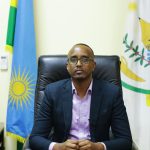
Rwanda’s Prime Minister, Dr. Justin Nsengiyumva, on Friday urged African nations and financial institutions to significantly increase investment in infrastructure, sustainable agriculture, and small businesses to fast-track the continent’s economic transformation.
Speaking at the 2025 General Assembly of the Eastern and Southern African Trade and Development Bank (TDB Group) held in Kigali, Nsengiyumva said that Africa’s long-term development depends on focusing resources and political will on foundational sectors that drive inclusive growth.
“To accelerate Africa’s sustainable development, we must prioritize investment in roads, ports, and electricity infrastructure,” he said. “These are key to boosting intra-African trade and enhancing our global competitiveness.”
He emphasized that agriculture remains at the heart of many African economies and that targeted investments in climate-resilient, environmentally sustainable farming systems are essential to achieving food security and building economic resilience.
The Prime Minister also called for greater support to small and medium-sized enterprises, especially those led by women and young people, who often struggle to access funding. He noted that SMEs play a critical role in job creation, innovation, and building inclusive economies, and that neglecting them would be a missed opportunity for long-term growth.
The summit also marked the 40th anniversary of the TDB Group, a multilateral development bank created by 11 founding member states of COMESA, including Rwanda. Dr. Nsengiyumva praised the bank’s contribution to regional development over the past four decades, saying its financing had transformed lives and economies through support for infrastructure, agriculture, energy, trade, and health systems.
He noted that Rwanda had benefited from up to $1 billion in loans and grants from the bank, supporting key areas such as transport, aviation, value-added exports, renewable energy, and vaccine production. He particularly highlighted the bank’s support for RwandAir, the country’s national airline, and investments that have helped reduce reliance on imported medical goods.
Despite these gains, the Prime Minister challenged Rwanda’s private sector to increase engagement with the TDB Group. Out of the bank’s $36 billion portfolio across Africa, only $1 billion has gone to Rwanda, which he said should improve.
“That is not enough,” Nsengiyumva said. “We must do more to seize the opportunities TDB offers. Our private sector must engage more boldly.”
He pointed to recent signs of economic resilience across the continent. Africa’s GDP grew by 3.2 percent in 2024, with trade bouncing back from a 5.4 percent contraction in 2023 to a 13.9 percent increase in 2024. Growth projections remain strong, with Africa expected to expand by 3.9 percent in 2025 and 4.1 percent in 2026. In the TDB Group’s coverage area, growth is forecast at 4.3 percent and 5.1 percent respectively.
Nsengiyumva concluded by expressing confidence in Africa’s potential and reaffirming the importance of strong political leadership, financial innovation, and regional integration through frameworks like the African Continental Free Trade Area (AfCFTA) to unlock sustainable, inclusive development.