Women in Rwanda are increasingly benefiting from a transformative shift in the country’s mining sector, which has evolved significantly over the past three decades. Once dominated by men, the sector is now seeing women take on critical roles as investors, exporters, technicians, and policymakers.
This shift is attributed to the apparent gender-sensitive and democratic economic environment in the country’s second foreign exchange earner’s stance to uphold gender-sensitive laws and policies. The beneficiaries of women’s emancipation laud concerted efforts by stakeholders like Rwanda Mines, Petroleum, and Gas Board (RMB) to promote women’s participation, and the formation of associations like Rwanda Women in Mining Association (RWIMA).

In addition, they are grateful to stakeholders who supported women in taking on roles that were once dominated by men, such as geologists, engineers, and environmentalists.
RWIMA, in particular, has emerged as a vital platform for empowering women in the sector. Through training, mentorship, and networking opportunities, the association helps women build the skills and confidence needed to thrive and lead in the mining industry.
Immaculée Nyiranzirorera, the President of RWIMA emphasizes that they work with government institutions and other organizations “to address challenges in the mining sector.”

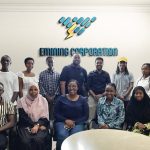
Immaculée Nyiranzirorera, the President of RWIMA
She observes that while mining can be dangerous and difficult, women are contributing meaningfully to national development by paying taxes, improving family livelihoods and foreign exchange earnings, while prioritizing safety mining over traditional artisanal techniques.
RWIMA strictly prohibits artisanal mining, which is illegal in Rwanda, and promotes environmental sustainability and safety in mining operations.
Nyiranzirorera, stresses the use of proper safety equipment to minimize risks.
Established following a 2015 African Union resolution calling for the creation of women’s mining associations across Africa, RWIMA has grown into a key platform for advancing women’s participation in the sector. RWIMA is a member of both the Association of Women in Mining in Africa (AWIMA) and the Rwanda Mining Association, enabling it to collaborate regionally and nationally to promote gender inclusion, policy advocacy, and capacity building within the mining industry.

Though relatively young, RWIMA’s impact is already regionally recognized. Its president, Nyiranzirorera, was elected to represent the Eastern Africa region and currently serves on the new Executive Board of the Association of Women in Mining in Africa.
The association’s goal is to empower women and their families by improving the quality of life, fostering social justice, and contributing to sustainable development in a democratic environment.
RWIMA unites women in the extractive industry, advocate for rights, and improve their well- being. As part of this mission, the association collaborates closely with the government and stakeholders to help implement Vision 2050, ensuring sustainable management of mineral and quarry resources in Rwanda.
To become a member of RWIMA, one must be actively working in the mining sector and hold a valid license. The association develops targeted programs to support women in mining and quarrying, helping them advance professionally and improve access to finance.
Committed to promoting gender equality, RWIMA collaborates with partners to share knowledge, best practices, and policy recommendations.

The association also places strong emphasis on empowering young women, girls, and youth, encouraging them to pursue opportunities in the mining industry through mentorship, skills development, and awareness campaigns.
RWIMA began in mineral and quarry mining with just 13 members. Today, it operates under a robust governance structure that includes a General Assembly—the highest decision-making body—an Executive Committee, and dedicated subcommittees for management, audit, and conflict resolution.
As mechanized mining methods are increasingly adopted, the president notes that more women are joining the sector. “These methods, like digging tunnels and transporting ore, are becoming more manageable as
technology advance.”
They help in advocacy to address gender-based violence (GBV) through policies that enhance women’s safety at the workplace. While mining companies that violate these policies are held accountable.
Josiane Nsanza, one of the founders and treasurer of RWIMA recalls, “Most people think mining a male-dominated sector, but being in RWIMA, I find myself with other women who share the same ideas,” she says. “The association helps women not only learn how to get their product to market but also realize their potential and how to shape the industry’s future.”

Josiane Nsanza, one of the founders and treasurer of RWIMA
Nsanza, the Managing Director of EPROCOMI, a mining company founded by her family, says that women now have access to finance and grants from institutions like the Green Fund, as well as obtain mining licenses and concessions through RMB. She believes that women can thrive in business: “Once you get into this sector, there’s so much you can learn. It gives you the capability to create your own company and build the kind of business you want, with RWIMA’s help.”
While women like Nsanza and Nyiranzirorera take on roles once dominated by men, they still face challenges like societal perceptions. Nsanza notes, “If women want to go into deep mines, some people tend to say we won’t be able to handle it. They see us as fragile, but once you show them you can do it, it becomes easier.”
Mining has become a key driver of Rwanda’s economy, now the second- largest foreign exchange earner after tourism.