In Rwanda, statistical data shows promising progress in the fight against stunting, a condition that has long posed a challenge to the country’s development goals.
Stunting, caused by chronic malnutrition affects both the child’s physical growth and cognitive development, often leaving long-term effects that stretch into adulthood.
The Rwanda Demographic and Health Survey shows that 38% of children under the age of five were stunted in 2014–2015. By 2019–2020, that number had dropped to 33%.
The government had set an ambitious target to bring stunting down to 19 percent by 2024, but the target was not achieved.
The line graph shows a decline in stunting in Rwanda from 45 per cent in 2oo6 to 35.5 per cent in 2020
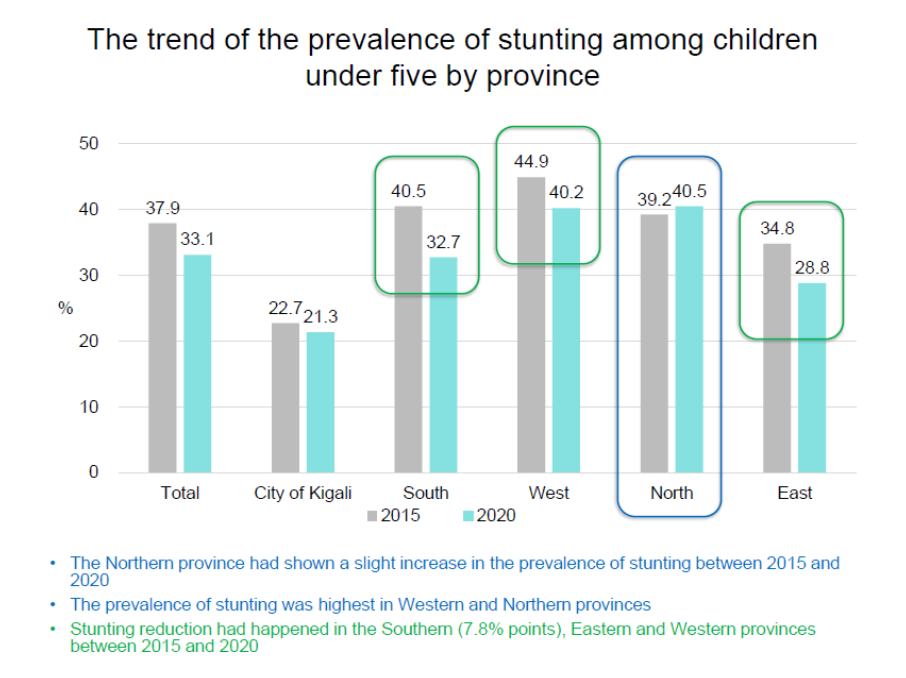
Behind progress, the data also tell a story of persistence. Many families across districts still struggle to put nutritious food on the table. In the Northern and Western Province, prevalence of stunting is still high. 40 % and 40.5% respectively.
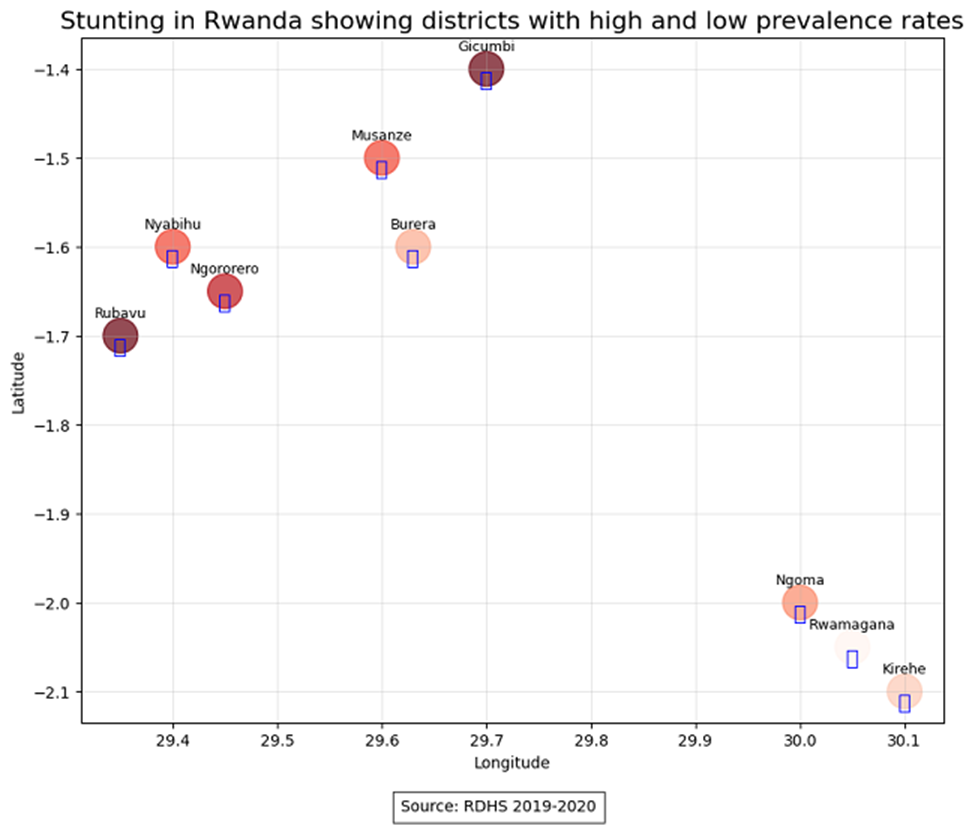
The districts of Musanze Burera, and Gicumbi in the north have a high prevalence rates. Rubavu was at 35%, Nyabibu and Burera at 31% and 28% respectively. This highlights a high concentrated problem in this regioin.
In the Western Province, Rubavu, Nyabihu and Ngororero showed the least progress in stunting according to the RHS 2019-2020. “Even with fertile land, malnutrition remains widespread because many families cannot access the food their children need,” said Pacifique Ishimwe, Vice Mayor for Social Affairs in Rubavu District.
In a field visit to 12 disttricts, the Chamber of deputies sometime back observed, “Many parents still lack awareness about proper nutrition and daily feeding practices…..in some homes, poverty and limited knowledge mean children meals altogether.
Serious problems were also observed in home-based Early Childhood Development (ECD’s) centers. Some centers do not operate every day. Others fail to provide enough food, or provide meals that lack proper nutrients. Caregiver training is often inadequate, and sanitation standards fall below national requirements. Some centers also operate without proper authorization,
Souce: NISR Report
In contrast, Kamonyi, Nyarugenge, and Ngoma districts recorded the most impressive declines, up to 70%, while sectors in Kigali City, including Kicukiro and Nyanza, have already reduced stunting below the national target.
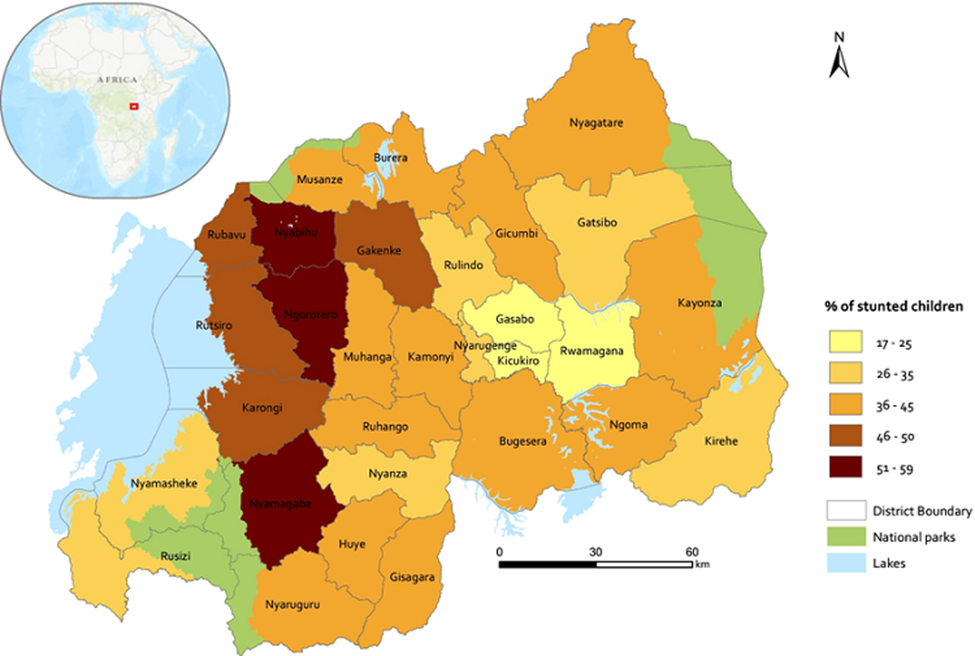
Geographical Distribution of Stunting in Rwanda
Source: RDHS 2019-2020 Amap of showinng districts with high prevalence rates of stunting inn dark brown.
Meanwhile, the Eastern Province has emerged as a model of success. Districts such as Ngoma, Kirehe, and Rwamagana recorded stunting reductions of 71%, 67%, and 56%, respectively.
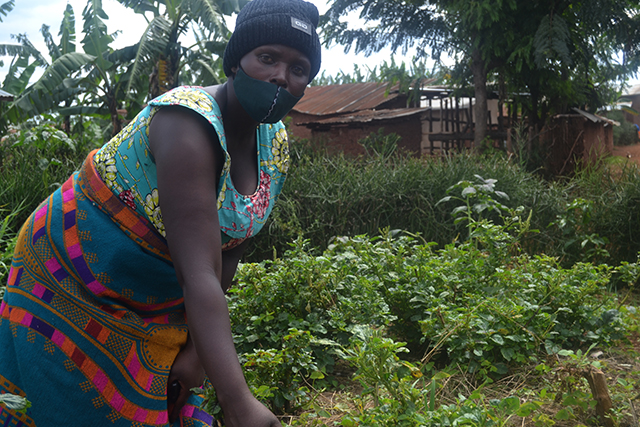
Many local leaders credit programs like “Girinka” (“One Cow per Poor Family”) and Akarima k’igikoni (kitchen gardens) for improving household nutrition.
“High milk production and awareness campaigns have played a big role in fighting stunting,” said Alphonse Rutazigwa, a farmer in Karangazi Sector.
The above graph shows, that districts below have low prevalence of stunting due to goverment programs like one child per familiy cow, and kitchen garden.
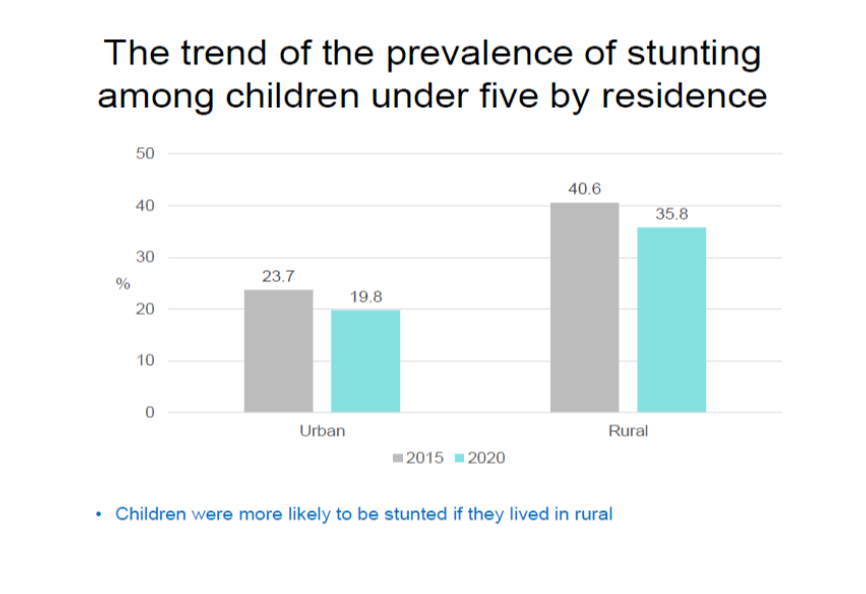
Yet, gender and education gaps remain. The RDHS 2019–2020 shows that boys (35%) are more likely to be stunted than girls (31%), and children born to mothers without formal education face stunting rates as high as 45%, compared to just 6% among those whose mothers studied beyond secondary school. High rates of stunting have been observed in rural communities compared to urban regions.
Source: RDHS 2015-2020
Health experts say these disparities reflect deep- social and economic inequalities. Poverty, limited dietary diversity, and a lack of nutrition awareness continue to affect rural families the mostF
Further, experts have said that child stunting is not about just food, it is also tied to women exposure to violence, their autonomy, and well-being. Nearly half of the mothers experience some form of violence and this has a measurable impact on their child’s growth and development.
Children whose mothers faced physical and sexual violence before or during pregnancy are reported to be more likely to be stunted.
Looking at the data, Rwanda Dispatch had a discussion with Dr. Jean Nepo Abdullah Utumatwishima, a PhD holder and the current Rwandan Minister of Youth. He said that public experts have invested a lot in providing nutrition to children below the age of five. “Because it is about food, we have a lot of programs that support families to fight malnutrition,” he explained.
Having done all that, he added, child stunting has not reduced as much as we would like.
The Doctor further explained that we equally deployed same measures in provinces, and most have seen a decline, why not in the North, which is why “maybe it was not the food”.
He emphasized that stunting is multidimensional. Factors such as intimate partner violence (IPV), maternal health, household income, and parenting practices all significantly impact child stunting.
In a study of 601 households in Northern Province, Dr. Nepo noted that children of mothers experiencing IPV or depression were more likely to be stunted. ”Stunting isn’t just about food, Mothers mental health, household living conditions, and supporting fathers are critical for a child’s growth,”
“There are other factors like household living condition, relationship of house partners, which affects mental health mothers, household income, and poor parenting may lead to not feeding children promptly leading to Stunting.” Dr. Nepo and current Minister of Youth pointed out.
DR. Nepo said that, in the research, they asked everything, including intimate partner violence (IPV), we checked for depression, anxiety, suicidal actors in 601 households, we found that in families were partners, mothers had a lot of issues like depression, they had more stunted children.
“We need to develop programs about stunting in a compressive way, for the child to leave in family and with a mother who is 100% health, and the husband must stand the responsibilities in adulthood.”
“We need to factor in household living conditions to educate pregnant mothers about IPV and prevent poor parenting during their child’s early years. This should also be included in antenatal care consultations and captured in the Rwanda Health Management Information System (HMIS) by integrating data on household conditions, IPV, and mental health. Doing so will give us a clearer picture of how many women are pregnant in Rwanda, how many experience depression, and what these figures mean for action. It will also highlight issues of violence between couples,”* he explained.
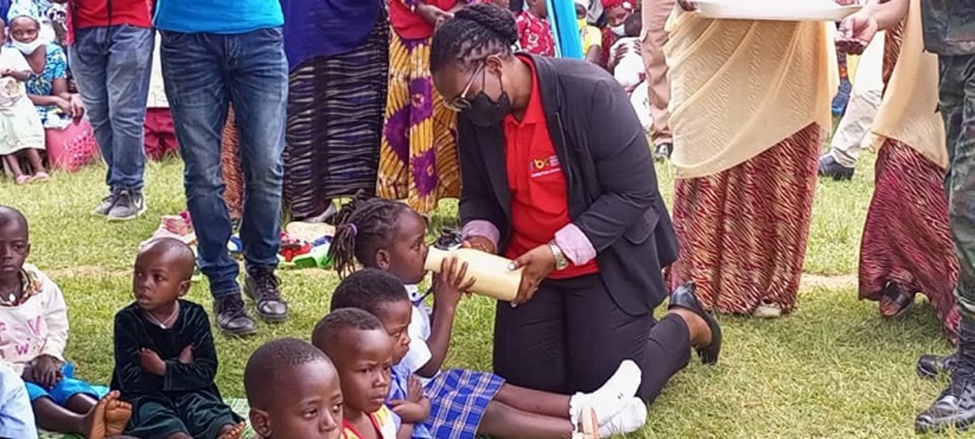
Parents are urged to give their child milk because it builds a stronger healthier child tomorrow preventing stunting through good nutrition
Rwanda has made progress in fighting stunting through a wide range of interventions: Maternal and child health services, Improved sanitation and hygiene, Family planning and antenatal care, Community health insurance, Nutrition programs and early childhood development centers (ECDs)
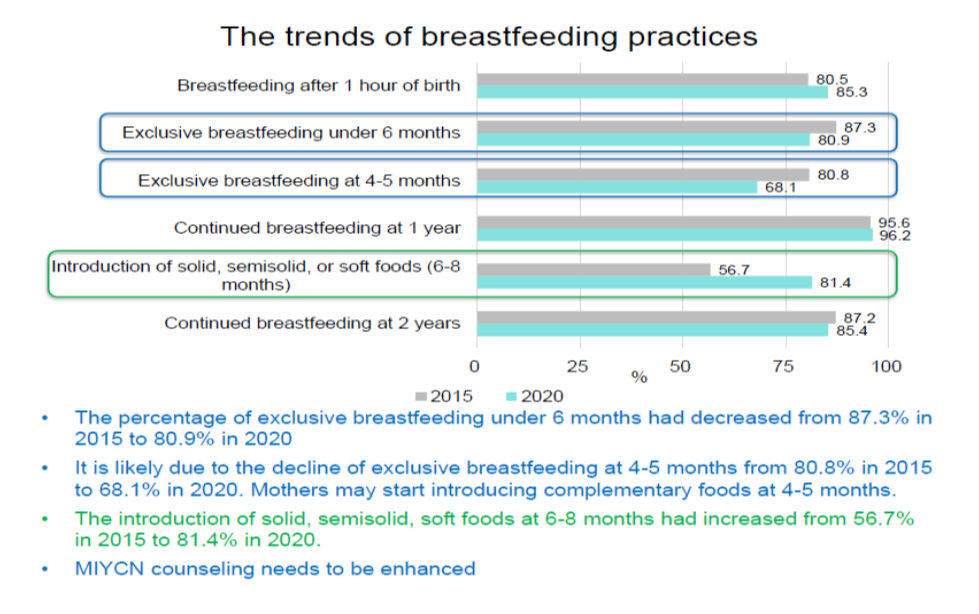
However, one worrying trend stands out, early breastfeeding rates have dropped, with children breastfed within the first hour of birth declining from87.3% in 2015 to 80% in 2020, a 6.3% fall that experts say needs urgent attention.
Source: RDHS 2015-2020
Despite these setbacks, Rwanda’s government continues to push forward. Through partnerships with organizations such as GAIN Rwanda, the Combating Malnutrition through Sustainable Food Systems (CMR-FS) project was launched to strengthen local nutrition programs.
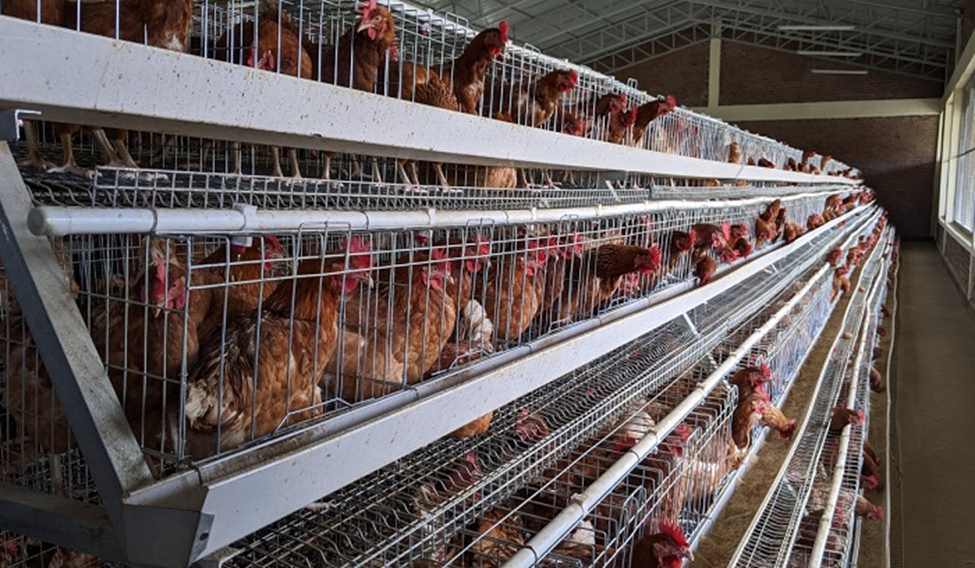
In Rubavu District, over RWF 46 million has been allocated to provide 7,800 egg-laying chickens to vulnerable households. The goal: to diversify diets and improve child nutrition.
“Even though we grow vegetables like carrots and cabbages, many families still lacked protein sources,” said Claudine Mukundwa, a nutritionist in Rubavu District. “The chicken project is changing that.”
In Rubavu District, households were given chicken that lay eggs so that they can feed thier children to prevent stunting
Across the country, nutrition education is also transforming mindsets. Mothers and fathers now learn together about exclusive breastfeeding for six months, continued feeding up to two years, and sing local foods to prepare alanced meals.
“When my son was born, I didn’t know the importance of nutrition,” said Igabire Peace, a mother from Kayonza District. “Now I understand, and I’m teaching others in my community.”
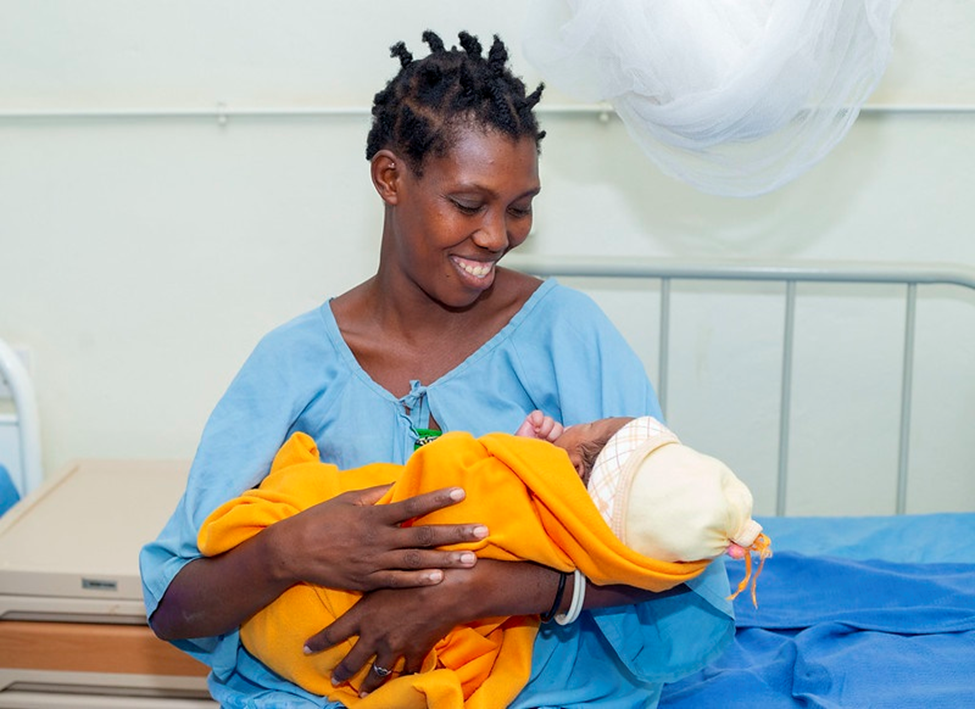
A touching photo of a mother holding her baby during a nutrition class about breastfeeding Courtesy
Government targets remain ambitious, to cut stunting to 15% by 2029. A multi-sectorial plan launched in June 2023 focuses on 10 priority districts, including Rubavu, to help meet this goal.
But as experts warn, progress must be consistent, inclusive, and evidence-based. Stunting rates may be falling, but inequality, poor diets, and limited maternal education still stand in the way of a healthier future.
To reach the target of 15% in 2029, Dr. Nepo adds, “We need to go to families and communities to create focus group discussions with mothers, husbands, and community leaders and tell them that in additional to nutritional food, we need to improve house security for mothers to take care of their children, it’s a plus. We need to have awareness about a safe household, family without violence, with positive parental techniques and health is combined with good nutritional needs for the child, and Rwanda will have a health generation of children.”
Although not yet officially confirmed, sources have informed Rwanda Dispatch that NISR, in partnership with the Rwanda Biomedical Centre (RBC) and the Ministry of Health, is conducting a health study that will include updated statistics on malnutrition