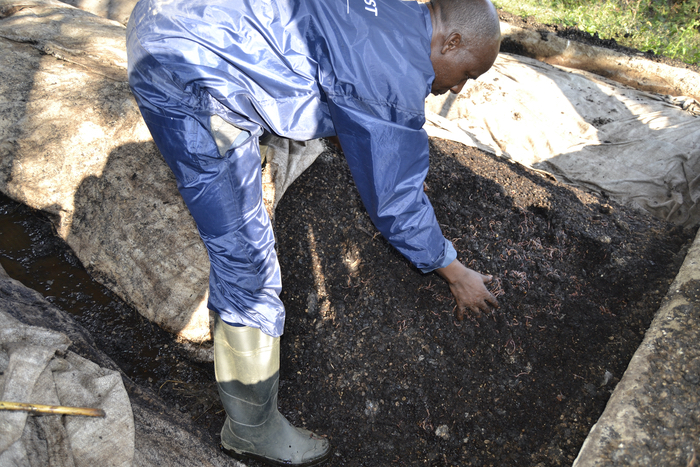
Preparations for Rwanda’s 2026A planting season are well underway, with 74.6% of farmland already prepared and 15.6% planted, according to the Ministry of Agriculture and Animal Resources (MINAGRI). With the rains now falling across the country, MINAGRI is urging farmers to accelerate planting to take full advantage of the season.
Dr. Florence Uwamahoro, Deputy Director General of Agriculture at the Rwanda Agriculture and Animal Resources Development Board (RAB), said soil preparation, fertilizer distribution, and planting activities are progressing steadily.
“We are currently focused on soil preparation and planting, as well as purchasing fertilizers. Land preparation has reached 74.6%, while planting is at 15.6%, with seeds already in the ground,” Dr. Uwamahoro said.
Key crops for the season include maize, to be planted on more than 277,000 hectares; sweet potatoes on 60,000 hectares; rice on 15,000 hectares; and soybeans on 5,700 hectares. Land preparation for some crops has reached 85.5%.
Dr. Uwamahoro urged farmers to prioritize marshlands and consolidated plots, which are considered high-yield areas, and to clear water channels and prevent soil erosion.
Weather forecasts from Meteo Rwanda indicate that rainfall, which started on Sept. 8, will continue through the season. Northern and Southern provinces are expected to receive 80–110 millimeters, while Central and Eastern regions may see 60–80 millimeters. These conditions provide an ideal window for planting.
Ndoli, a farmer in Ngoma District, said the rain has allowed them to start sowing. “The rain has fallen, the soil is wet, and we have started planting seeds. I am currently planting potatoes,” he said. Farmers in Western and Northern provinces reported similar progress with maize and sweet potatoes.
Rwanda aims to increase cultivated land by 3% compared to the previous season, part of a broader effort to boost agricultural productivity and ensure food security. MINAGRI and RAB are mobilizing farmers, ensuring access to quality seeds, fertilizers, and extension services, while encouraging crop insurance to reduce the risk of losses from floods or droughts.
“Using improved seeds and fertilizers and insuring crops are essential steps for increasing productivity and mitigating climate-related risks,” Dr. Uwamahoro said.
As the season gains momentum, authorities stress that timely planting and proper land management will be crucial for achieving high yields and supporting Rwanda’s food security goals.